
Japan National Football Team Formation
 July 29, 2025


Starting Lineup
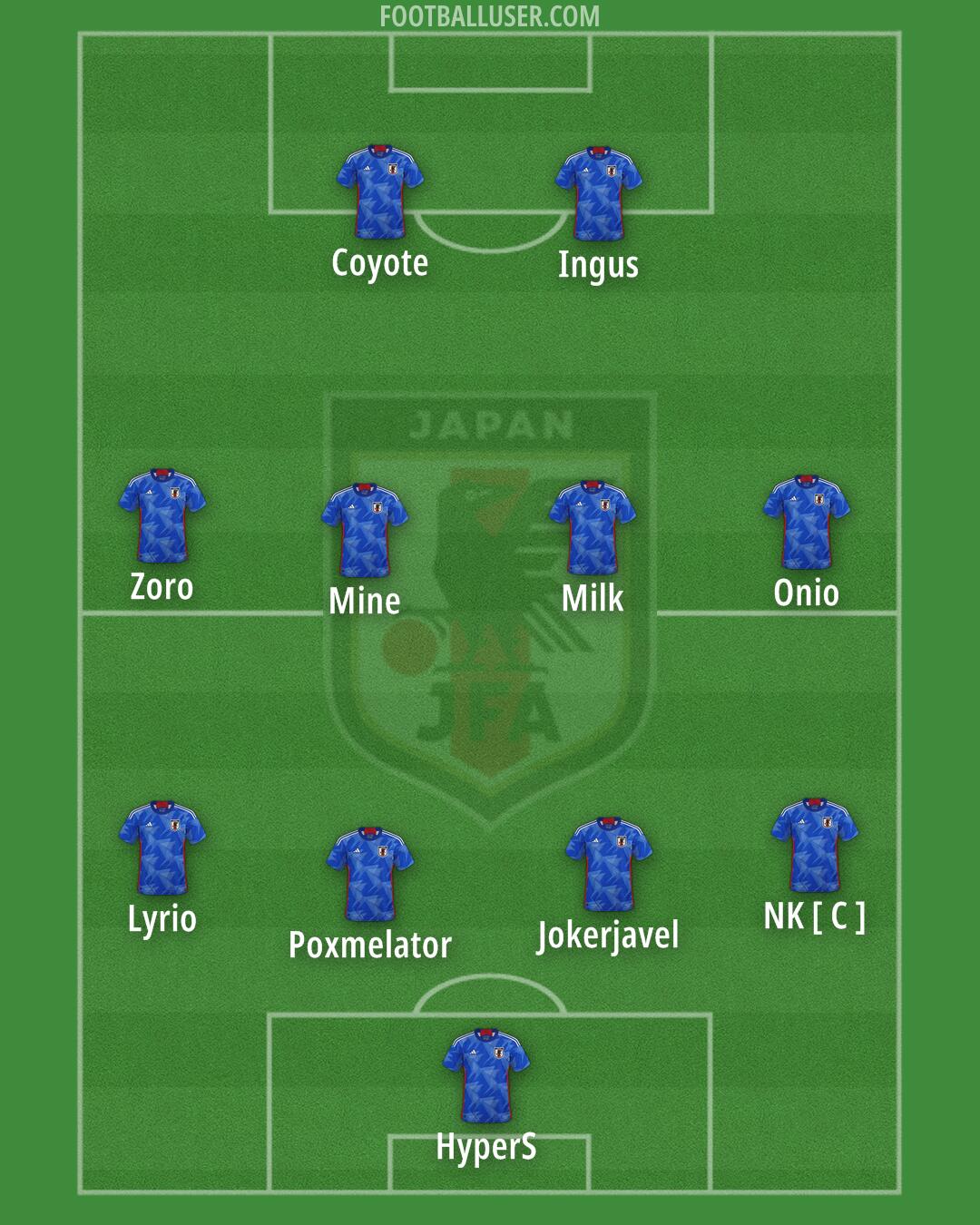
Coyote · Ingus · Zoro · Mine · Lyrio · Onio · NK [ C ] · Jokerjavel · HyperS · Poxmelator · MilkJapan plays with a direct and vertical identity through a 4-4-2 formation. This lineup is built to exploit spaces in transition and use two strikers to pin the opposition defense. The team seeks to win the second ball and quickly move the ball into the final third to catch the opponent out of position.
HyperS sits between the posts to command the area. The back four functions as a flat defensive line where Lyrio acts as the left back to provide width while NK, the captain, operates as the right back to cover the flank. Poxmelator and Jokerjavel form the central pairing, with Poxmelator acting as a ball playing defender to help play out from the back while Jokerjavel focuses on being dominant in the air. The unit moves together to hold a high line and squeeze the space when the team wins the ball back.
The midfield operates in two banks of four to maintain compactness. Mine and Milk form a central pairing where one acts as a shield for the defense and the other works to carry the ball forward. Onio plays as the right midfielder to stretch the play, while Zoro operates on the left to provide balance. This midfield unit works to connect the defensive line to the attackers by recycling possession and finding the feet of the forwards.
In the attacking phase, Japan utilizes two strikers in a partnership. Coyote leads the line as the lone striker to press from the front, while Ingus plays as a second striker in the hole to link play. The team uses wide players like Onio and Zoro to provide width, often looking to deliver early crosses or cutbacks from the byline. The movement of Coyote and Ingus is designed to create runs in behind and force the opposition defenders to drop deep.
One major advantage for Japan is the ability to press in a mid-block and win it back high up the pitch. The 4-4-2 formation allows for wide overloads when the full backs push up to support the wingers. This setup also provides numerical superiority in the central areas when the two central midfielders and two strikers combine to overwhelm the opposition pivot.
This formation relies on a coordinated press and quick vertical passing to break lines. It is best suited for games against opponents who leave large gaps behind their midfield.