Man City Football Formation
 August 1, 2025


Starting Lineup
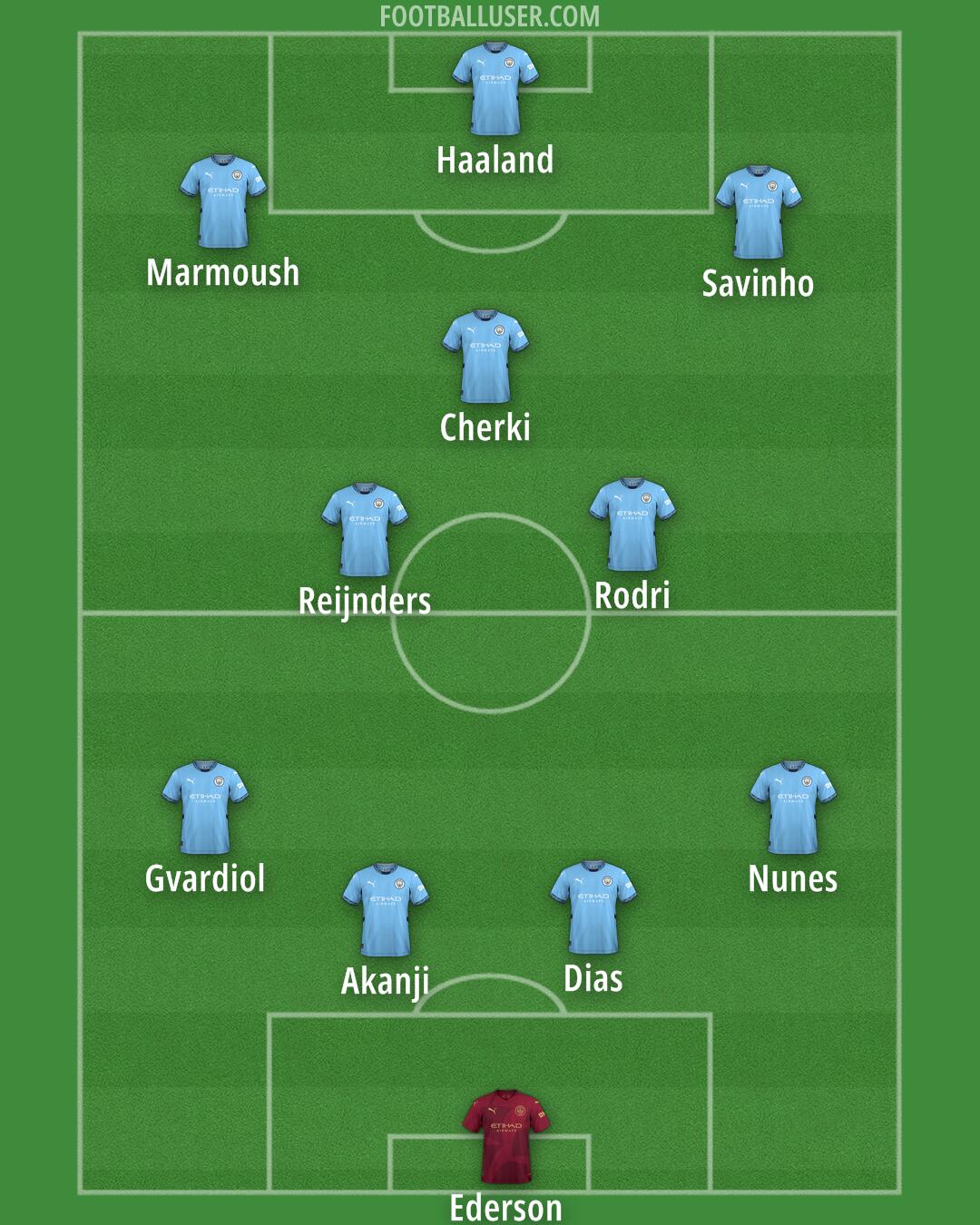
Haaland · Marmoush · Savinho · Cherki · Reijnders · Rodri · Gvardiol · Akanji · Dias · Nunes · EdersonMan City focuses on high possession and intense pressure through a 4-3-3 formation. This lineup is built to control the ball and pin the opposition deep in their own half by using constant movement and numerical superiority in key areas. The team aims to play through the lines to find pockets of space in the final third.
Ederson plays as the goalkeeper, acting as a sweeper to support the high line. The defensive unit consists of a flat back four where Akanji and Dias act as the central defenders. Akanji uses his mobility to cover space, while Dias provides aerial strength and dominance in the air. Gvardiol plays as the left back and can push up to support the attack, whereas Nunes operates at right back to provide balance. The back line works to keep a compact shape and squeeze the space between the lines.
The midfield is a three-man unit designed to dominate the center of the pitch. Rodri sits as a single pivot to shield the defence and recycle possession. He is joined by Reijnders, who acts as a carrier to drive forward with the ball and connect the lines. Cherki operates in the advanced space, often looking to play through the lines to find the attackers. This midfield group is tasked to win it back high up the pitch and control the tempo of the game.
In the attacking third, Man City uses three attackers to stretch the defence. Haaland acts as the central striker and a physical presence to hold up the ball. Savinho plays on the right as an inverted winger who likes to cut inside, while Marmoush occupies the left wing to provide width. These attackers press from the front to force a long ball from the opposition. The movement is designed to create runs in behind and allow for cutbacks from the byline.
A major tactical strength for Manchester City is the ability to create wide overloads when the full backs push forward. The team also benefits from numerical superiority in midfield, which allows them to control the game. They are capable of pressing in coordinated waves to win the ball back quickly in the attacking third.
The 4-3-3 formation creates a relentless attacking presence that is difficult to contain. This setup is best suited for games where the team needs to dominate possession against a side that sits deep.