Rangers Football Formation
 August 2, 2025


Starting Lineup
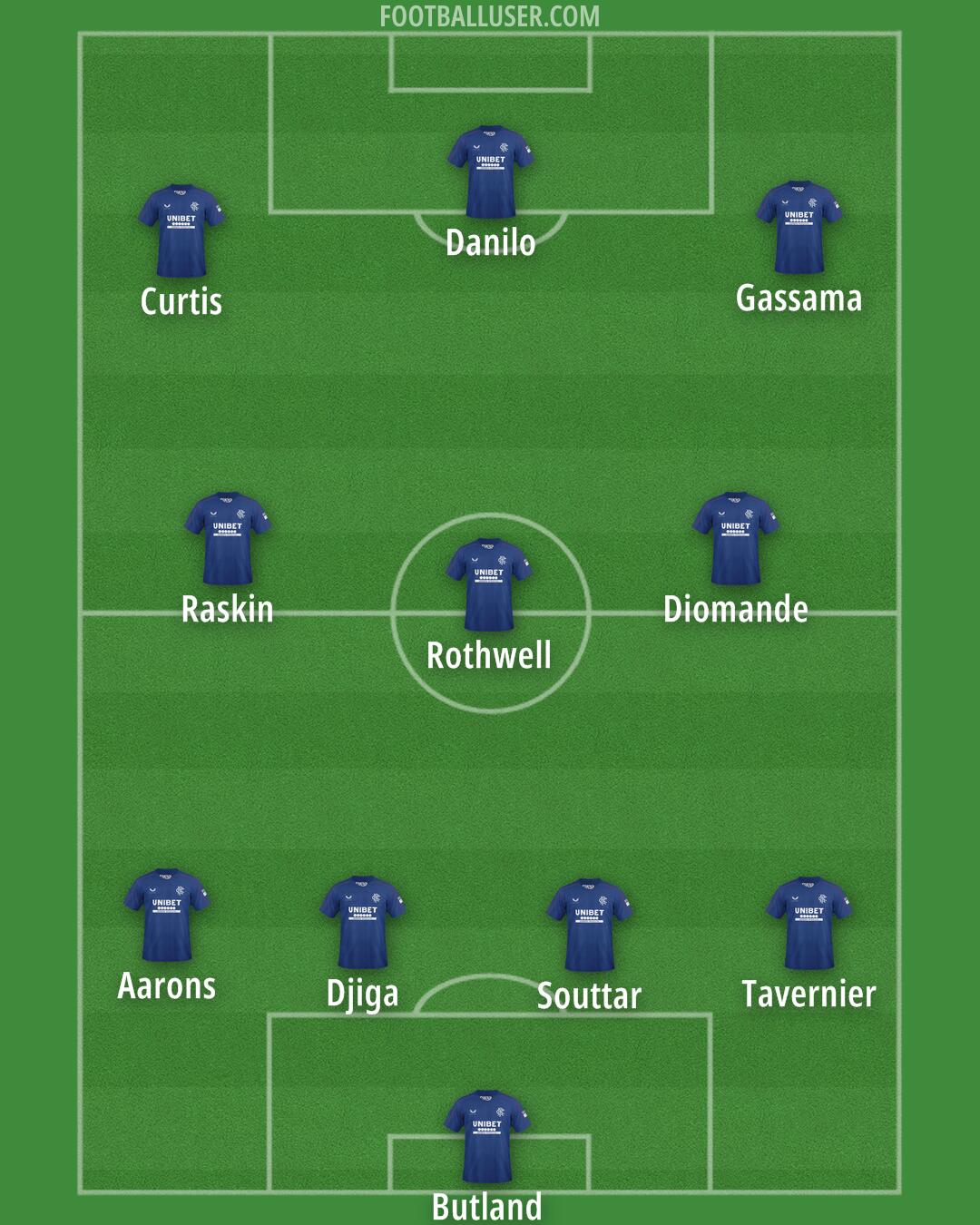
Butland · Tavernier · Souttar · Djiga · Aarons · Raskin · Rothwell · Diomande · Curtis · Danilo · GassamaRangers look to control matches through a high press and verticality in a 4-3-3. This formation is built to win the ball high up the pitch and move through the lines quickly to catch the opposition out of position. The team aims to dominate territory by pressing in waves to force mistakes in the opponent's half.
Jack Butland stays between the posts to command his area and act as the first point of distribution. The back line functions as a flat back four that can push up to maintain a high line. Souttar acts as a dominant presence in the air and provides cover when the line steps up, while Djiga plays as a ball playing defender to help play out from the back. Tavernier operates as an attacking full back who looks to overlap and provide width, while Aarons covers the left side to help the team defend zonally and shift across the pitch.
The midfield operates as a three man midfield with a carrier to drive the team forward. Raskin works to press aggressively to win the ball high and connects the defensive and attacking lines with his movement. Diomande acts as a central engine to carry the ball forward, while Rothwell occupies the space to recycle possession and find the feet of the striker. This unit works to compress the midfield and ensure the team stays compact when defending in a mid-block.
In the final third, Rangers use three attackers across the front to stretch the defence. Danilo plays as a pressing centre-forward who works to pin the last defender and hold up the ball for others. On the flanks, Curtis operates as an inverted winger who looks to cut inside to create goalscoring chances, while Gassama stays wide to pull defenders apart and deliver crosses. This attacking setup creates runs in behind and allows for quick combinations in transition.
Rangers find success by creating numerical superiority in midfield through the movement of Raskin and Diomande. The team also uses the width provided by Tavernier to create wide overloads, which helps to isolate wide players in one on one situations. The ability to transition at pace makes this lineup very dangerous when winning the ball back high up the pitch.
This 4-3-3 formation focuses on aggressive pressing and rapid vertical attacks. It is best suited for games against teams that struggle to play out from the back under heavy pressure.