Liverpool Football Formation

Creation DateAugust 5, 2025

Starting Lineup

1
2
3
4
11
5
6
7
8
9
10

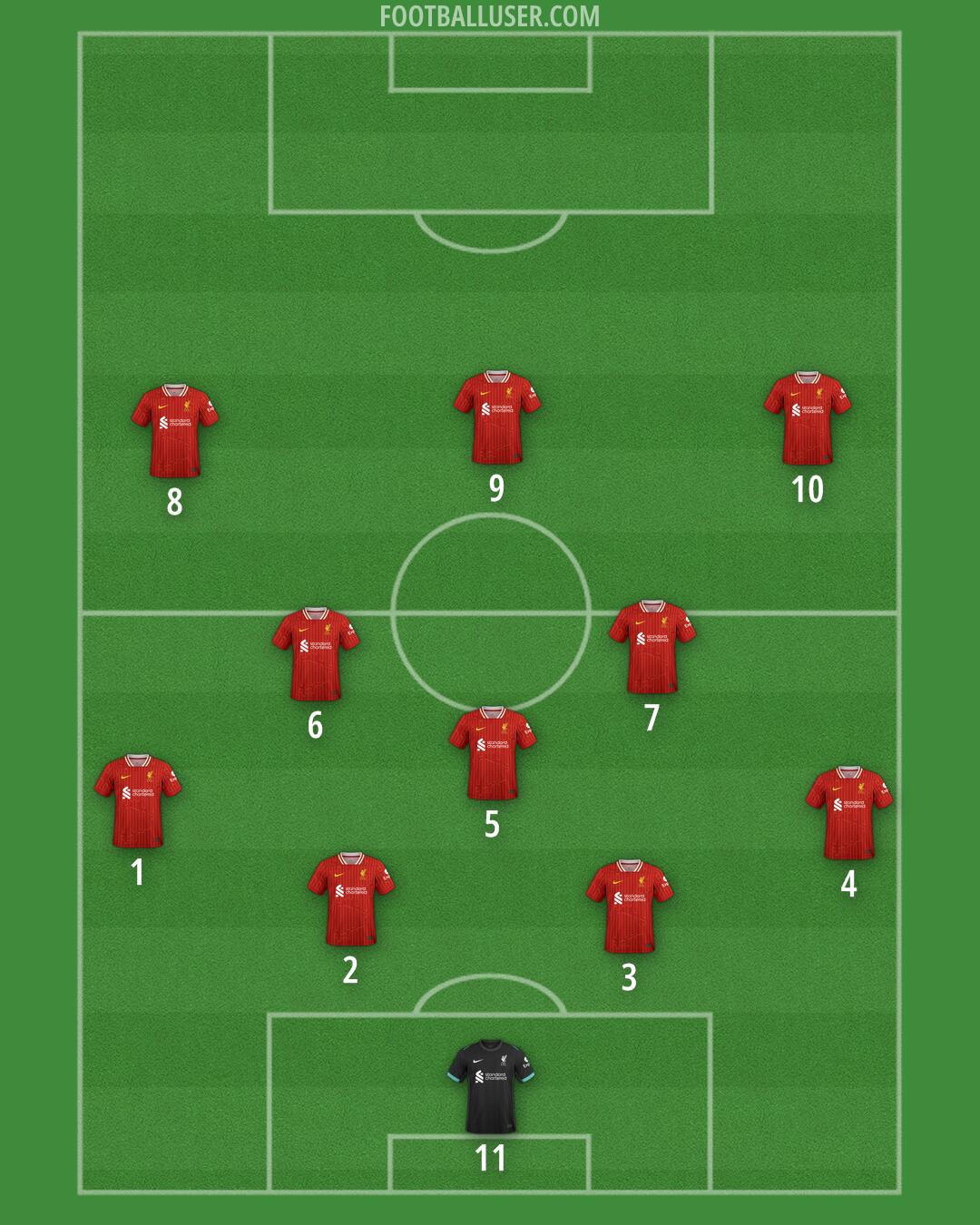
Liverpool plays a vertical game designed to win the ball high up the pitch with a 5-2-3 formation. This lineup aims to punish opponents through quick counter attacks and rapid forward movements. The team looks to squeeze the space in the opposition half and use the width of the pitch to stretch the defence.

In goal, 11 acts as the last line of defence. The back line consists of a central trio including 5, 2, and 3. As the central figure, 5 holds the line and protects the middle. To the sides, 2 and 3 cover the half spaces. The wing backs provide the width, with 1 and 4 pushing high to support the attack while tracking back to form a back five when the team sits deep. This unit can drop into a low block or push up to set the offside trap.

The midfield operates with a double pivot consisting of 6 and 7. These players act as the engine room to connect the defence and attack. 6 works to shield the defence and intercept passes, while 7 can drive forward with the ball to break the line. They must work together to win the second ball and ensure they do not get bypassed by the opposition. When the team presses, 6 and 7 must press in pairs to squeeze the space in the middle.

Up front, Liverpool utilizes three attackers to pin the last defender. 9 acts as the central presence to hold up the ball and find the feet of teammates. On the flanks, 8 and 10 provide both width and goal threat. 8 can cut inside to create space for 1 to overlap, while 10 can stay wide to allow 4 to overlap and deliver a cross or cut inside to attack the far post. The front three aim to press from the front to force a long ball from the opposition.

A key advantage for Liverpool is the ability to create wide overloads using the wing backs 1 and 4. This allows the team to spread wide and find space in the final third. The formation also provides compactness when defending in a mid block. By using 6 and 7 to compress the midfield, the team makes it hard for opponents to play through the lines. Additionally, the speed of transition allows 8, 10, and 9 to hit in behind on the transition.

The 5-2-3 formation provides a balance of defensive solidity and attacking width. This lineup is best suited for matches against teams that play with high wingers or rely heavily on central playmakers.