
Portugal National Football Team Formation
 August 8, 2025


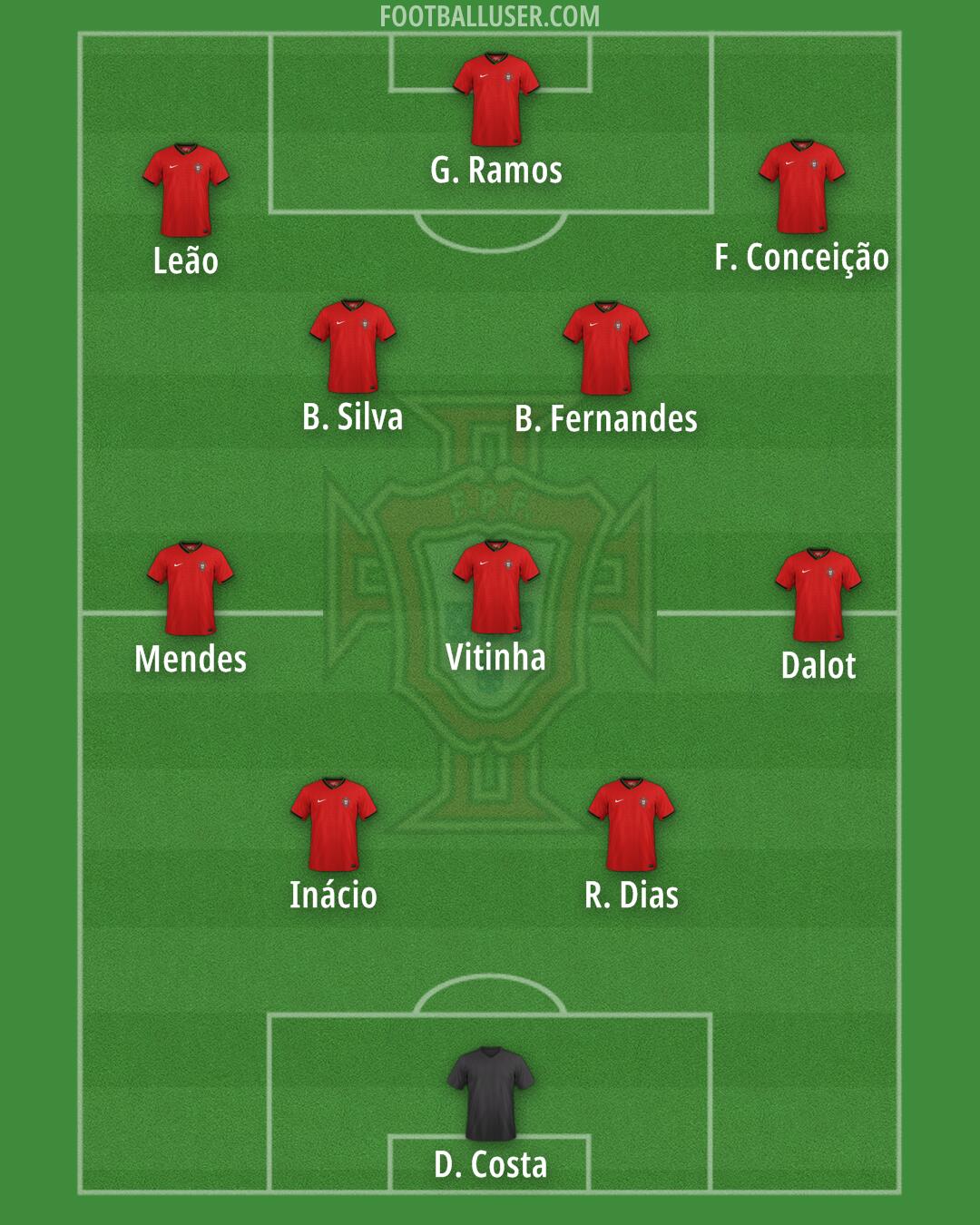
Starting Lineup
G. Ramos · Leão · B. Silva · B. Fernandes · F. Conceição · Mendes · Dalot · Inácio · Vitinha · R. Dias · D. CostaPortugal focuses on quick transitions and verticality through a 5-2-3 formation. This lineup seeks to win the ball high up the pitch and strike rapidly before the opposition can settle. By using a wide attacking front, the team aims to stretch the defence and create space for runners in behind.
Diogo Costa operates between the posts to manage the high line and sweep behind the defenders when necessary. The back five relies on Vitinha as a ball playing centre back to progress through the thirds. Rúben Dias acts as the dominant presence in the air and leads the defensive unit, while Inácio provides cover to the left. The wing backs, Dalot and Mendes, are tasked with providing width and pushing high to support the attack. They must track back quickly to ensure the team maintains a narrow defensive block when out of possession.
The midfield relies on a two man unit to control the center of the pitch. Bruno Fernandes works as a carrier who looks to break the line with progressive passes and arrives late into the box. Alongside him, Bernardo Silva connects the defensive and attacking lines by dropping deep to receive the ball and recycle possession. These two must work hard to compress the midfield and prevent the opposition from playing through the center. They are responsible for picking up runners and ensuring the team stays compact when the opponent has the ball.
Up front, the team uses three attackers to pin the last defender. Gonçalo Ramos acts as the central striker to hold up the ball and link up play with the midfielders. On the wings, Rafael Leão and Francisco Conceição operate as inverted wingers who cut inside to threaten the goal. Leão uses his dribbling style to drive at the defence, while Conceição looks to isolate his marker in one on one situations. This front three triggers a press from the front to force a long ball from the opposition.
A major advantage for Portugal is the ability to create wide overloads when Dalot and Mendes overlap the winger. The formation also offers great speed of transition, allowing the team to hit in behind on the transition through the pace of Leão. Having a numerical superiority in the wide areas makes it difficult for opponents to defend the flanks.
This 5-2-3 formation is built for teams that want to exploit space in behind through rapid counter attacks. It is best suited for games where the opponent plays a high line and leaves gaps behind their defenders.