
Japan National Football Team Formation
 August 11, 2025


Starting Lineup
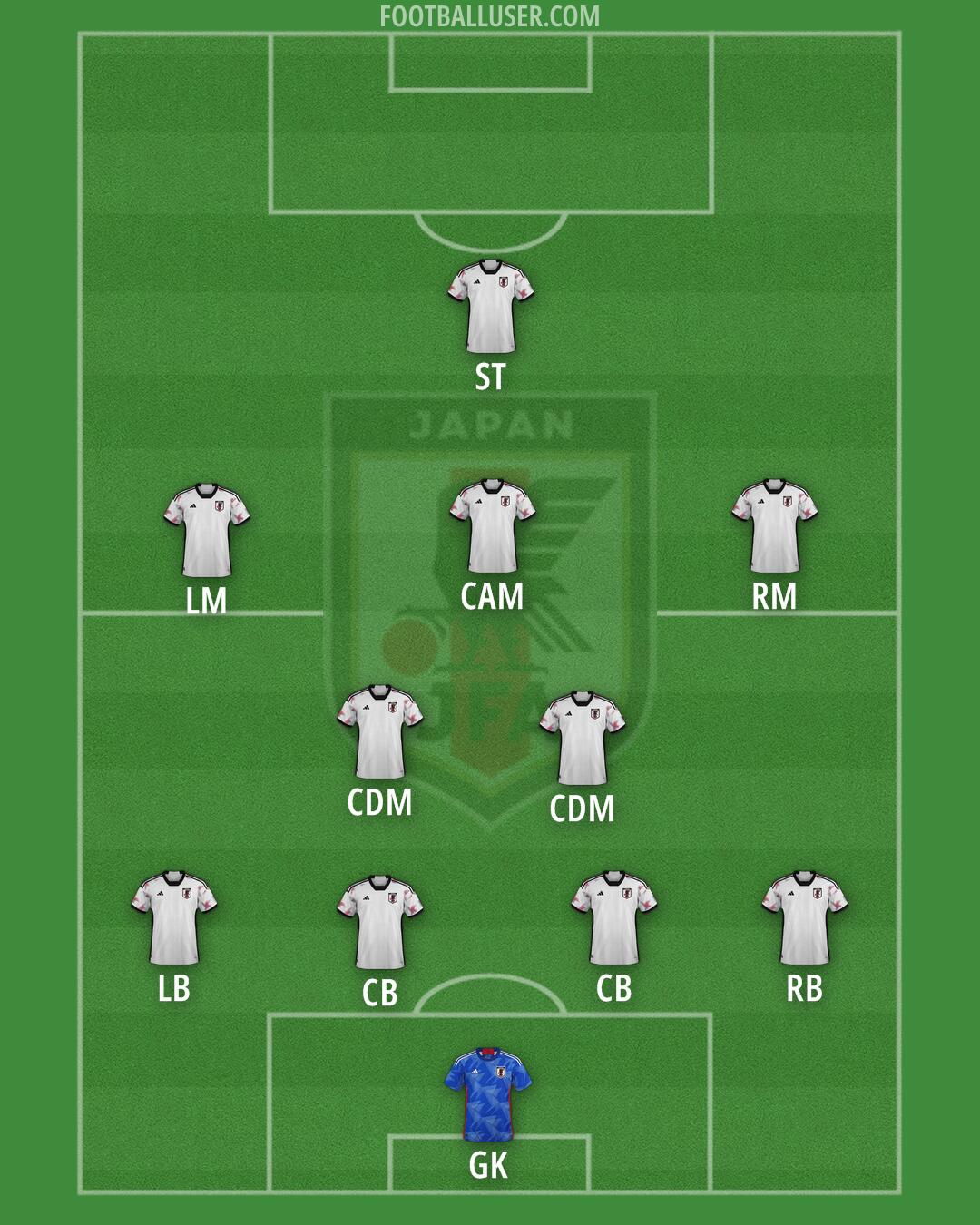
ST · GK · LM · CAM · RM · CDM · CDM · LB · CB · CB · RBJapan relies on a compact and defensively solid identity through a 4-5-1 formation. This lineup focuses on closing down passing lanes and waiting for the right moment to hit in behind on the transition. The team aims to sit deep when out of possession to squeeze the space between the lines before looking to move the ball quickly forward once the ball is won back.
The goalkeeper manages the defensive line from the back to ensure the unit remains tight. A flat back four consists of the LB, RB, and two central defenders who maintain a narrow defensive block. The LCB and RCB focus on defending zonally and marking the opposing striker, while one of the center backs is expected to step up to intercept long balls. The LB and RB work to track back and prevent crosses, often squeezing the space to force the opposition wide and away from the goal.
In the middle of the pitch, Japan employs a three-man midfield line supported by a double pivot. The RDM and LDM act as the shield for the defense, working to win the second ball and deny the turn to oncoming attackers. Ahead of them, the LCM and RCM operate as inverted eights, looking to carry the ball forward and connect the defensive and attacking lines. The CM plays as an attacking ten behind the lone striker, acting as the creative link to play through the lines and find the feet of the striker in tight spaces.
The attacking unit relies on a lone striker who acts as a pressing centre-forward to disrupt the opposition back line. To provide width, the LM and RM spread wide to stretch the defence and provide outlets for quick transitions. These wide players look to get to the byline or pull wide to create space for the CM to arrive late into the box. The striker must hold up the ball to allow the midfield to move up the pitch, often looking for runs in behind the high line of the opponent.
A primary strength for Japan is the ability to maintain compactness when defending in a mid-block. This prevents the opposition from playing through the middle and forces them to go direct. The formation also offers great speed of transition, as the narrow midfield can quickly switch play to the wide players once a turnover occurs. This setup creates immediate pressure on a disorganized defense.
Japan uses this 4-5-1 formation to frustrate superior technical sides by denying central space. It is a setup best suited for matches where the team needs to absorb pressure and play on the counter at pace.