
Inter Football Formation
 August 12, 2025


Starting Lineup
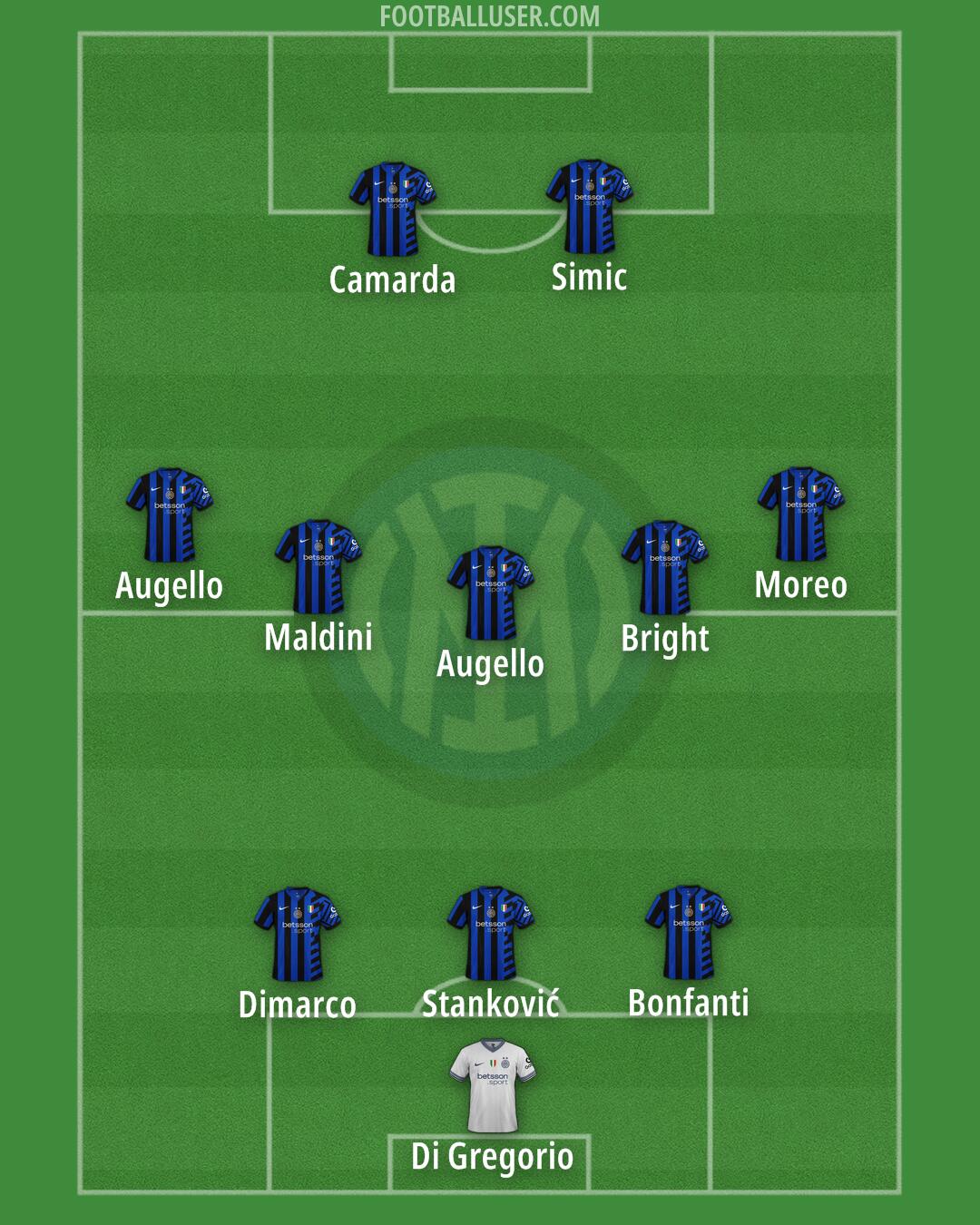
Moreo · Simic · Maldini · Augello · Camarda · Bright · Augello · Bonfanti · Stanković · Dimarco · Di GregorioInter focuses on a direct and vertical style of play through a 3-5-2. This formation is built to overwhelm opponents in the middle of the pitch and use wide areas to create chances through quick transitions. By utilizing a heavy midfield presence, the team aims to win the second ball and push the opposition back into their own half.
Di Gregorio starts between the posts to organize the defensive line. Behind him, a back three provides a solid base where Stanković acts as the central pillar to win headers and clear the lines. Bonfanti operates as the right centre-back to cover the wide spaces, while Dimarco plays as the left centre-back in this specific lineup. This unit works together to maintain a compact shape and can step up to trigger a press or drop into a low block when required.
The midfield is the engine of this Inter lineup, utilizing a five man unit that offers great coverage. Augello and Bright form a central pairing to control the tempo, with Maldini operating as a left central midfielder to connect the defence and attack. To provide width, Augello plays on the left flank and Moreo occupies the right. This midfield group is designed to press in a mid-block, squeeze the space between the lines, and ensure that the team can quickly recycle possession once it is regained.
In the attacking third, the team relies on a two man partnership up front. Camarda and Simic operate as the primary threats, working to find space between the opposition centre-backs. The forwards are tasked to press from the front to force a long ball from the opposition. When the team breaks quickly, the wingers and midfielders look to deliver early crosses or play through the lines to find the feet of the striker. Movements are designed to create runs in behind and allow the forwards to combine in tight spaces.
One major advantage of this 3-5-2 is the ability to create numerical superiority in the middle of the pitch. The heavy presence of midfielders makes it difficult for opponents to play through the center without losing the ball. Another strength is the capacity for wide overloads, as the wingers can work in tandem with the central midfielders to pull wide and stretch the defence. This creates gaps in the middle for the attackers to exploit during transitions.
This formation provides a balance of defensive solidity and attacking width. It is best suited for matches against teams that play with a single pivot or those that struggle to handle high pressing in the middle third.