Liverpool Football Formation
 August 16, 2025


Starting Lineup
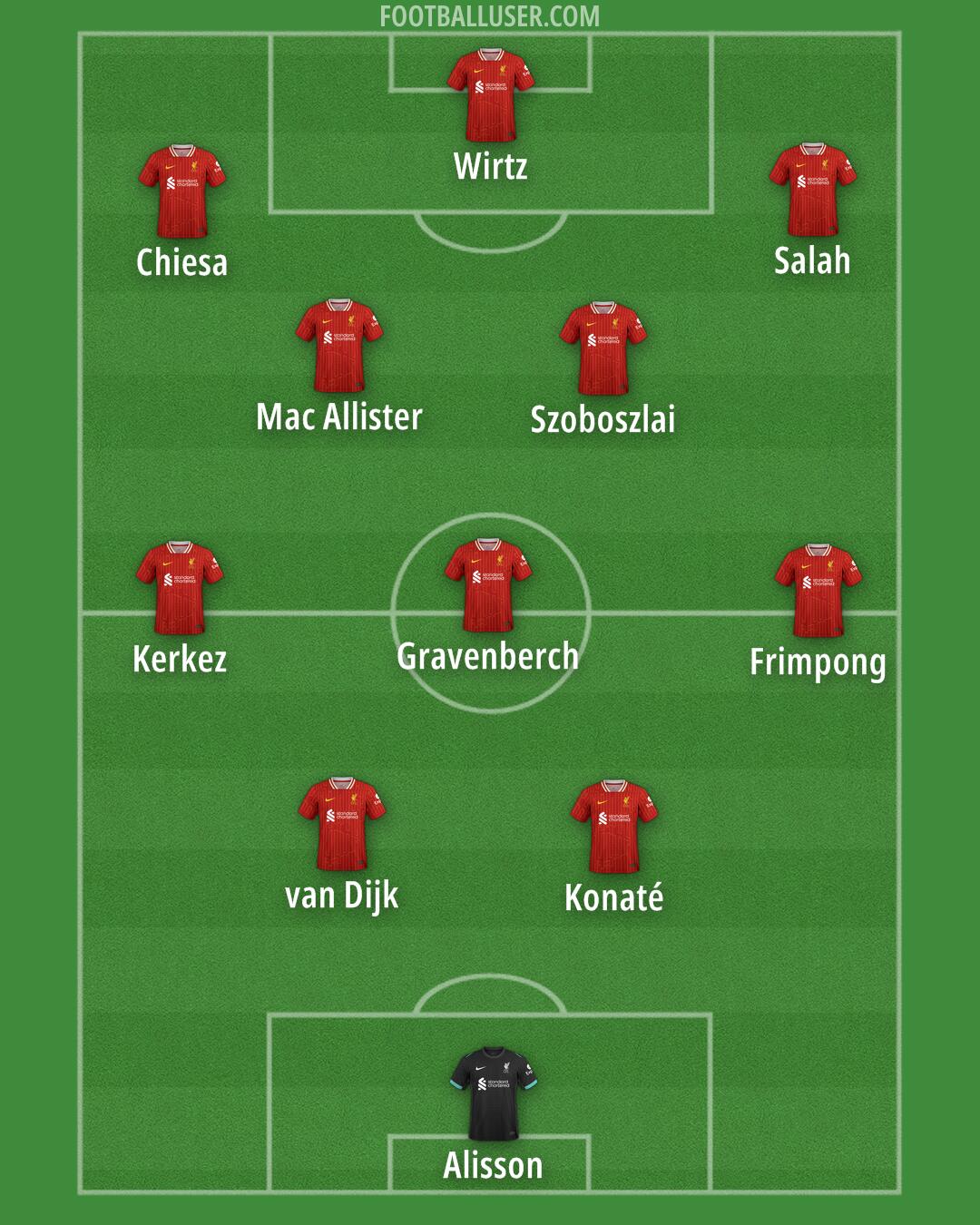
Wirtz · Chiesa · Salah · Gravenberch · Szoboszlai · Mac Allister · Kerkez · Frimpong · van Dijk · Konaté · AlissonLiverpool play with a high press and a focus on quick transitions in a 5-2-3. This lineup seeks to win the ball back high up the pitch and use vertical passing to catch the opponent out of position. This formation is built to play direct, attacking football that utilizes the speed of the front three.
Alisson acts as the last line of defense, often sweeping behind a high line to cover space. The back five consists of Konaté, van Dijk, and Gravenberch in the middle, with Frimpong and Kerkez acting as attacking wing backs on the flanks. van Dijk uses his aerial strength and passing range to lead the defense, while Konaté provides physical presence to block the runner. Gravenberch sits in the center to hold the line. Frimpong and Kerkez push high to provide width, leaving the three central defenders to protect the box and defend zonally.
The midfield works as a pair with Mac Allister and Szoboszlai. Mac Allister connects the defensive and attacking lines, often dropping to receive the ball and play through the lines. Szoboszlai presses aggressively to win the ball high and carries the ball forward to drive the team into the final third. These two must cover large amounts of ground to protect the back five and ensure they can transition quickly from defense to attack.
In the attacking phase, Liverpool use three attackers across the front. Wirtz operates as a central figure who can drop into the hole to link up play between the lines. Salah and Chiesa occupy the wide positions, with Salah often cutting inside to attack the near post or far post. Chiesa works to stretch the defence by staying wide or moving into the half spaces. The wing backs, Frimpong and Kerkez, overlap the winger to create wide overloads, allowing the front three to find space in the channels.
One major strength of this Liverpool lineup is the ability to press high in coordinated waves to force a long ball from the opposition. The formation creates wide overloads because the wing backs push so far forward, which pins the last defender. This creates numerical superiority in the wide areas and allows the team to recycle possession quickly when the initial attack is blocked.
This 5-2-3 formation provides a balance of defensive stability and rapid attacking transition. It is best suited for matches against teams that play a high line and struggle to track runners in behind.