
Racing Club Football Formation
 August 17, 2025


Starting Lineup
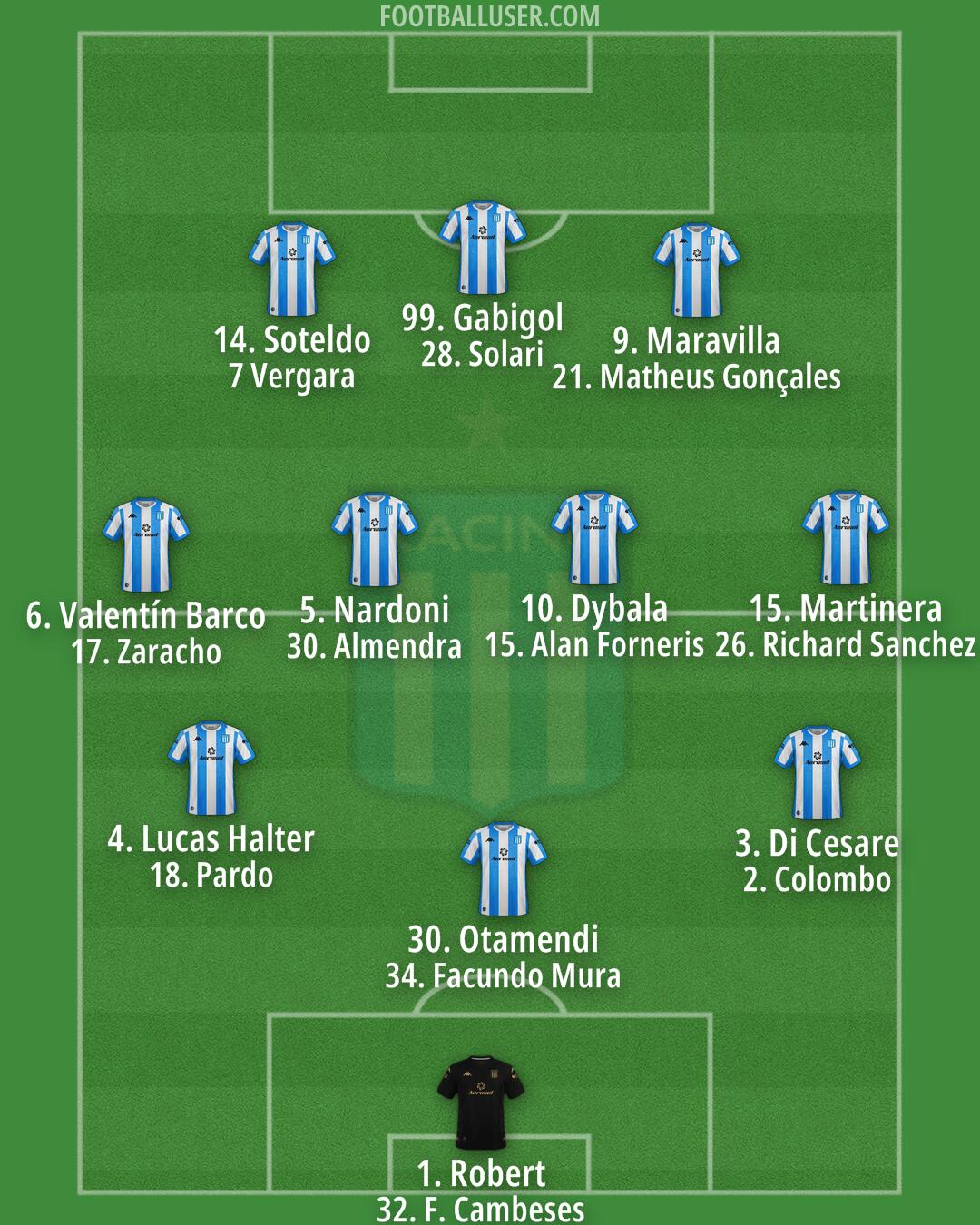
1. Robert (32. F. Cambeses)3. Di Cesare (2. Colombo)
4. Lucas Halter (18. Pardo)
30. Otamendi (34. Facundo Mura)
10. Dybala (15. Alan Forneris)
15. Martinera (26. Richard Sanchez)
5. Nardoni (30. Almendra)
99. Gabigol (28. Solari)
9. Maravilla (21. Matheus Gonçales)
14. Soteldo (7 Vergara)
6. Valentín Barco (17. Zaracho)
Racing Club plays with a direct and aggressive intent using a 3-4-3 formation. This lineup focuses on winning the ball back high up the pitch and attacking through rapid transitions. The team aims to stretch the defence by using wide players to create chances in the final third.
Robert stays between the posts to command the area during defensive moments. The back line consists of a back three where Otamendi acts as the central leader to win the header and organise the unit. Di Cesare operates as the right centre back to cover wide spaces, while Lucas Halter occupies the left centre back position. This defensive unit works to hold the line and play out from the back to start attacks.
The midfield relies on a four man line to control the center of the pitch. Valentín Barco plays as a wide midfielder who can push up to overlap the wingers, while Martinera provides width on the opposite flank. In the middle, Nardoni works to shield the defence and win the second ball. Dybala plays in the half spaces to create from deep and link the midfield to the front three.
The attacking unit uses three players to pin the last defender. Gabigol acts as the central striker to hold up the ball and find the feet of his teammates. Soteldo plays as a wide attacker on the left to cut inside and create, while Maravilla stays wide on the right to deliver crosses. These forwards press from the front to force a long ball from the opposition.
Racing Club benefits from significant wide overloads when the wing backs and wingers combine to pull wide. The presence of Dybala allows the team to find space between the lines to play through the lines effectively. This formation also offers great speed of transition to punish teams that leave space behind their midfield.
This 3-4-3 lineup is built for high intensity and attacking pressure. It is best suited for matches against teams that play a high line or struggle to defend wide areas.