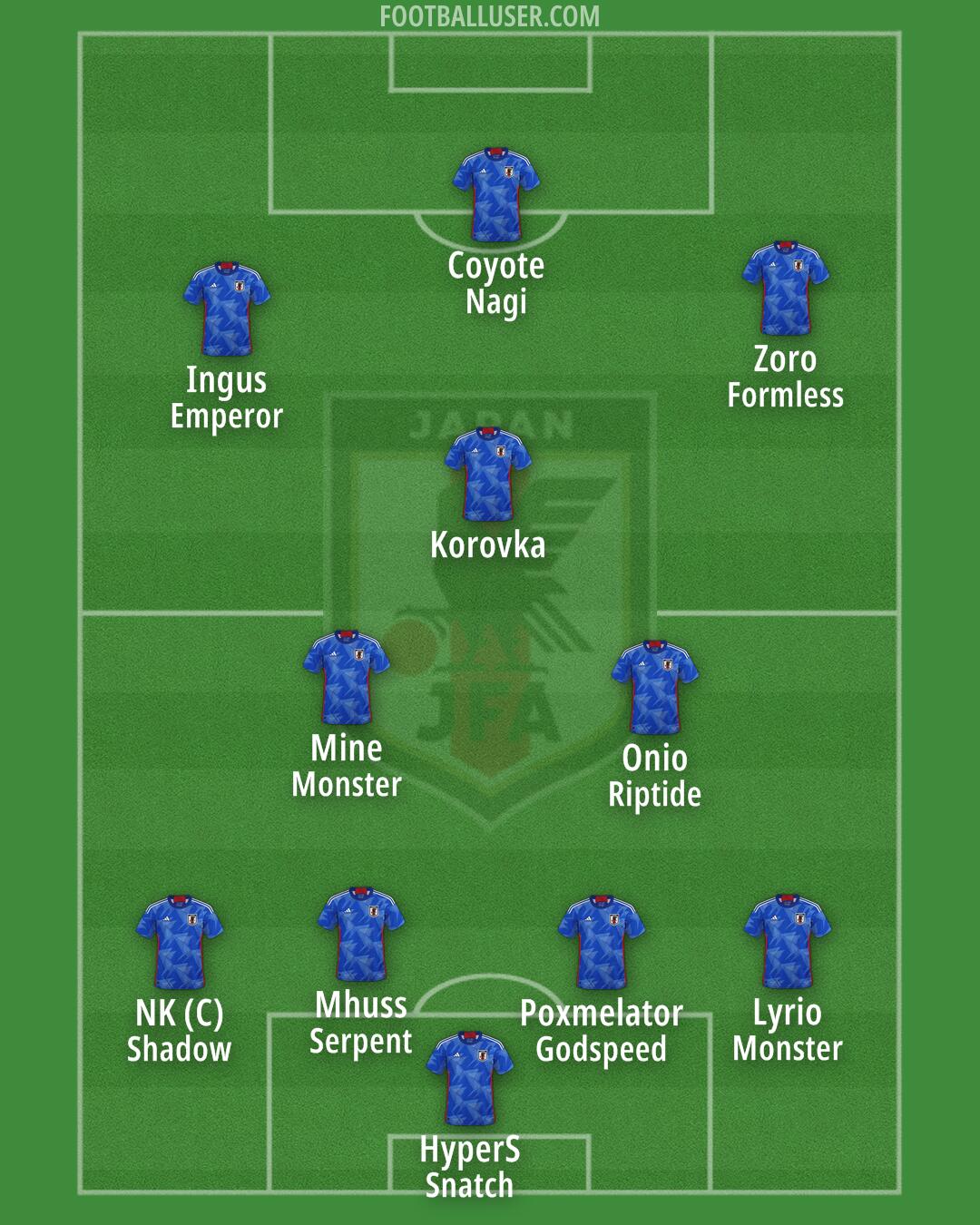

Japan National Football Team Formation
 August 25, 2025
 NK_Leonardoburst


Starting Lineup
NK (C) (Shadow) · HyperS (Snatch) · Mhuss (Serpent) · Mine (Monster) · Onio (Riptide) · Korovka · Poxmelator (Godspeed) · Zoro (Formless) · Coyote (Nagi) · Ingus (Emperor) · Lyrio (Monster)Japan looks to dominate through high intensity and rapid transitions using a 4-3-3. This lineup aims to win the ball back high up the pitch and move the play forward with speed. The goal is to stretch the opposition and use verticality to catch teams out of position.
HyperS starts between the posts to command the area. The back four functions as a zonal line with Lyrio acting as an attacking full back to provide width on the right. On the left, NK (C), the captain, manages the defensive line and can step up to intercept play. Poxmelator and Mhuss operate as central defenders, where Poxmelator covers the right side while Mhuss stays more central to hold the line. They work together to squeeze the space between the defense and midfield.
The midfield consists of a three man midfield with a carrier and creative elements. Mine and Onio occupy the central roles to shield the defense and win the second ball. Mine works to recycle possession, while Onio carries the ball forward to drive the team into the final third. Korovka plays as an attacking ten behind the striker to link the lines. Korovka finds the pockets of space between the lines to play through the lines and create chances for the front three.
In the attacking phase, Japan utilizes three attackers across the front. Coyote acts as the central striker to find the feet of the striker and hold up the ball. Ingus and Zoro act as inverted wingers who cut inside to threaten the goal. Ingus pulls wide to stretch the defense before cutting into central areas. Zoro looks to isolate a one on one wide or make runs in behind. The front three press from the front to force a long ball from the opposition.
This formation offers clear tactical advantages such as the ability to press high in coordinated waves. By using Lyrio in advanced positions, Japan creates wide overloads to bypass the midfield. The presence of Korovka in the hole allows the team to maintain numerical superiority in the center of the pitch. This creates many opportunities for quick one two combinations in tight spaces.
Japan relies on high pressing and rapid attacking movements to control matches. This 4-3-3 is best suited for facing teams that play a high defensive line or struggle to play out from the back.