
Real Madrid Football Formation
 August 26, 2025


Starting Lineup
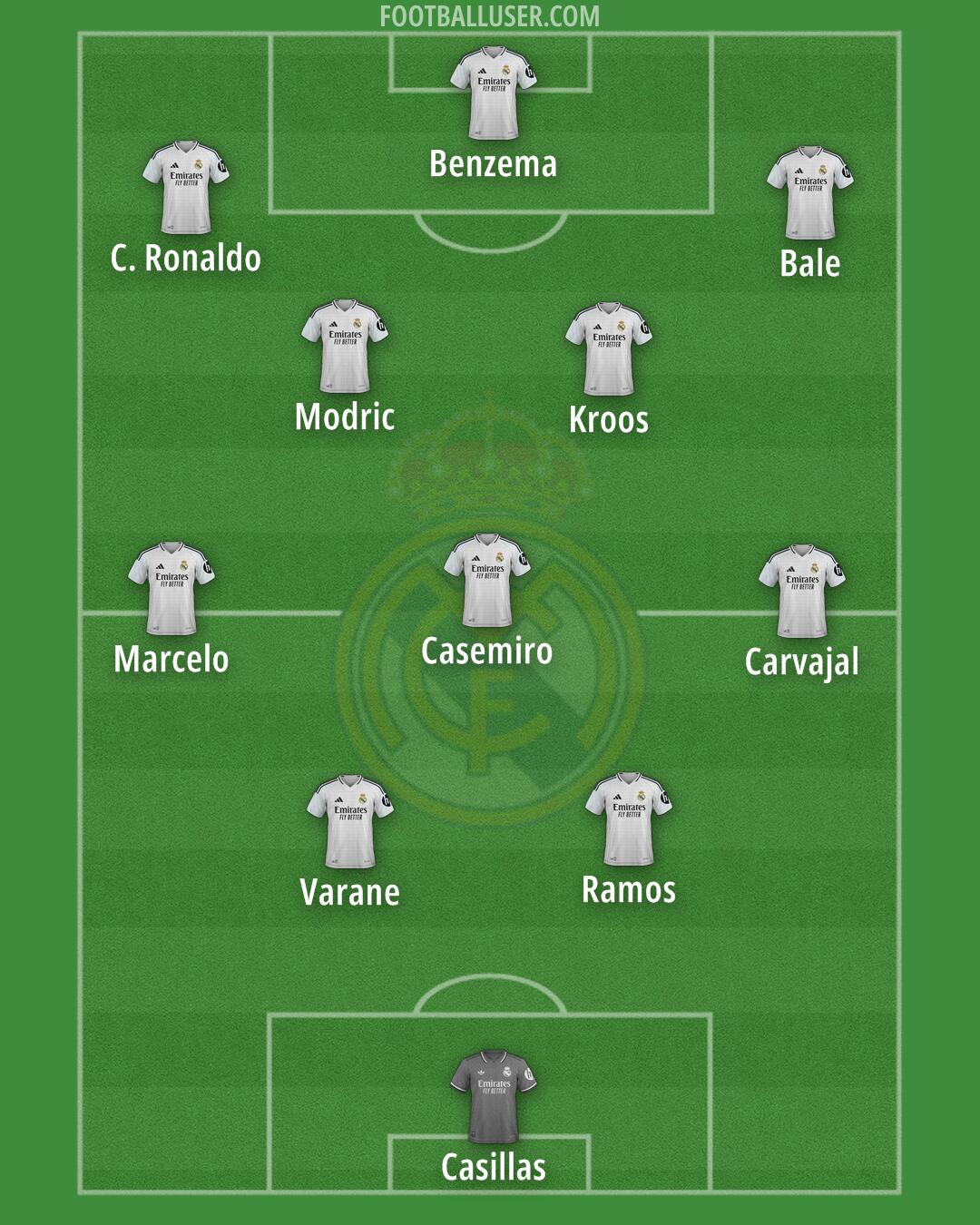
Casemiro · Modric · Kroos · C. Ronaldo · Benzema · Bale · Carvajal · Marcelo · Varane · Ramos · CasillasReal Madrid looks to play with a high press and lightning fast transitions in this 5-2-3 formation. The goal is to win it back high up the pitch and strike immediately before the opposition can settle or organize their defense. This lineup is built to dominate through technical skill and physical presence.
Casillas guards the goal to command the box. The defense works in a back five to maintain a compact block. Casemiro acts as the central defender to provide strength in the middle. Ramos is a dominant defender in the air who can also play out from the back. Varane plays as a covering defender to sweep behind the line. Marcelo and Carvajal function as attacking wing backs to stretch the pitch, with Marcelo pushing high on the left and Carvajal overlapping on the right.
The midfield works with a two man unit to control the center of the pitch. Kroos acts as a deep lying playmaker with an immense passing range to switch play and find the feet of the striker. Modric works to connect the defensive and attacking lines, often carrying the ball forward to drive through the middle. These two must work together to win the second ball and compress the midfield when the team defends.
The attack uses three players to pin the last defender. Benzema acts as a striker who can hold up the ball and play link up play between the lines. C. Ronaldo works as an inverted winger on the left who will cut inside to find scoring positions. Bale operates on the right wing to whip it in or drive at the opposition. This front line will press from the front to force a long ball and regain possession.
One major advantage of this formation is the width provided by the wing backs. Overlapping runs from Marcelo and Carvajal create wide overloads on the flanks. Real Madrid also benefits from the speed of transition when the forwards move quickly into space. The back five makes it difficult for opponents to find gaps in the center.
This 5-2-3 formation relies on individual quality to control the tempo of the match and break the lines. It is most effective when playing against teams that commit many players forward and leave space behind the defense.