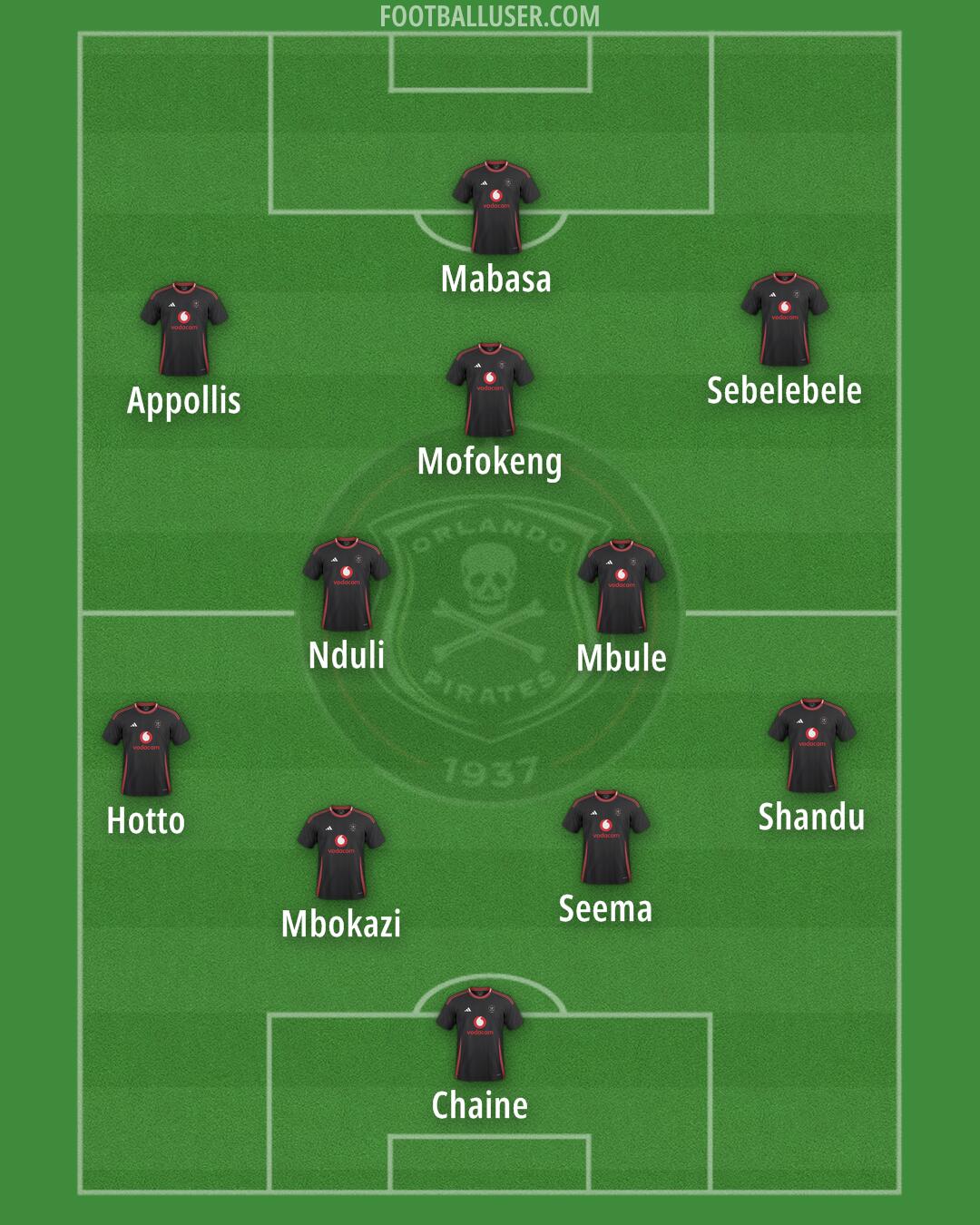

Orlando Pirates Soccer Formation
 August 26, 2025
 Sipho
Sipho


Starting Lineup
Chaine · Shandu · Sebelebele · Nduli · Seema · Mbokazi · Hotto · Mbule · Mofokeng · Appollis · MabasaOrlando Pirates look to sit deep and strike with speed using a 5-4-1 formation. This lineup is built to be defensively solid while waiting for the right moment to hit in behind on the transition. The team focuses on a compact block to deny space in the middle, making it difficult for opponents to pass through the lines.
Mabasa acts as the last line of defense in goal. The defensive unit functions as a back five where Mofokeng, Nduli, and Mbule form a central trio to hold the line and win the second ball. Nduli and Mbule work to cover the central areas, while Mofokeng provides presence in the air. Sebelebele and Appollis act as attacking wing backs, tasked to push up the pitch to provide width, but they must track back quickly to help the back three.
The midfield works in a flat four to squeeze the space between the lines. Seema and Mbokazi occupy the central roles to shield the defense and recycle possession when the team wins the ball. Shandu and Hotto operate on the flanks to provide width in the middle third. Mbokazi and Seema focus on protecting the center, while Shandu and Hotto are ready to carry the ball forward to transition the play from the deep block into the attacking third.
Chaine plays as a lone striker and is tasked to hold up the ball to bring the midfielders into the play. The attacking intent relies on Chaine making runs in behind the opposition defense. When Orlando Pirates win the ball, the wing backs Sebelebele and Appollis overlap to create numbers in the final third. Chaine must also press from the front to force a long ball from the opposition, allowing the defensive unit to regain control.
One major advantage for Orlando Pirates is the compactness when defending, which makes it very hard for opponents to find gaps. The formation also offers the ability to transition quickly, as the wing backs can immediately stretch the defense. By having five defenders, the team creates a narrow defensive block that is difficult to break down centrally.
This formation is designed for a team that wants to absorb pressure and hit on the break. It is best suited for matches against dominant teams where staying compact is the priority.