Leeds Football Formation
 August 26, 2025


Starting Lineup
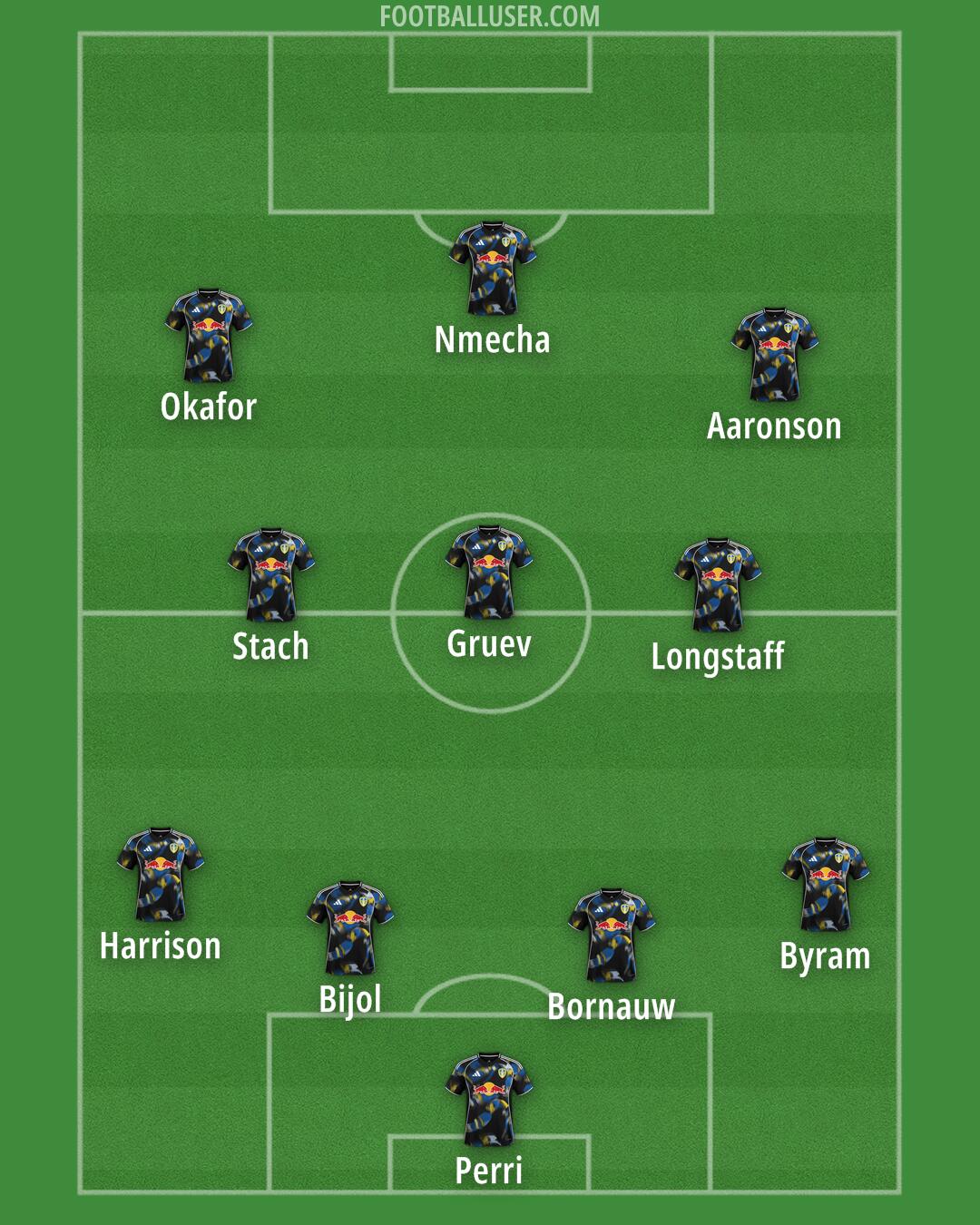
Nmecha · Okafor · Aaronson · Gruev · Longstaff · Stach · Harrison · Bijol · Bornauw · Byram · PerriLeeds aims to play a high press with a heavy focus on winning the ball back high up the pitch. This 4-3-3 formation is built to sustain pressure and use verticality to catch opponents out of position. The team wants to keep the play moving quickly through the thirds to catch the opposition before they can settle into a defensive block.
Perri starts between the posts to organize the back line. The Leeds defensive unit operates as a flat back four where Byram acts as an attacking full back to provide width on the right. On the left, Harrison provides balance while looking to overlap in the final third. In the center, Bornauw and Bijol form the heart of the defense, with Bornauw looking to win headers and Bijol acting as a covering defender to sweep behind a high line.
The midfield functions as a three-man midfield with a carrier to drive the team forward. Gruev sits in the central role to connect the defensive and attacking lines, often dropping deep to collect the ball from the defenders. Stach and Longstaff operate as two inverted eights who press aggressively to win the ball in the middle third. Stach works to break the line with vertical passes, while Longstaff helps to recycle possession and shift the play to the flanks.
Leeds utilizes three attackers across the front to stretch the opposition. Nmecha acts as the lone striker, tasked to hold up the ball and pin the last defender. On the wings, Okafor and Aaronson operate as inverted wingers who cut inside to create central overloads. Okafor looks to find the feet of the striker or drive into the box, while Aaronson stretches the defence by running in behind. This front line works to trigger a press from the front to force a long ball from the opponent.
One major advantage of this lineup is the ability to press high in coordinated waves, making it very difficult for opponents to play out from the back. The team can also create wide overloads when Byram and Harrison push high, leaving the central midfielders to cover the space. This movement allows the team to dominate the half spaces and create numerical superiority in the final third.
This 4-3-3 formation relies on high energy and intense pressing to control matches. It is best suited for games where Leeds can exploit a disorganized opponent through quick transitions and heavy pressure.