
FC Porto Football Formation
 August 28, 2025


Starting Lineup
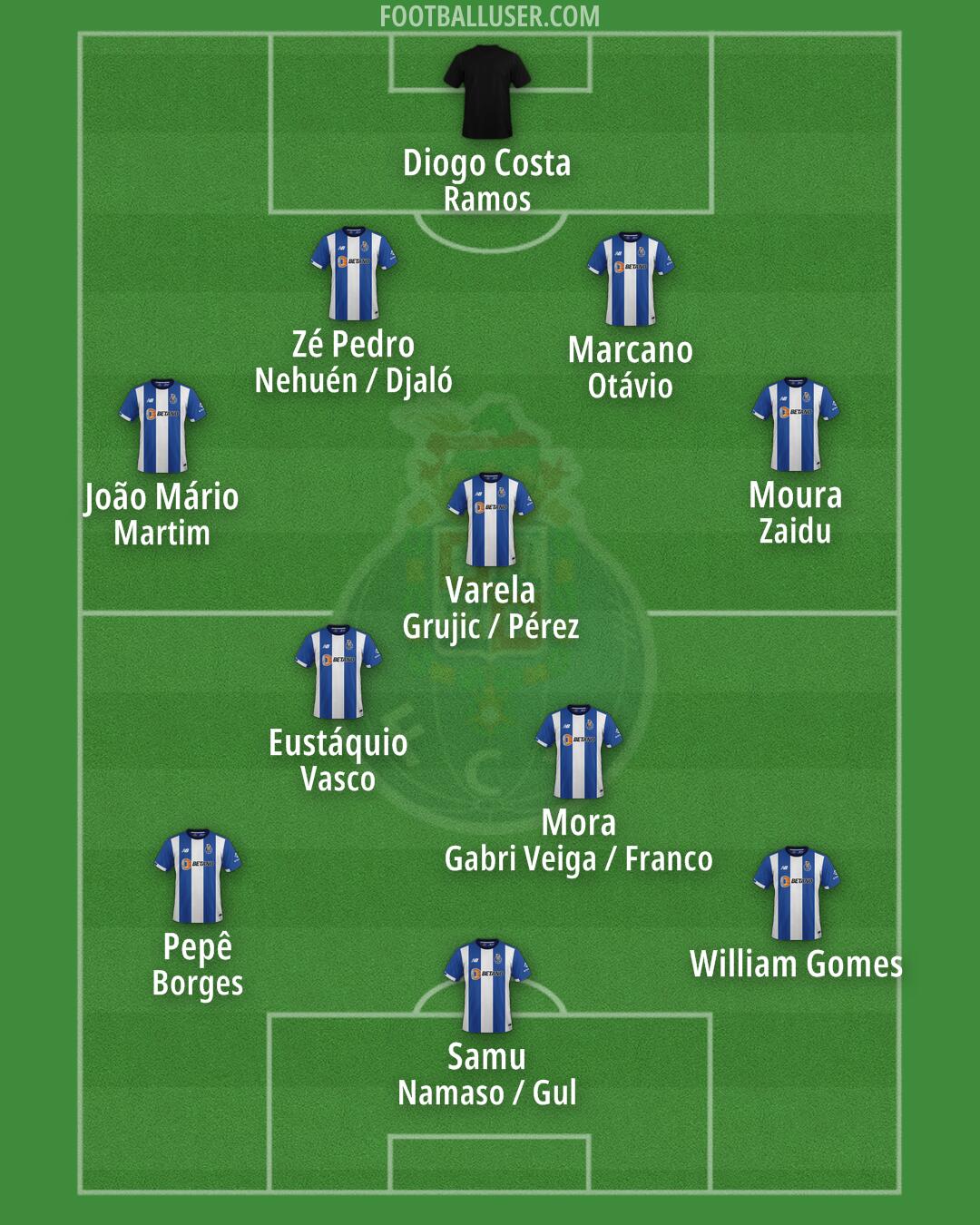
Diogo Costa (Ramos) · Zé Pedro (Nehuén / Djaló) · Marcano (Otávio) · Moura (Zaidu) · João Mário (Martim) · Varela (Grujic / Pérez) · Mora (Gabri Veiga / Franco) · Eustáquio (Vasco) · Pepê (Borges) · William Gomes · Samu (Namaso / Gul)FC Porto relies on a high press and quick verticality within a 5-2-3 formation. This lineup is built to win the ball high up the pitch and strike immediately before the opposition can settle. The goal is to use wide areas to stretch the defence and create chaos in transition.
Diogo Costa starts in goal to organize the back line and play short from the back. The defensive unit operates as a back three with Varela acting as the central man to win headers and command the area. Zé Pedro sits as the right centre-back to cover space, while Marcano holds the left side as a ball playing defender. The wide defenders, João Mário at right wing back and Moura at left wing back, provide the main width. They must track back to form a five man line when defending deep, but they also push high to support the attack.
The midfield works as a double pivot to control the center of the pitch. Eustáquio and Mora occupy the two central roles, acting as the engine room to connect the defence to the front three. Mora helps to shield the defence while Eustáquio looks to carry the ball forward into the half spaces. These two players must win the second ball and ensure they do not get bypassed during transitions. They are responsible for recycling possession and ensuring the team stays compact when the opposition tries to play through the middle.
In the attacking phase, FC Porto uses three attackers to pin the opposition back line. Samu operates as a lone striker to hold up the ball and link play with the midfielders. On the flanks, Pepê acts as an inverted winger on the right to cut inside and create chances, while William Gomes stays wide on the left to provide crosses. This front three is designed to press in pairs from the front to force a long ball from the opposition. The movement creates constant runs in behind and allows the wing backs to overlap the winger.
This formation offers significant tactical advantages through wide overloads and defensive solidity. When João Mário and Pepê push forward, they create a numerical superiority on the right flank to pull defenders out of position. The ability to shift from a back five to a front three allows the team to stay compact when defending and strike with speed of transition once the ball is won.
The 5-2-3 formation provides a robust defensive base while maintaining a dangerous presence in the final third. It is best suited for games against teams that play with high lines or struggle to deal with intense pressing.