
FC Porto Football Formation
 August 28, 2025


Starting Lineup
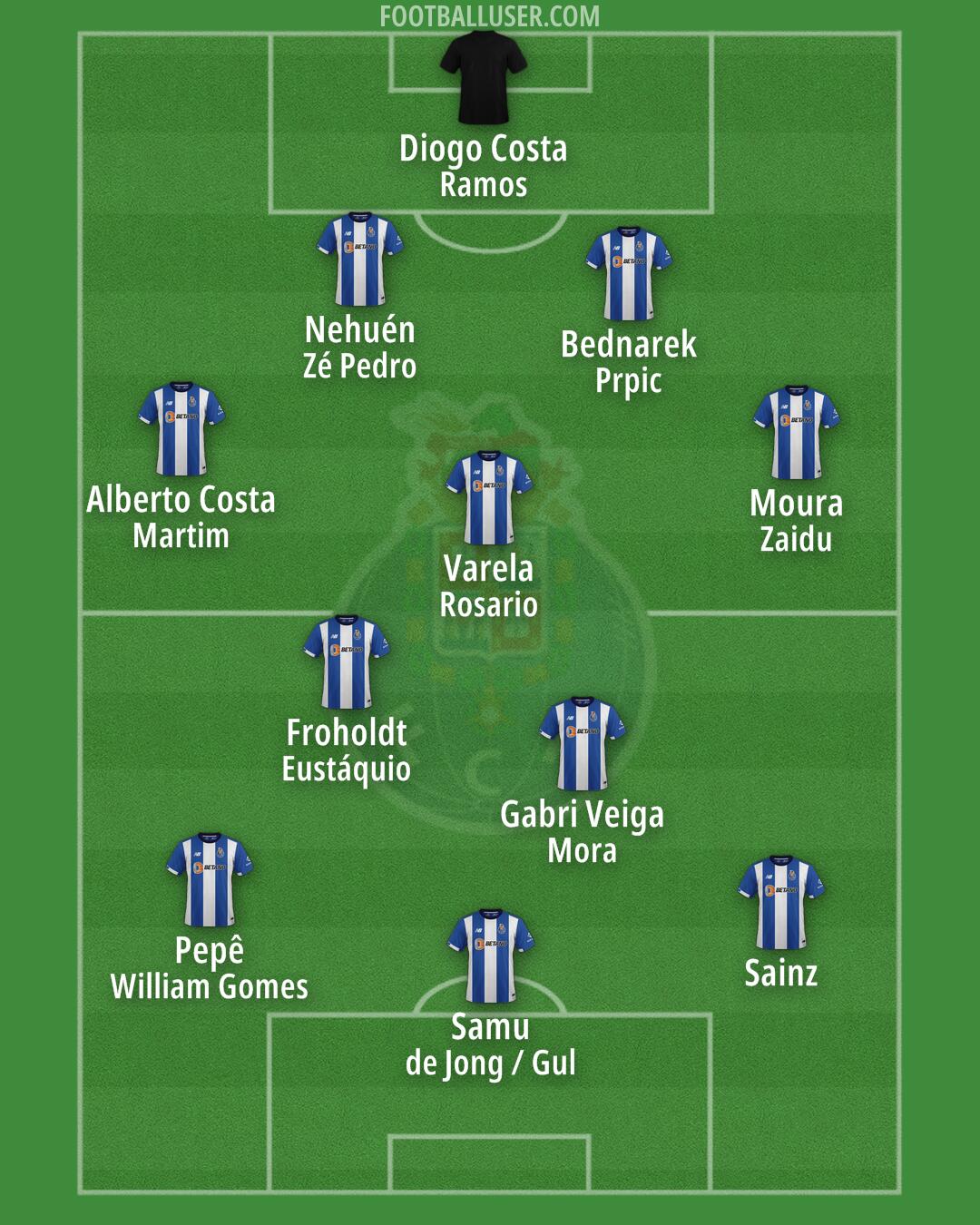
Diogo Costa (Ramos) · Nehuén (Zé Pedro) · Bednarek (Prpic) · Moura (Zaidu) · Alberto Costa (Martim) · Varela (Rosario) · Froholdt (Eustáquio) · Gabri Veiga (Mora) · Pepê (William Gomes) · Sainz · Samu (de Jong / Gul)FC Porto plays with a focus on defensive stability and quick transitions, utilizing a 5-2-3. This lineup is built to sit deep and absorb pressure before hitting the opponent on the break. The team aims to stay compact to make it difficult for opponents to play through the middle.
Diogo Costa guards the net as the last line of defense. The defensive unit operates as a back five with Varela acting as the central anchor to hold the line. Nehuén and Bednarek sit on either side of him to cover the zone and win the second ball. Alberto Costa and Moura work as attacking wing backs, providing width and tasked to track back when the team loses possession. They push high to support the attack but also drop to form a narrow defensive block when the opposition has the ball.
The midfield consists of a double pivot with Froholdt and Gabri Veiga. These two players must shield the defense and work to win it back high up the pitch. Froholdt looks to recycle possession and connect the defensive and attacking lines. Gabri Veiga is able to carry the ball forward and arrive late into the box to add an extra threat. This pairing is central to how the team moves from a defensive stance into a vertical attack.
Up front, the team uses three attackers to stretch the defense. Samu acts as the focal point, playing as a pressing centre-forward to pin the last defender. Pepê and Sainz play as wide attackers, with Pepê looking to cut inside and Sainz looking to get to the byline and whip it in. The aim is to use the width provided by the wing backs to create overloads. The forwards work together to press the opposition back line, aiming to hit in behind on the transition.
A clear advantage of this FC Porto formation is the ability to create wide overloads. When Alberto Costa and Moura push up, they create numerical superiority against opposition full backs. Another strength is the compactness when defending, as the five defenders and two midfielders squeeze the space in the center. This makes it hard for opponents to find passing lanes. The team also benefits from the speed of transition once the midfield wins the ball.
This 5-2-3 formation relies on a strong defensive base and quick counter attacks. It is best suited for matches against teams that dominate possession, allowing FC Porto to exploit the spaces left behind.