
Milan Football Formation
 September 2, 2025


Starting Lineup
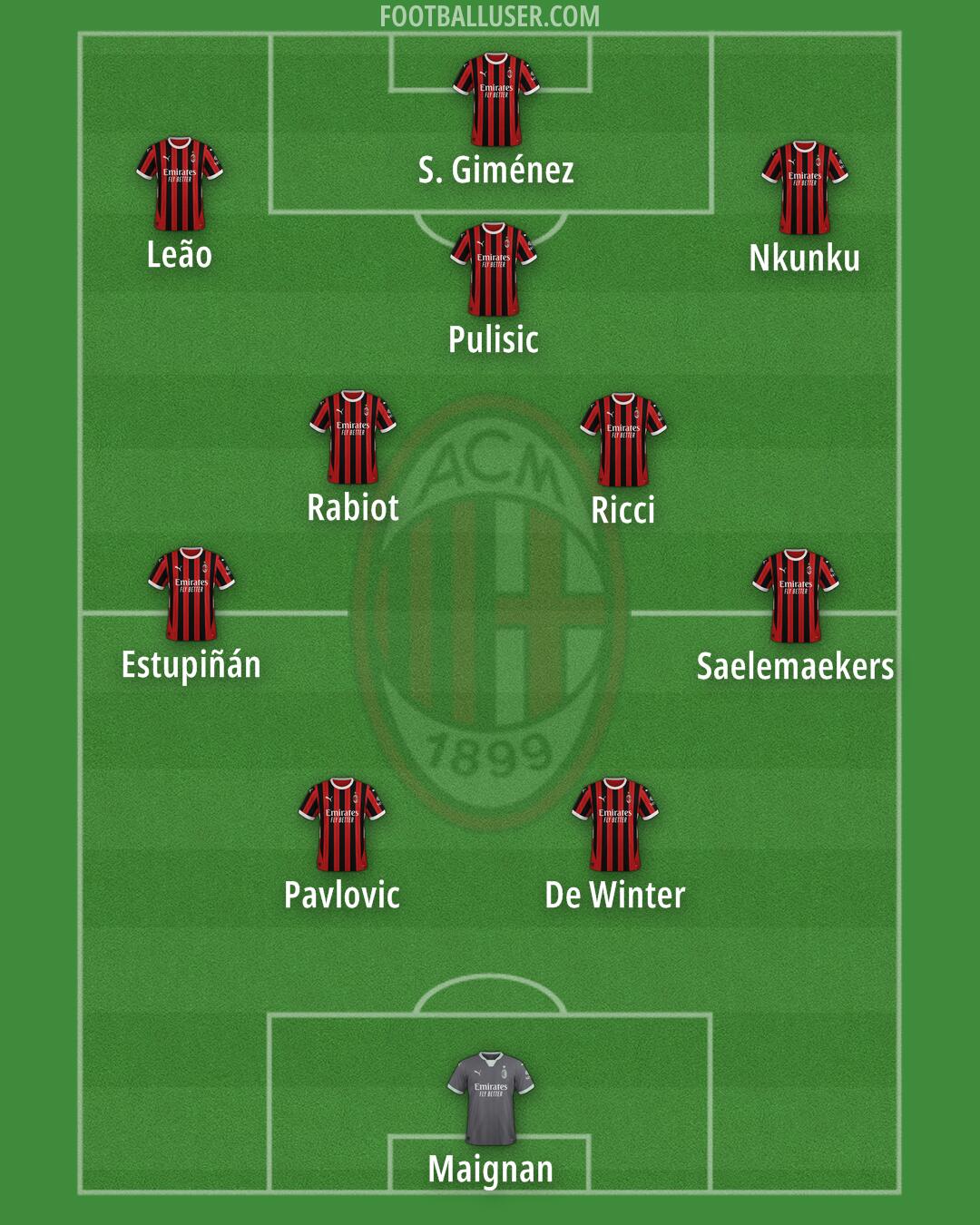
Estupiñán · De Winter · Pavlovic · Saelemaekers · S. Giménez · Leão · Pulisic · Nkunku · Rabiot · Ricci · MaignanAiming for a high press and verticality, Milan utilizes a 2-5-3. This formation is built to play an aggressive game that seeks to win the ball back high up the pitch. By pushing several players into advanced positions, the team looks to dominate the central areas and overwhelm the opposition. This lineup focuses on constant pressure to prevent the opponent from building their own attacks.
Maignan operates as the goalkeeper. The defensive unit relies on two central defenders, De Winter and Pavlovic, playing a high line. These ball playing defenders must be ready to cover and sweep behind the midfield if the opposition tries to hit in behind. They must stay disciplined to defend in a narrow block and prevent the opponent from exploiting the space left by the attacking players. The duo is tasked with winning the second ball and playing short from the back to start the build up.
The midfield features a five man unit to control the pitch. Saelemaekers and Estupiñán play on the edges of this block to cover the wide areas and provide width. Ricci and Rabiot work in the center to win the second ball and progress the ball through the thirds. Pulisic acts as an attacking ten behind the striker to link the midfield and the attack. This group works to recycle possession, play through the lines, and ensure the team can transition quickly once the ball is won.
The front line consists of three attackers. Leão plays on the left as an inverted winger to cut inside and create space for others. Nkunku occupies the right flank to stretch the defence and pull defenders away from the center. S. Giménez acts as a central striker to lead the press from the front and find the feet of the midfielders. This combination is designed to create runs in behind and allow players to combine in tight spaces to break the line.
One major advantage of this Milan lineup is the numerical superiority in the midfield. With five players, the team can easily spread wide and control the tempo of the game. The coordination of the group also allows them to press in coordinated waves to force a long ball from the opposition. This formation makes it very difficult for opponents to find passing lanes through the middle.
This formation relies on intense pressure and quick vertical play. It is best suited for facing teams that struggle to play short from the back or cannot handle high intensity.