
Napoli Football Formation
 September 2, 2025


Starting Lineup
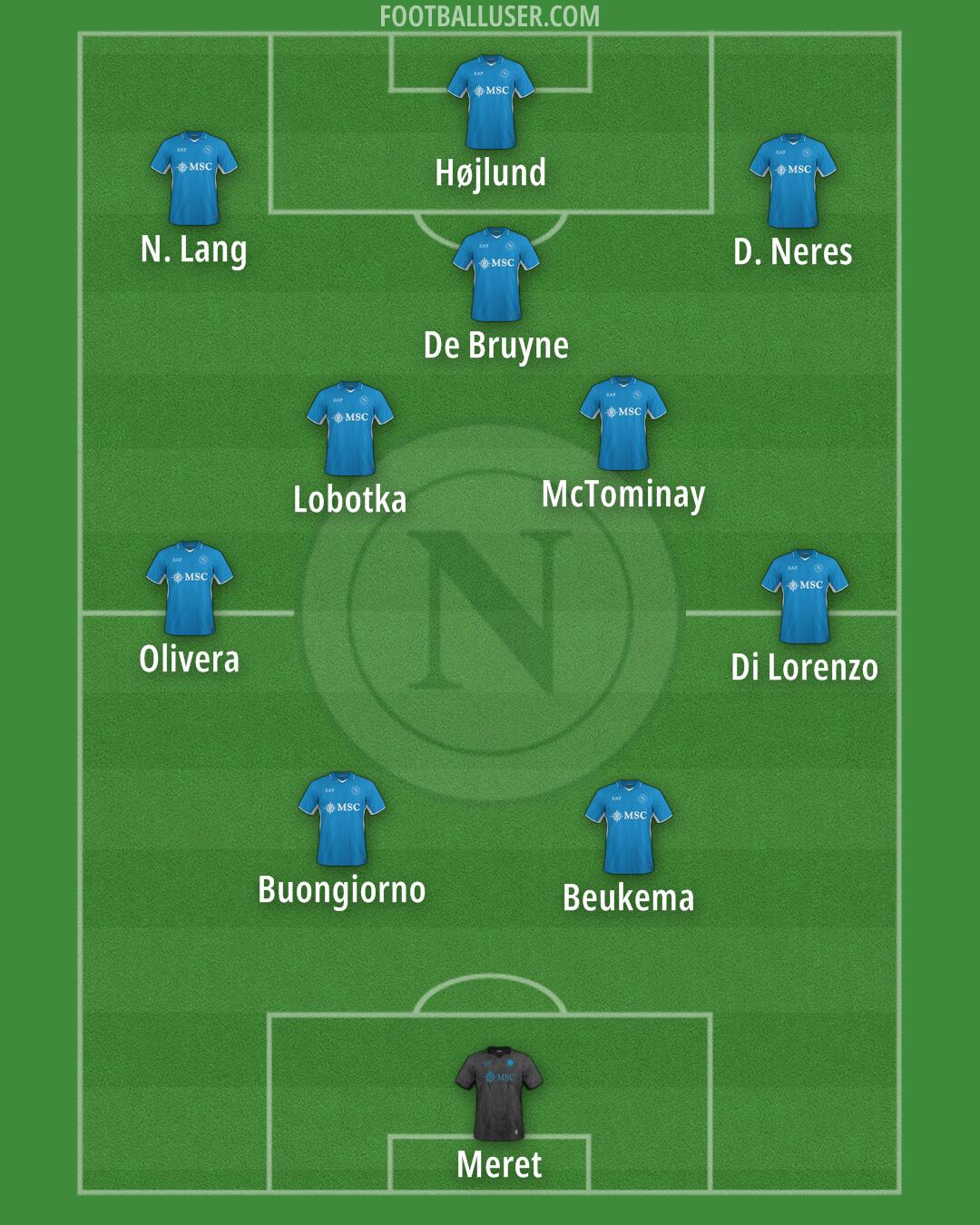
Olivera · Di Lorenzo · Højlund · D. Neres · N. Lang · De Bruyne · Lobotka · McTominay · Buongiorno · Beukema · MeretNapoli operates with a high pressing 2-5-3 formation. This lineup aims to control the game through central dominance and verticality. The team seeks to win the ball high up the pitch and strike quickly to catch the opposition off guard. Every player works to keep the unit compact when they lose possession to prevent counter attacks.
Meret stays between the posts while Beukema and Buongiorno form a narrow two man back line. These central defenders must play out from the back and step up to squeeze the space in the middle. They function as ball playing defenders who are prepared to cover the large gaps left by the aggressive midfield. The unit must stay compact to prevent being split by direct passes or runners.
The midfield contains five players who connect the defense to the attack. Di Lorenzo and Olivera sit as a double pivot to shield the two defenders and protect the center. Lobotka stays central to recycle possession and link the play. McTominay drives forward with the ball and makes late runs into the box to support the front line. De Bruyne acts as the attacking ten, using his passing range and set piece delivery to break the line and find attackers in dangerous positions.
Three players work in close combinations in the attack. Højlund serves as the central striker, using his strength to hold up the ball and make runs in behind. N. Lang and D. Neres provide width as wingers who look to cut inside and create space for others. They press from the front to force a long ball and aim to win the second ball in the attacking third. Such movement is designed to pull the defenders out of position and allow for runs in behind.
A primary advantage of this formation is the numerical superiority in the midfield. By placing five players in the center, Napoli can dominate possession and find players through the lines. The team also benefits from a high level of intensity during the transition. This allows them to hit in behind on the transition and exploit spaces left by an advancing opponent. They can quickly switch play to catch a defense out of position.
This 2-5-3 formation is a risky and rewarding system built for heavy attacking pressure. It is best used against teams that struggle to deal with central overloads and rapid vertical play.