
Japan National Football Team Formation
 September 6, 2025
 NK_Leonardoburst


Starting Lineup
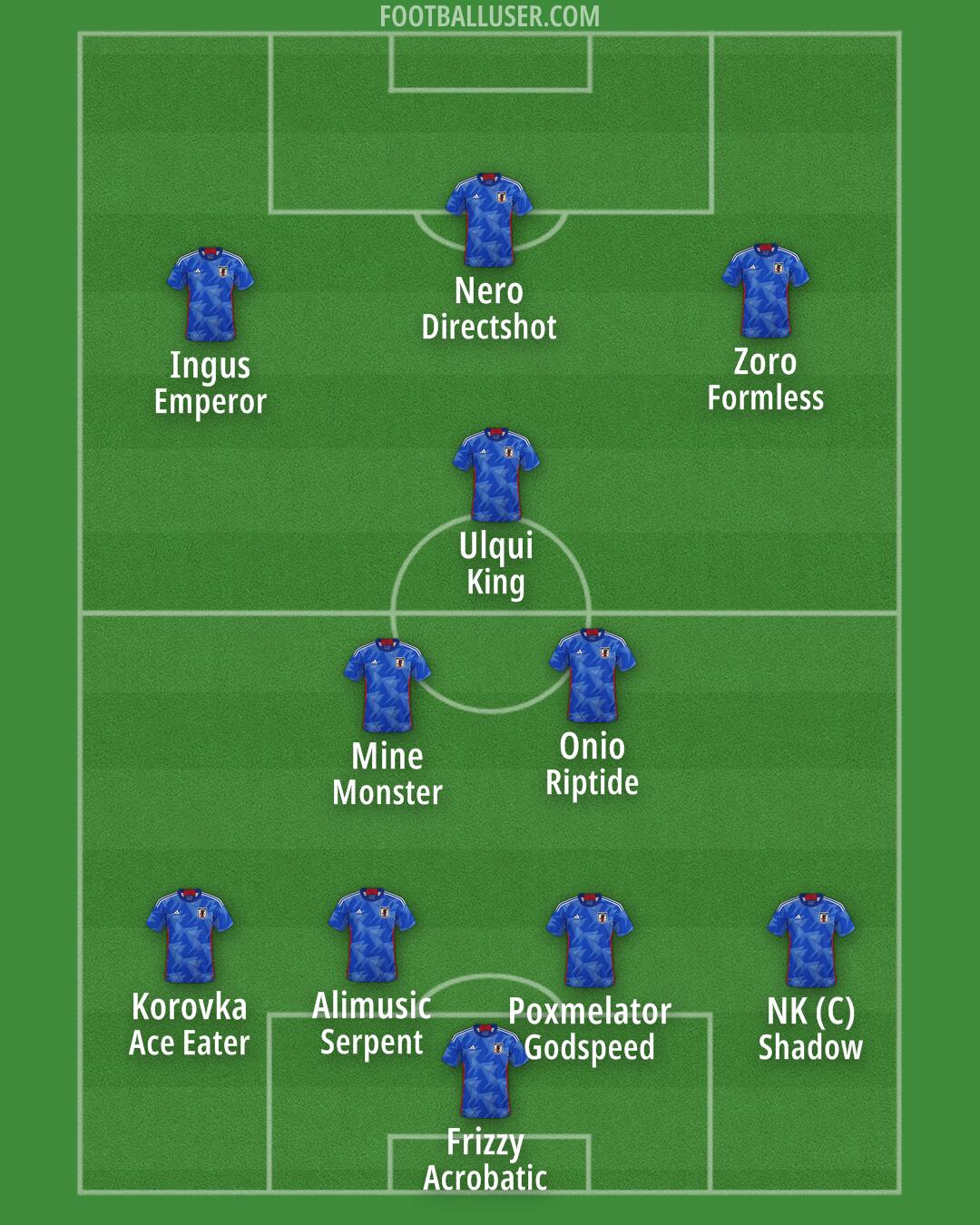
Frizzy (Acrobatic) · Alimusic (Serpent) · Korovka (Ace Eater) · Poxmelator (Godspeed) · NK (C) (Shadow) · Onio (Riptide) · Nero (Directshot) · Zoro (Formless) · Ingus (Emperor) · Mine (Monster) · Ulqui (King)Japan focuses on a high press and quick transitions using a 4-3-3. This formation seeks to win the ball high up the pitch and use the width of the field to stretch the opposition. The lineup is built to press in waves and use direct movements to catch opponents out of position.
Frizzy operates between the posts to organize the defensive unit. The back line functions as a flat back four that can step up to set the offside trap. NK (C) acts as the right back and provides balance while Alimusic and Poxmelator serve as the central defenders. Alimusic and Poxmelator must stay compact to defend zonally and cover the space behind the full backs. Korovka plays at left back and can push forward to add numbers in the attacking phase.
The midfield uses a three-man midfield with a carrier to progress through the thirds. Onio and Mine occupy the central roles to control the tempo and protect the defensive line. Mine works to shield the defense while Onio looks to carry the ball forward and connect the lines. Ulqui plays as an attacking ten behind the striker to find pockets of space. Ulqui works to link the midfield to the front three by playing through the lines.
Japan uses three attackers across the front to maintain constant pressure. Nero acts as a pressing centre-forward to harass the opposition back line. Ingus and Zoro play as wide wingers who cut inside to create goal scoring chances. Ingus and Zoro provide the width to spread the defence before looking to cut inside. The front three combine in tight spaces to create runs in behind the defenders.
This formation offers the ability to press high in coordinated waves to win the ball back near the opponent's goal. Japan can also use wide overloads when the full backs push up to support the wingers. The presence of Ulqui allows for numerical superiority in the attacking third.
Japan relies on an aggressive pressing identity to dominate games. This 4-3-3 is best suited for facing teams that struggle to play out from the back under pressure.