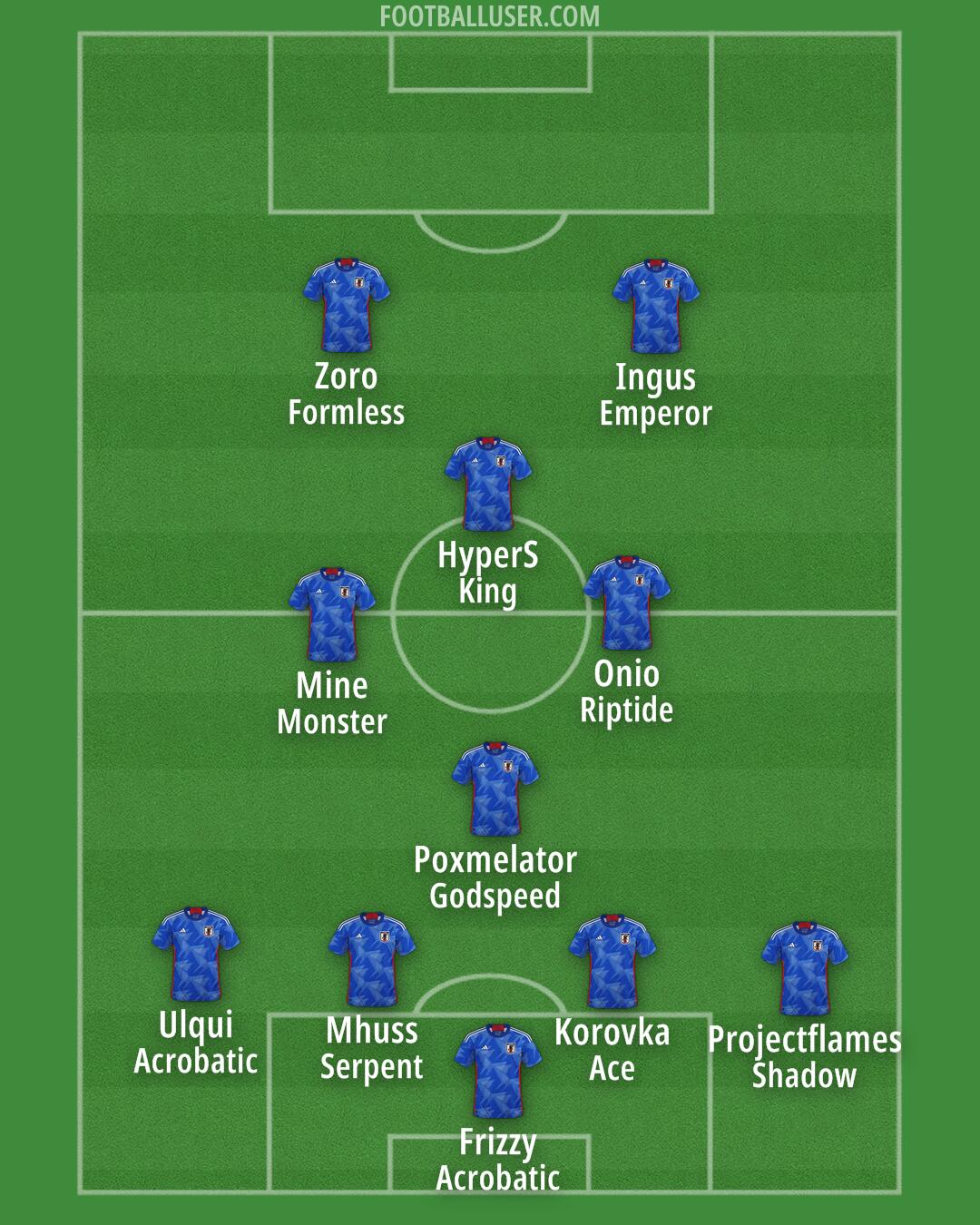

Japan National Football Team Formation
 September 6, 2025
 NK_Leonardoburst


Starting Lineup
Frizzy (Acrobatic) · Mhuss (Serpent) · Korovka (Ace) · Poxmelator (Godspeed) · Mine (Monster) · Onio (Riptide) · Projectflames (Shadow) · Ulqui (Acrobatic) · HyperS (King) · Ingus (Emperor) · Zoro (Formless)Japan prioritizes a defensively solid identity using a 5-3-2 formation. This lineup is built to absorb pressure and strike quickly through transitions. To deny space between the lines, the team seeks to stay compact and force opponents into wide areas.
Frizzy guards the goal and organizes the unit from the back. The defense operates with a back three where Poxmelator sits centrally to sweep behind the line and cover the deep space. Korovka and Mhuss act as the wide centre-backs to cover the channels and win headers. Projectflames and Ulqui play as attacking wing backs to provide width. These defenders push high to join the attack but must track back to help the defensive block when the ball is lost.
A three-man midfield is used to control the center of the pitch. Onio and Mine sit in the middle to shield the defense and win the second ball. They look to recycle possession and connect the defensive and attacking lines. HyperS acts as an attacking ten who plays behind the forwards. This player works to find pockets of space to play through the lines and support the forward movement.
Two forwards in a partnership lead the attack. Zoro and Ingus push the line high to stretch the defense. Both players look to make runs in behind the opposition back line to catch them on the transition. They combine in tight spaces to pull defenders out of position. Projectflames and Ulqui provide width by overlapping the forwards to deliver early crosses or whip it in from the flanks to the strikers.
This formation provides clear tactical advantages. Japan can maintain great compactness when defending to deny central entries. Wide overloads are created through the movement of Projectflames and Ulqui. Such ability to hit in behind on the transition allows the team to counter at pace once the ball is won in the middle third.
Japan uses this 5-3-2 formation to remain a resilient and dangerous side on the break. Such a lineup is best suited for facing teams that dominate possession and leave space behind their defenders.