Man City Football Formation
 September 10, 2025


Starting Lineup
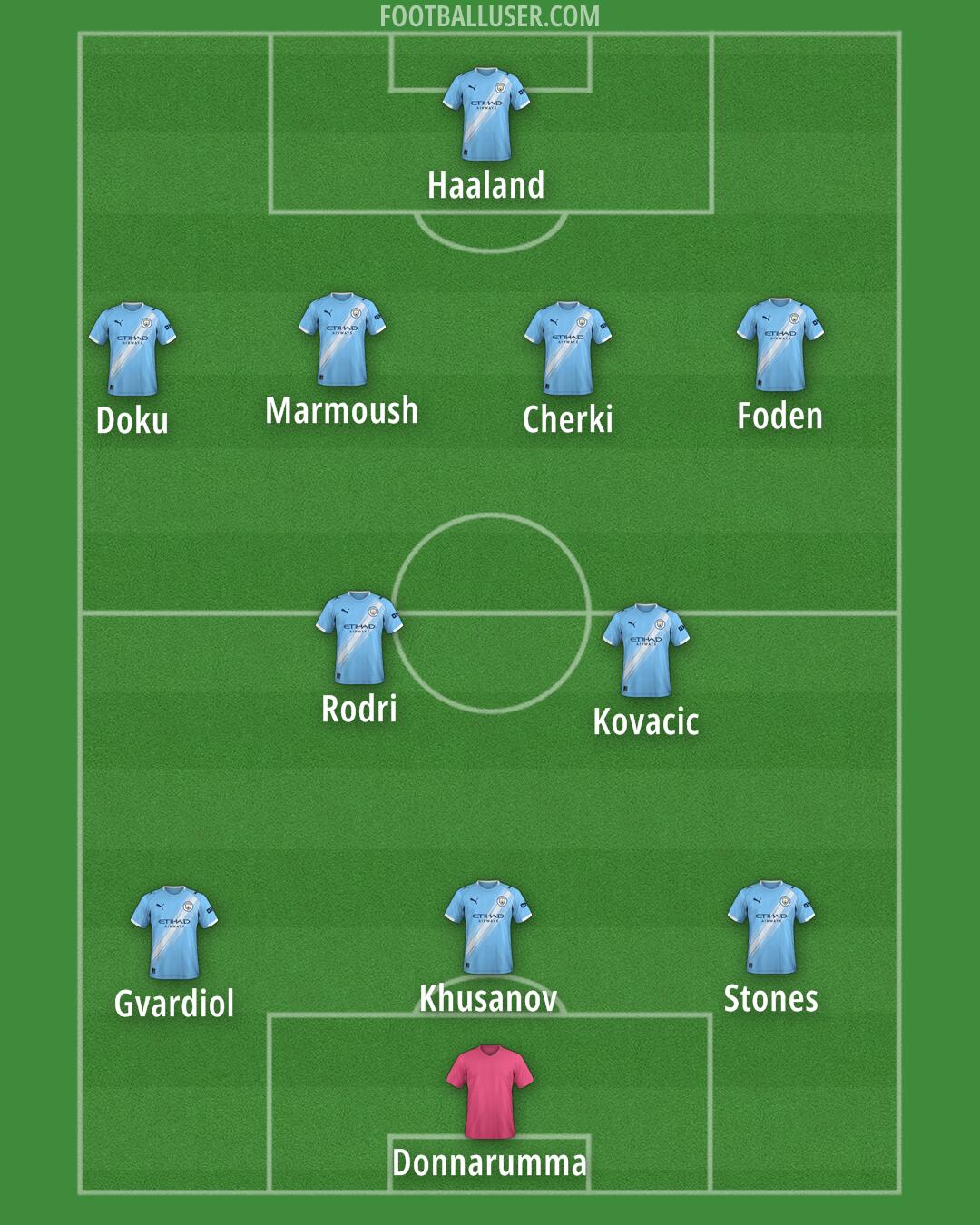
Donnarumma · Stones · Khusanov · Gvardiol · Rodri · Kovacic · Foden · Cherki · Marmoush · Doku · HaalandManchester City focuses on a defensive solidity that allows for rapid transitions in this 5-4-1 formation. The lineup is built to sit deep and absorb pressure before hitting the opposition with pace. This formation aims to deny the turn to attackers and force the opponent into difficult long balls.
Donnarumma stands between the posts to command the area and sweep behind the line. The back line operates as a narrow defensive block using a back five to protect the central zone. Khusanov and Kovacic act as the central pillars while Rodri plays as a ball playing defender to help play out from the back. Gvardiol acts as an attacking wing back on the left to provide width, while Stones plays as a defensive wing back on the right to maintain a compact formation. The defensive unit works to squeeze the space and protect the goalkeeper.
A flat four man midfield occupies the center of the pitch to protect the back five. Marmoush and Cherki form a central pairing where Marmoush works to shield the defense and Cherki looks to carry the ball forward. Doku and Foden operate on the flanks to provide width and help win the ball high up the pitch. This midfield group must work to pick up runners and ensure they do not get bypassed during transition. They link the defense to the attack by recycling possession through the wide players.
The attack relies on a lone striker in Haaland who acts as a target man to hold up the ball and pin the last defender. The team builds attacks through the wide players, with Doku and Foden looking to cut inside and find the feet of the striker. Haaland uses his aerial strength to win the header when crosses arrive from Gvardiol or Stones. The formation aims to create runs in behind by using the speed of the wide men to stretch the defense and find space between the lines.
This 5-4-1 formation offers extreme compactness when defending in a mid-block. Man City can use the speed of transition to catch opponents out of position as they move forward. The width provided by Gvardiol and Stones allows for wide overloads when the team moves into an attacking phase. This creates chances to whip it in or deliver early balls to the target man.
This formation is a resilient way to play against teams that control possession. It is best used to frustrate dominant sides and strike quickly on the break.