United States National Soccer Team Formation
 September 11, 2025


Starting Lineup
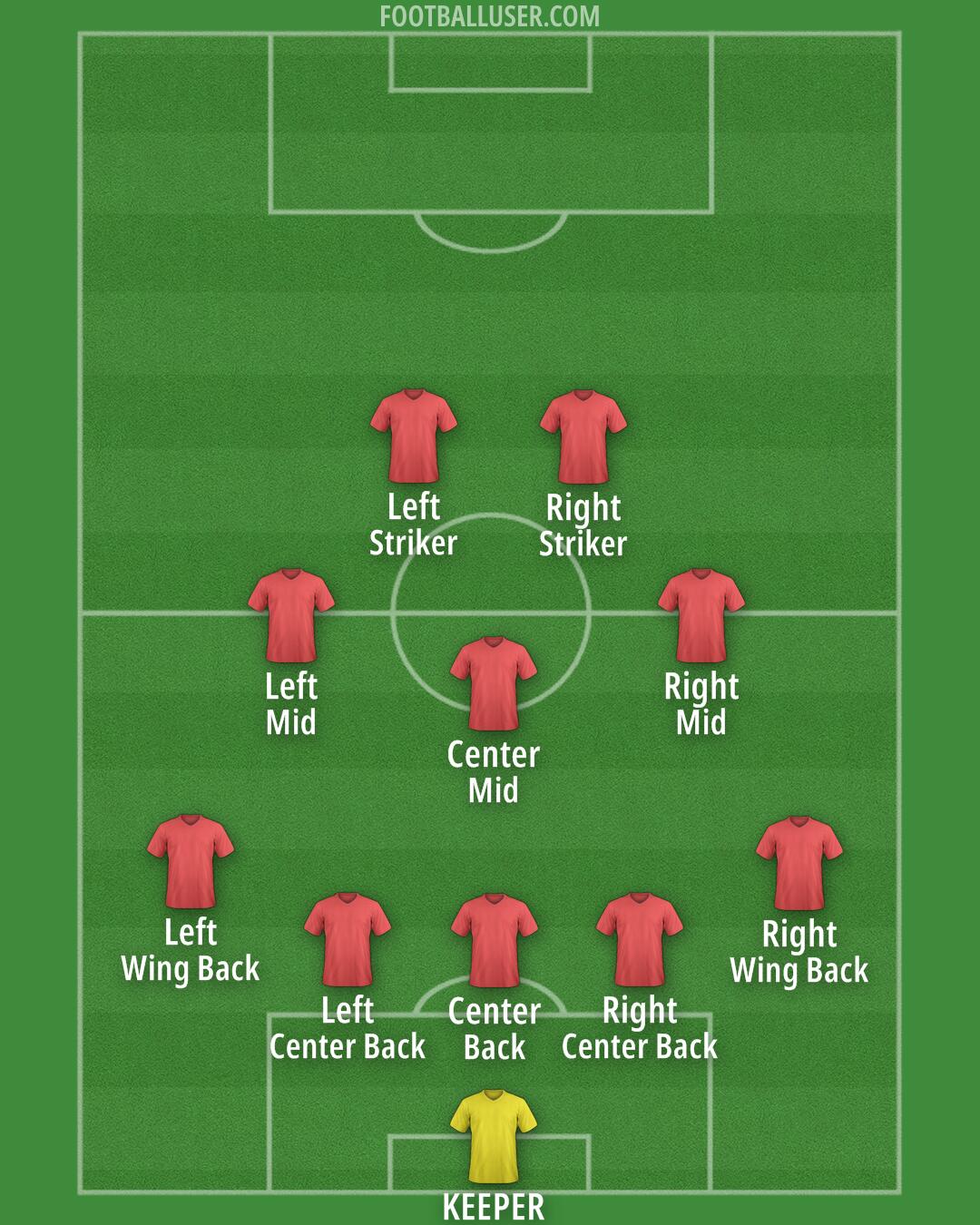
Center (Back) · Left (Center Back) · Right (Striker) · KEEPER · Left (Striker) · Right (Wing Back) · Center (Mid) · Right (Center Back) · Right (Mid) · Left (Wing Back) · Left (Mid)A defensive solidity and heavy reliance on rapid transitions defines United States in this 5-3-2 formation. The team aims to sit deep, soak up pressure, and then hit opponents in behind using the pace of their front two. This formation is built to play with a low block that is very difficult to break down, looking to absorb energy before launching attacks.
The KEEPER starts the defensive unit, supported by a back five that provides massive coverage across the pitch. The three central defenders work as a cohesive block, with the middle defender acting as a sweeper to cover space behind the others. The RCB and LCB provide additional width to the central line, while the RWB and LWB act as attacking wing backs. These wing backs are required to track back and defend the flanks while also providing the width needed during transitions. This lineup allows the team to defend zonally and maintain a narrow defensive block when the opposition has the ball.
In the center of the pitch, a three-man midfield acts as the engine room to link the defense and the attack. The CM sits in front of the back three to shield the defense and win the second ball. To the left and right, the LCM and RCM operate as box to box players who must press aggressively to win the ball high when possible. These midfielders are responsible for recycling possession and finding the forwards quickly once the ball is recovered. They must also cover the wide areas when the wing backs are caught high up the pitch.
The attacking structure relies on two forwards working in a partnership to stretch the opposition. The LS and RS function as a duo that can either play as a target man and a runner or two mobile attackers. They press the opposition back line to force a long ball, which the central defenders can then aim to win. When United States transitions, the RS and LS look to make runs in behind the defenders to receive long passes. The wing backs provide the necessary width to create cutbacks from the byline once they reach the final third.
This 5-3-2 formation offers clear tactical advantages through its extreme compactness when defending. The heavy presence in the box makes it very hard for opponents to find space in central areas. Additionally, the team can create wide overloads when the RWB and LWB push up to join the attack, catching the opposition out of position. This setup allows for a very quick transition from a deep block to a vertical attack.
The United States formation focuses on defensive stability and punishing teams on the break. This lineup is best suited for matches against teams that dominate possession and leave space behind their defensive line.