
Vasco da Gama Football Formation
 September 19, 2025
 Pretorian


Starting Lineup
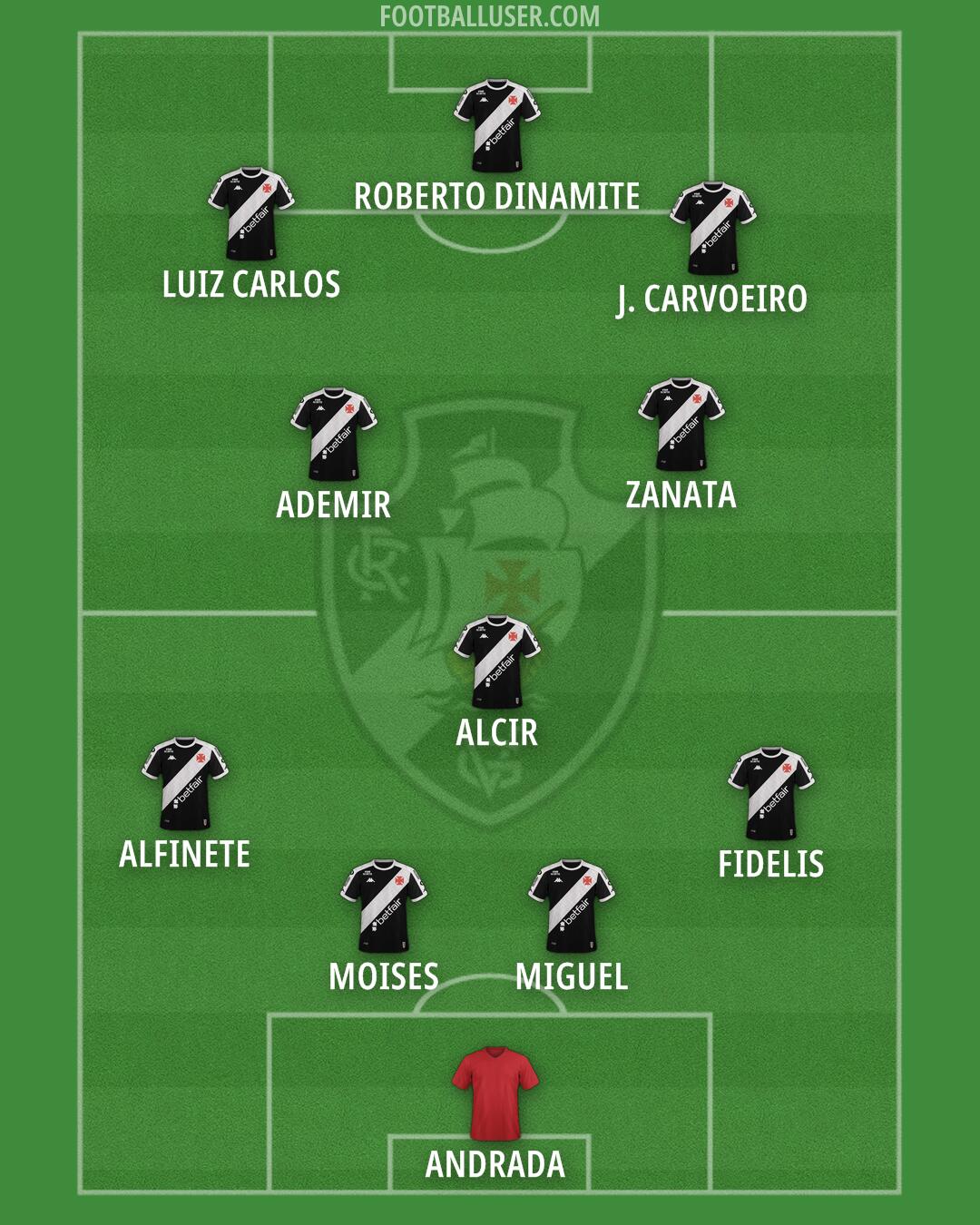
ANDRADA · FIDELIS · MIGUEL · MOISES · ALFINETE · ALCIR · ZANATA · ADEMIR · J. CARVOEIRO · LUIZ CARLOS · ROBERTO DINAMITEVasco da Gama aims to win the ball high up the pitch and strike quickly through a heavy vertical style of play using a 5-2-3. This formation is built to absorb pressure and use the wide spaces left behind the opposition back line. The lineup relies on quick transitions to catch opponents out of position before they can recover.
In goal, Andrada acts as the last line of defense to sweep behind the defensive unit. The back five consists of Alcir in the center with Moises and Miguel acting as the wide center backs. Moises provides coverage while Miguel works to intercept passes. The wing backs, Fidelis and Alfinete, are tasked to push high to provide width but must track back to form a narrow defensive block when the team sits deep. This unit works to keep the distance between the lines small and force the opponent to go wide.
The midfield operates as a double pivot with Ademir and Zanata controlling the central zone. Ademir works to shield the defense and win the second ball, while Zanata acts as a carrier to drive forward with the ball. They must connect the defensive unit to the attacking line by recycling possession or playing through the lines. This pair needs to stay compact to deny the opposition space in the middle and ensure the team can transition from a mid-block into a rapid attack.
Vasco da Gama uses three attackers across the front to stretch the defense. Roberto Dinamite acts as the central striker to hold up the ball and lead the press from the front. On the flanks, Luiz Carlos and J. Carvoeiro operate as wide wingers who look to cut inside or get to the byline to deliver crosses. Their movements create runs in behind and force the opposing full backs into difficult one on one situations. The attack works in combinations to pull defenders out of position.
One major advantage for Vasco da Gama is the ability to create wide overloads when Fidelis and Alfinete join the wingers in the final third. The formation also offers great compactness when defending a lead, making it hard for opponents to find gaps. The speed of transition allows the team to punish teams that commit too many men forward.
This 5-2-3 lineup is a direct and reactive system designed to exploit space on the break. It is best suited for facing teams that play with a high defensive line and leave gaps in behind.