Aston Villa Football Formation
 September 22, 2025


Starting Lineup
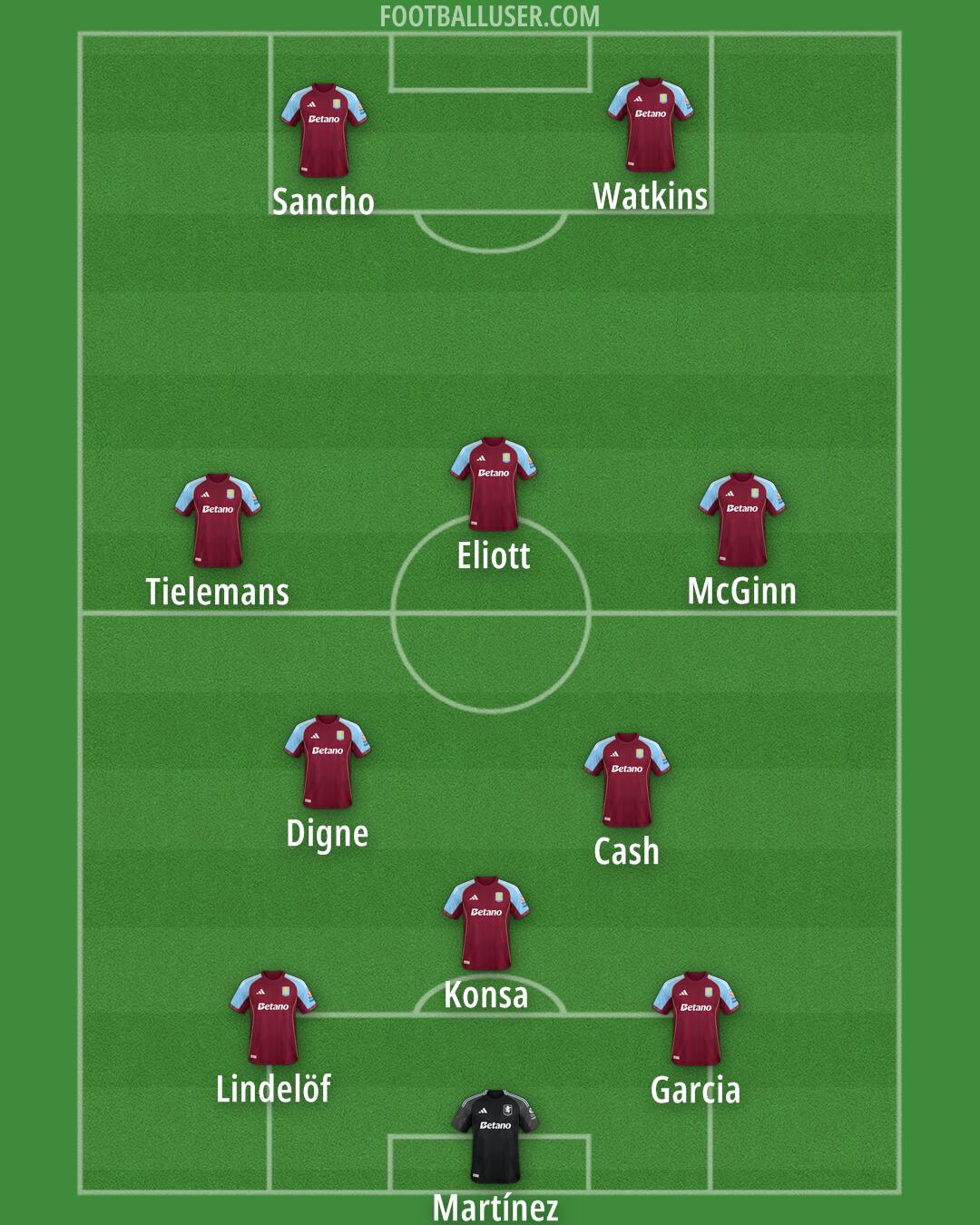
Martínez · Lindelöf · Garcia · Sancho · Watkins · Tielemans · McGinn · Eliott · Konsa · Digne · CashAston Villa aims to control matches through a compact defensive unit and rapid transitions in a 5-3-2. This formation is built to sit in a mid-block, squeeze the space between lines, and use the width of the pitch to spring forward once the ball is won.
Martínez stays between the posts to command his area and organize the back five. The defense operates with a staggered line where Digne acts as the left centre-back, providing coverage and left-footed balance. Cash plays as the right centre-back, while Konsa sits in the middle to win the header and anchor the line. On the flanks, Garcia and Lindelöf act as attacking wing backs, pushing high to provide width and overlapping the midfielders when the team has the ball.
A three-man midfield provides the engine for the Aston Villa lineup. Tielemans sits deeper to recycle possession and play through the lines with his passing range. McGinn works hard to press in a mid-block and connects the defensive and attacking lines with his energy. Eliott operates alongside them to support the transition, often looking to carry the ball forward or make runs into the box to support the strikers. This trio works to shield the centre-backs and deny the turn to opposition playmakers.
The attack relies on a partnership of two forwards to stretch the opposition. Watkins plays as the right striker, using his speed to hit in behind on the transition and find space in the channels. Sancho plays as the left striker, often dropping into the hole to link up play and create space for the wing backs. They press from the front to force a long ball from the opposition, looking to win the second ball so the midfielders can immediately spread wide and attack.
One major advantage of this formation is the ability to create wide overloads when Garcia and Lindelöf push up. The team can also maintain compactness when defending, making it very hard for opponents to play through the middle. This setup allows the club to shift quickly from a narrow defensive block to a wide attacking presence.
This 5-3-2 formation provides a solid base for teams that want to defend deep and strike on the break. It is best suited for matches against dominant sides where absorbing pressure and hitting in behind is the priority.