Custom Team Football Formation
 September 27, 2025


Starting Lineup
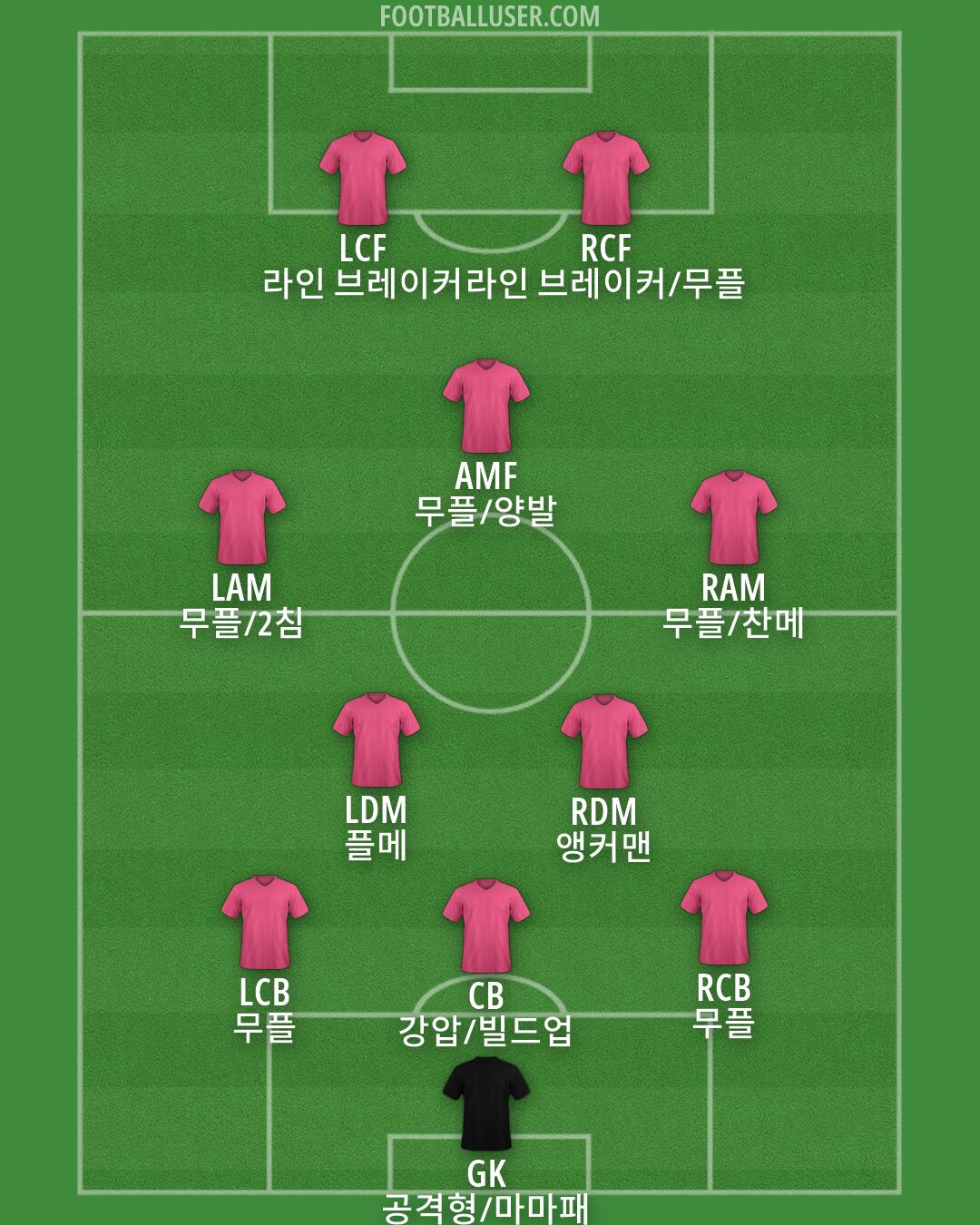
LCF (라인 브레이커) · RCF (라인 브레이커/무플) · AMF (무플/양발) · LAM (무플/2침) · RAM (무플/찬메) · LDM (플메) · RDM (앵커맨) · CB (강압/빌드업) · RCB (무플) · LCB (무플) · GK (공격형/마마패)A focus on defensive stability and rapid transition defines this lineup, utilizing a 5-3-2 formation. The team is built to sit in a compact block and strike quickly when the opposition loses control. By maintaining a narrow defensive unit, the team looks to absorb pressure before hitting the ball into space behind the opponent.
GK starts the build up from the back, acting as the first point of distribution. The defensive unit consists of a back five that can shift between a narrow bank of five and a more aggressive wing back system. CB sits centrally to command the area and sweep behind the line, while LCB and RCB operate as wide centre backs to cover the channels. LDM and RDM act as the deeper defensive anchors to protect the central zone, while the wing backs, LWB and RWB, provide the necessary width. The defensive unit works to stay close together to deny passing lanes through the middle.
The midfield operates as a three-man midfield with a carrier. LDM and RDM provide a double pivot to shield the defence and win second balls. LAM and RAM act as inverted eights, operating in the half spaces to connect the defensive and attacking lines. AMF sits higher up as an attacking ten, looking to find the feet of the strikers or arrive late into the box. This midfield group is tasked with pressing in a mid-block to force long balls and then recycling possession once the ball is won back.
In the final third, the team utilizes two forwards in a partnership. LCF and RCF work together to pin the last defender, often playing with one striker holding up the ball while the other looks for runs in behind. The attack relies on the movement of LAM and RAM to support the front two, creating combinations in tight spaces. When the team transitions, the LWB and RWB push high to provide width, allowing the forwards to exploit the central areas or receive cutbacks from the byline.
This formation offers the ability to press high in coordinated waves when the ball enters specific zones. It also provides great compactness when defending, making it very difficult for opponents to play through the middle. The tactical setup allows for quick transitions, using the speed of the front two to punish teams that overcommit.
This 5-3-2 formation is designed for a team that wants to remain hard to beat while exploiting space on the counter. It is best suited for matches against possession based teams that leave gaps behind their defensive line.