
MTK Football Formation
 September 28, 2025


Starting Lineup
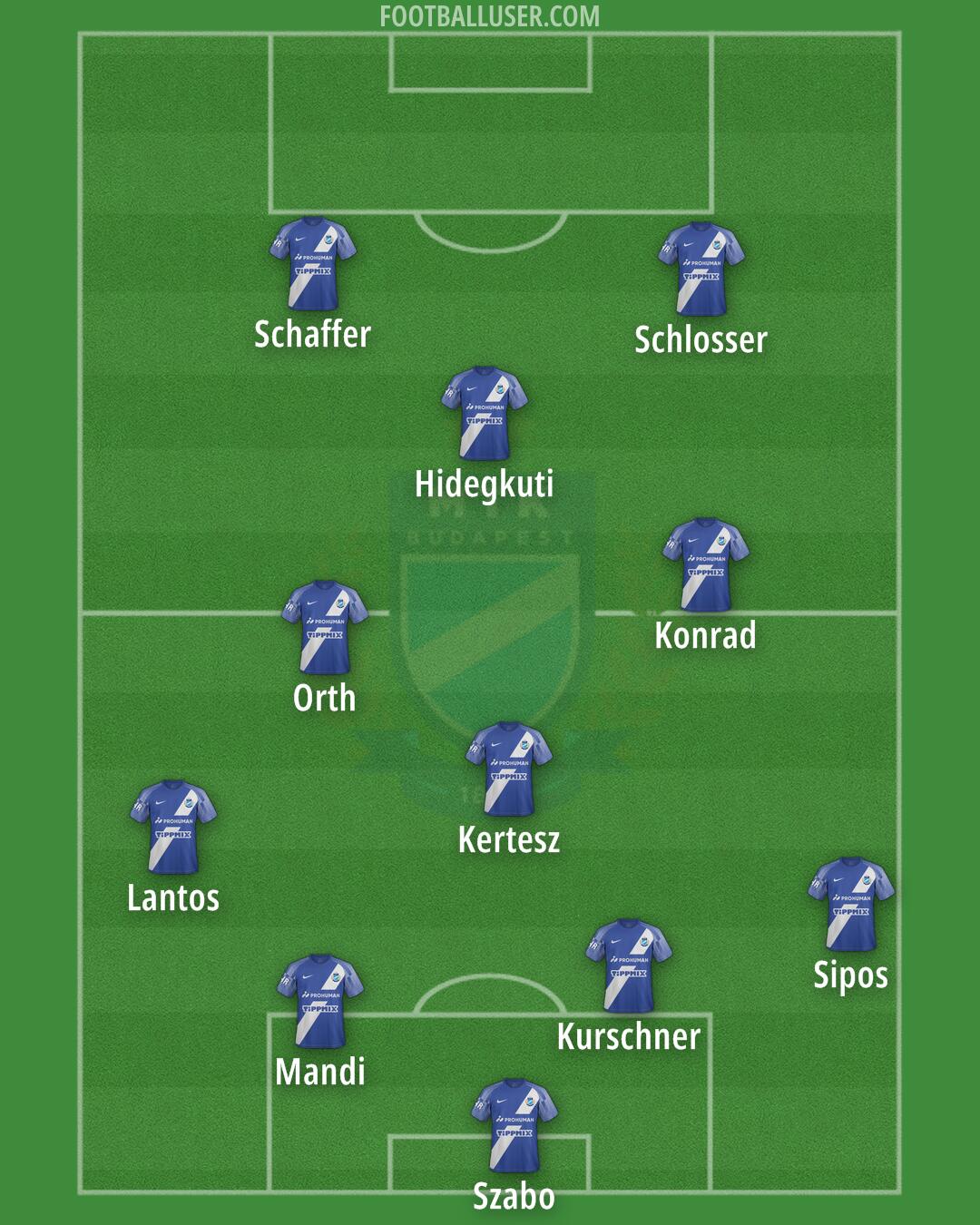
Szabo · Sipos · Mandi · Kurschner · Lantos · Kertesz · Konrad · Orth · Hidegkuti · Schlosser · SchafferMTK looks to sit deep and strike on the break using a 5-3-2. This lineup focuses on defensive solidity and fast transitions rather than high possession. The team works to remain compact and absorbs pressure before looking to hit the opposition in behind.
Szabo guards the goal as the lone goalkeeper. The defense forms a solid back five where Kertesz sits in the center to anchor the line. Mandi and Kurschner act as the left and right central defenders to cover the space in front of the middle man. Lantos plays as a left wing back to provide width and track back when needed. Sipos works on the right as a wing back to stretch the play or drop into a low block to help the defenders.
In the middle of the pitch, Konrad and Orth form a central pairing to win the second ball and protect the defense. They act as the engine to recycle possession and move the ball forward. Hidegkuti operates as an attacking ten in the hole to connect the midfield to the forwards. This three man group must work together to squeeze the space and deny the turn to opposition players. Hidegkuti looks to receive on the half turn to drive the team into the final third.
The attack features a two man partnership with Schaffer and Schlosser leading the way. Schaffer works as the main striker to hold up the ball, while Schlosser plays as a second striker to make runs in behind. The team builds attacks through the wide areas when Lantos and Sipos push up to provide depth. This creates opportunities for Schaffer and Schlosser to receive crosses or play one twos in the box. The forwards also press from the front to force a long ball from the opposition.
A key strength for MTK is the compactness when defending in a mid block. With five defenders and three midfielders, it is difficult for opponents to find gaps to play through the lines. Another advantage is the speed of transition. When the ball is won, the team can quickly spread wide to use the wing backs and isolate defenders in one on one situations.
This 5-3-2 formation is built to defend a lead or counter at pace. It is most effective against teams that play a high line and leave large spaces behind their defense.