Leeds Football Formation
 October 6, 2025


Starting Lineup
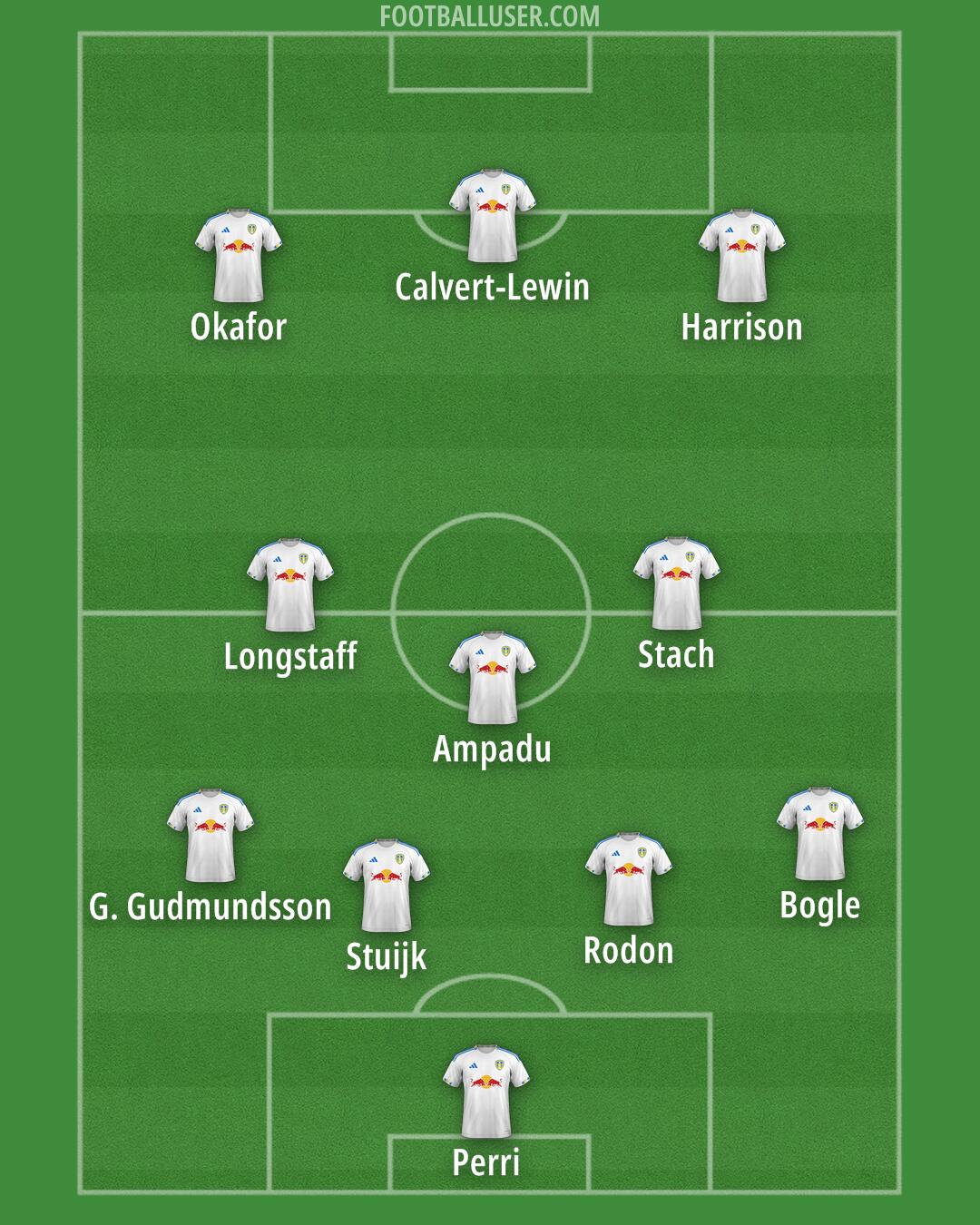
Perri · Ampadu · Stuijk · Rodon · G. Gudmundsson · Bogle · Longstaff · Stach · Okafor · Calvert-Lewin · HarrisonPrioritizing high intensity and direct verticality, Leeds play a 4-3-3 formation. The team looks to win the ball back quickly and push forward through the middle or out wide. This lineup is built to exploit transitions and put constant pressure on the opposition back line.
Perri acts as the last line of defense, standing behind a flat back four. Rodon and Stuijk operate as the central defenders, with Rodon providing aerial strength and Stuijk acting as a ball playing defender to start attacks. Bogle pushes up the right flank to provide width, while G. Gudmundsson covers the left side. When the team sits deep, this defensive unit stays compact to prevent passes through the middle.
The midfield operates with a single pivot system to control the center of the pitch. Ampadu sits in front of the defense to shield the back four and intercept passes. Longstaff and Stach play as the two central midfielders, with Longstaff driving forward into the box and Stach working to connect the lines. This group works to maintain control and ensure the team can transition from defense to attack without losing possession easily.
In the final third, Leeds use three attackers to stretch the opposition. Calvert-Lewin leads the line as a lone striker, using his physical presence to hold up the ball for others. Okafor and Harrison act as wide wingers, with Okafor looking to cut inside from the left and Harrison stretching the play from the right. The forwards press high, forcing mistakes from the opponent to create quick chances in the attacking third.
Leeds possess several tactical advantages through this specific lineup. The presence of Calvert-Lewin allows the team to win long balls and create second balls for the advancing midfielders. They also create wide overloads when Bogle and Harrison combine on the right flank. This allows the team to isolate wide players in one on one situations to break down compact blocks.
This 4-3-3 formation creates a relentless attacking presence through high pressing and quick transitions. It is best suited for matches against teams that struggle to play out from the back under heavy pressure.