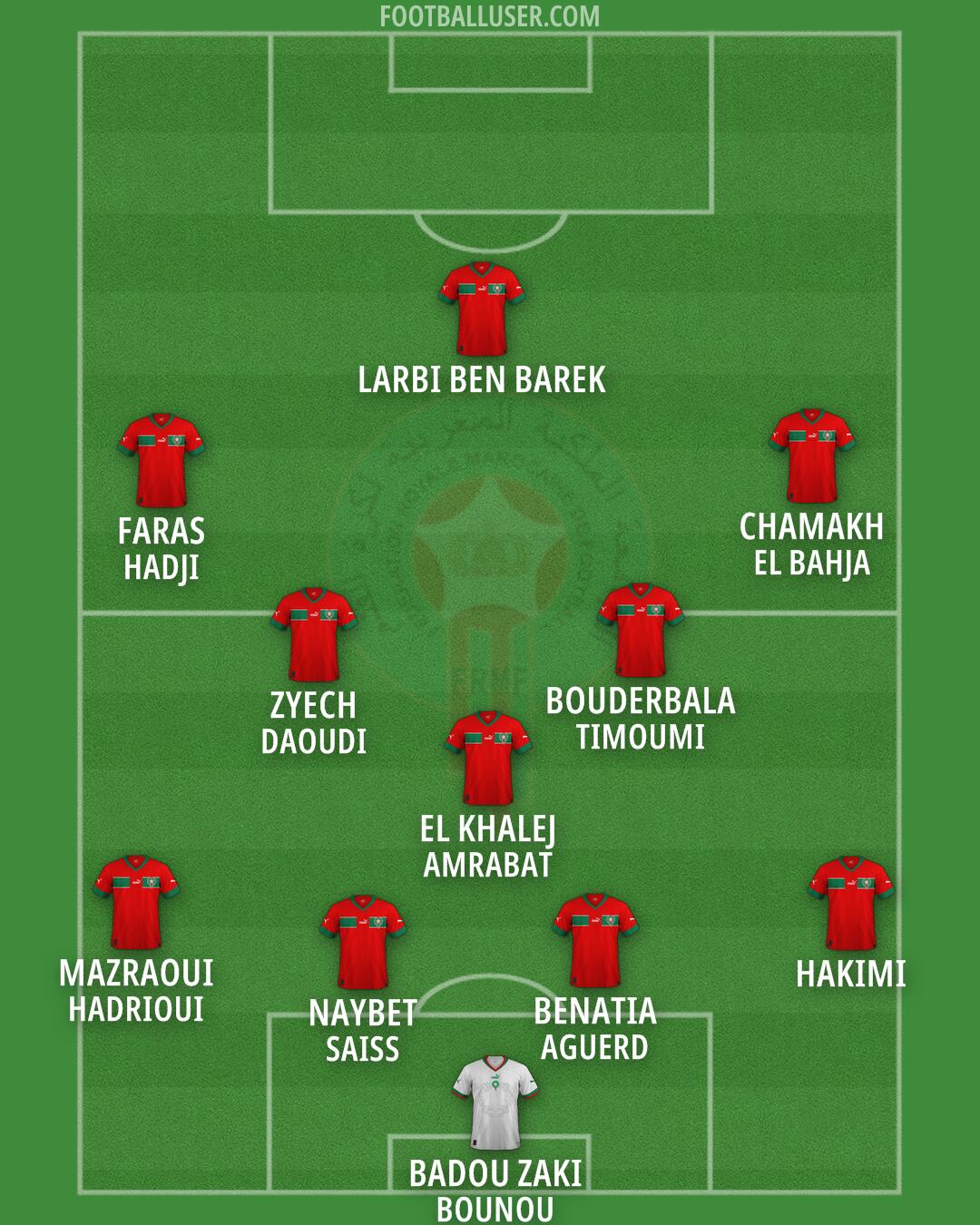

Morocco National Football Team Formation
 October 10, 2025


Starting Lineup
HAKIMI · NAYBET (SAISS) · BADOU ZAKI (BOUNOU) · BENATIA (AGUERD) · MAZRAOUI (HADRIOUI) · BOUDERBALA (TIMOUMI) · EL KHALEJ (AMRABAT) · ZYECH (DAOUDI) · FARAS (HADJI) · CHAMAKH (EL BAHJA) · LARBI BEN BAREKMorocco relies on a direct and high pressing identity using a 4-3-3 formation. This lineup seeks to win the ball high up the pitch and move the play forward quickly through the middle and wide areas. The goal is to control the tempo by pressing opponents before they can settle and using quick transitions to catch defenses out of position.
Badou Zaki stands between the posts to organize the back line. The defensive unit works as a flat back four where Naybet and Benatia act as the central pillars. Benatia provides aerial strength and physical presence to defend the box, while Naybet covers space and intercepts passes. On the flanks, Hakimi pushes high to provide width and overlapping runs, whereas Mazraoui offers balance by stepping up to join the attack or dropping back to protect the space.
A single pivot system controls the center of the pitch. El Khalej sits deep to shield the defense and break the line with vertical passes. Beside him, Bouderbala drives forward to connect the defense to the attack, using his engine to cover ground. Zyech operates in the half space, looking to cut inside and use his wide passing range and set piece delivery to create chances. This midfield trio works to maintain compactness and ensure there is always a player available to receive the ball under pressure.
The attacking unit utilizes three attackers to stretch the opposition. Larbi Ben Barek leads the line as a lone striker, tasked to hold up the ball and bring others into play. On the wings, Chamakh and Faras act as wide attackers who look to exploit the channels. Faras pushes high to pin the full backs, while Chamakh can drift inward to create central presence. The movement of these three players is designed to pull defenders out of position and create gaps for the midfielders to run into.
Morocco can create numerical superiority in the wide areas when Hakimi overlaps to support the wingers. This formation also allows the team to press high in coordinated waves, using the front three to force errors in the opposition half. By keeping the lines close together, the team can quickly shift play from one side to the other to isolate wide players in one on one situations.
This 4-3-3 formation provides Morocco with a balanced platform for both high pressing and rapid counter attacks. It is a lineup best suited for matches against teams that try to build play slowly from the back.