Arsenal Football Formation
 October 11, 2025


Starting Lineup
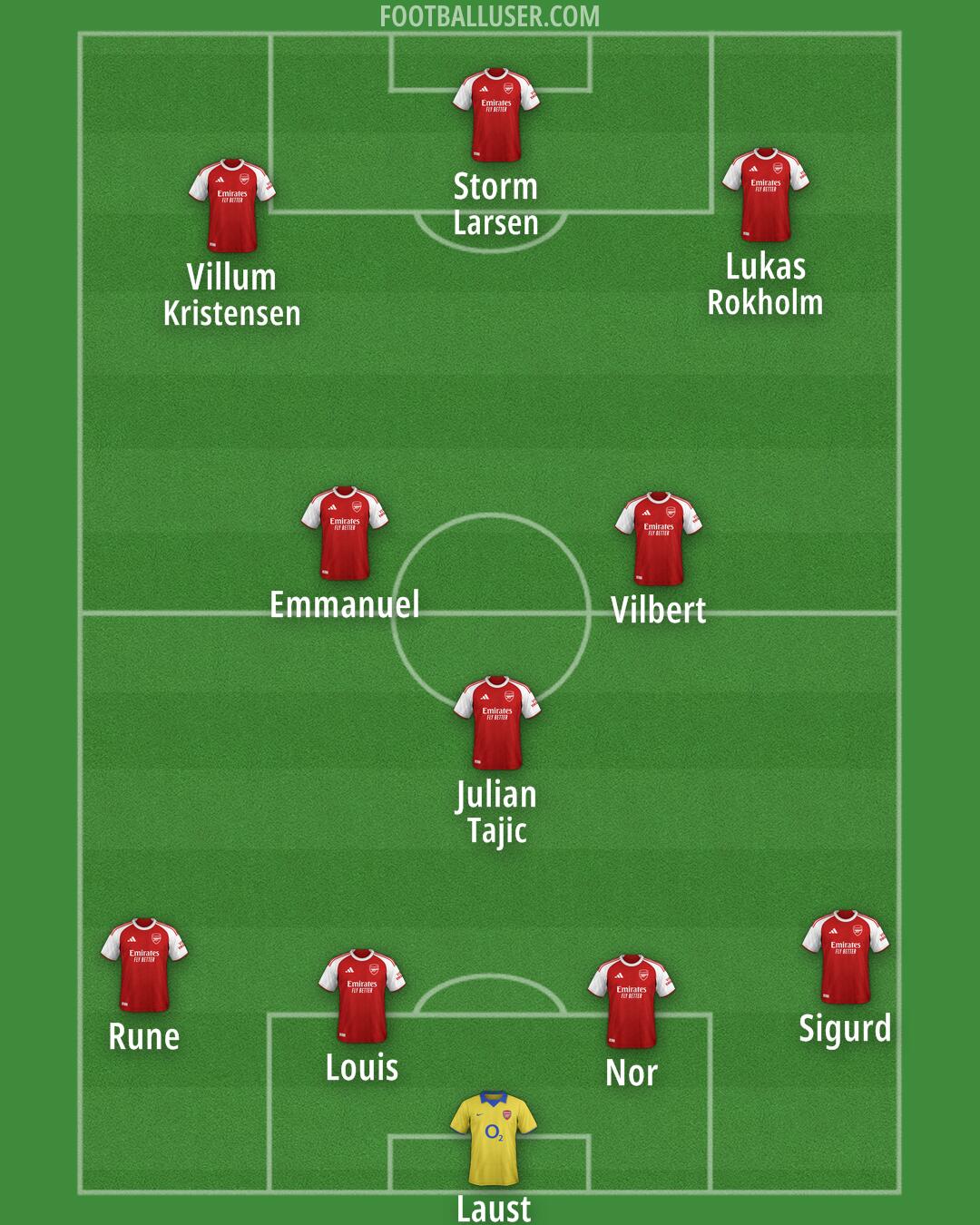
Storm (Larsen) · Lukas (Rokholm) · Villum (Kristensen) · Emmanuel · Vilbert · Julian (Tajic) · Laust · Louis · Nor · Sigurd · RuneArsenal looks to control games through high pressing and heavy possession using a 4-3-3. This formation allows the team to squeeze the pitch and dominate the ball in the middle third. The goal is to pin opponents back and use quick passes to break lines. This lineup is built to play a proactive game where the ball stays in the opponent half for long periods.
Laust stays between the posts to organize the defensive unit. The back four consists of a flat line where Sigurd and Rune occupy the wide positions. Sigurd plays as a right back to provide stability, while Rune acts as a left back to overlap when needed. In the center, Nor and Louis work together as the central defenders. Nor sits as the right sided center back and Louis plays on the left, with both players tasked to cover space and block crosses.
The midfield is built around a single pivot system to control the center of the pitch. Julian acts as the holding player to shield the defense and intercept passes. Ahead of him, Vilbert and Emmanuel operate as the two central midfielders. Vilbert drives forward to link the play, while Emmanuel works to connect the defense to the front line. This trio works to press opponents and win the ball back quickly to keep the tempo high for Arsenal.
The attacking force uses three players to stretch the opposition. Storm leads the line as the lone striker, tasked to hold up the ball and pin the defenders. On the flanks, Villum and Lukas operate as wide wingers to provide width. Villum pushes up on the left and Lukas cuts inside from the right to create scoring chances. The movements of these three attackers are designed to pull defenders out of position and create gaps in the middle.
One major strength of this Arsenal lineup is the ability to press high in coordinated waves. By having Julian sit deep and the front three push up, the team can suffocate opponents in their own half. Another advantage is the width provided by Rune and the wingers, which allows the team to create overloads on the flanks. This makes it hard for the opposition to track runners and cover the passing lanes.
This 4-3-3 formation relies on high intensity and technical control to dictate the tempo of the match. It is best suited for games against teams that sit deep and defend in a low block.