
FC Utrecht Football Formation
 October 20, 2025


Starting Lineup
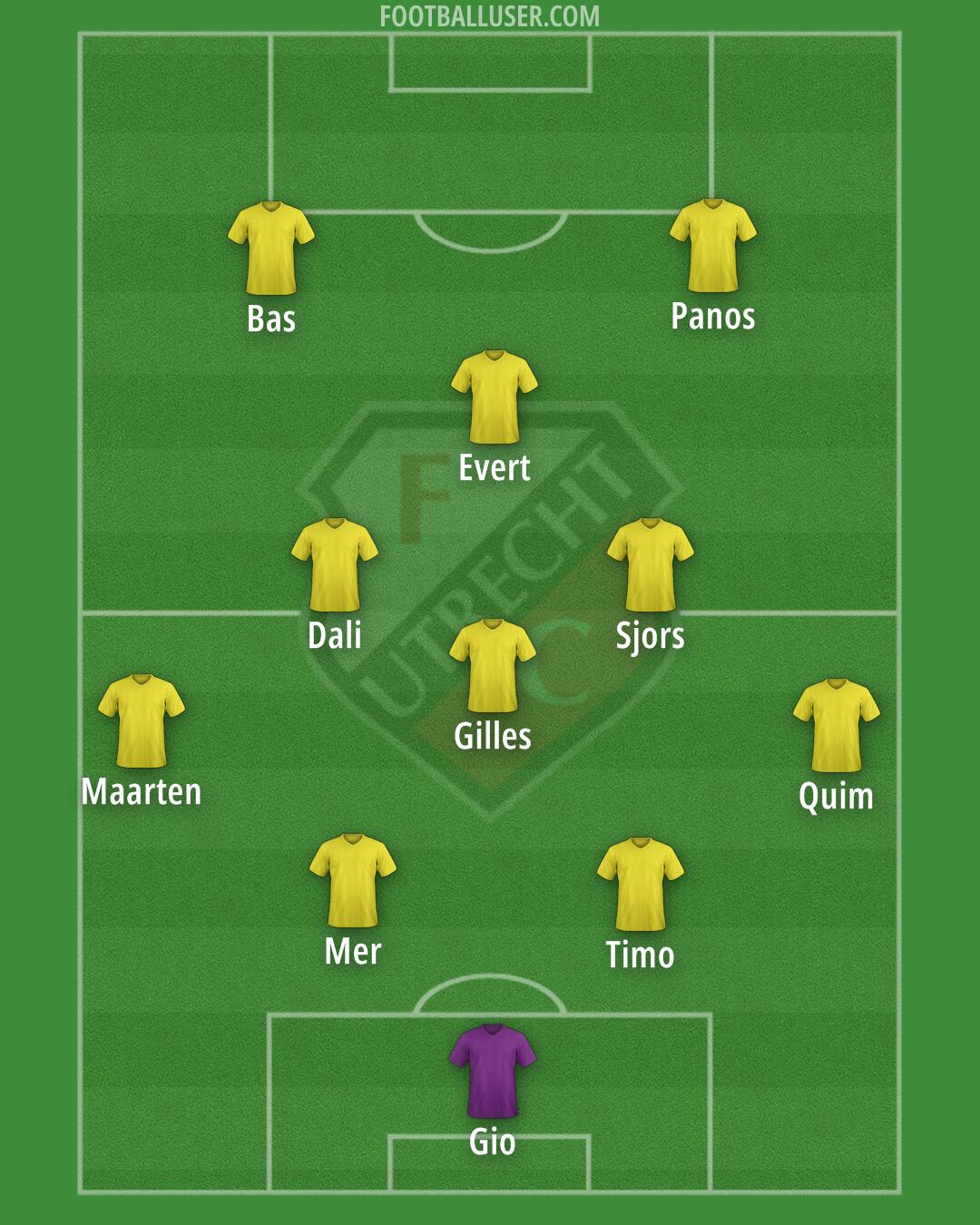
Timo · Bas · Gio · Evert · Maarten · Mer · Gilles · Sjors · Dali · Quim · PanosFC Utrecht looks to dominate the center of the pitch through heavy congestion in the middle with a 2-6-2 formation. This lineup is built to control the tempo and overwhelm opponents through sheer volume of passing options. The team seeks to keep the ball in high areas, making it very difficult for the opposition to find space between the lines.
Gio stands alone between the posts to guard the goal. In front of him, Timo and Mer form a narrow central pair of defenders. This back two must stay very close to avoid being split by through balls. Because there are no wide defenders, Timo and Mer need to be ready to shift quickly across the pitch to cover the flanks when the ball moves wide. They act as the last line of defense before the goalkeeper.
The midfield is the engine of this FC Utrecht lineup, operating in a massive block. Quim and Maarten form a double pivot to shield the two central defenders and intercept passes. Ahead of them, Gilles, Sjors, and Dali occupy the central zones to control the ball and switch play. Evert plays as an attacking ten, sitting just behind the two forwards to break the line with vertical passes. This heavy midfield presence allows the team to press high and recover the ball quickly in the middle third.
The attacking unit consists of two forwards, Bas and Panos, who operate in the channels. Bas and Panos stay close to each other to create central threats, but they also need to push wide to drag defenders out of position. They are tasked with pressing the opposition backline immediately to prevent easy build up. This formation forces the attackers to work hard to hold up the ball while waiting for the massive midfield group to join the attack.
This formation offers significant numerical superiority in the center of the pitch, making it hard for opponents to keep the ball. The ability to press high in coordinated waves from the six midfielders allows the team to win the ball back in dangerous areas. Additionally, the density in the middle creates many short passing lanes to keep possession under pressure.
This tactical identity relies on total control of the central areas through high volume passing and intense pressing. It is best suited for games against teams that sit deep and struggle to compete for second balls in the middle of the field.