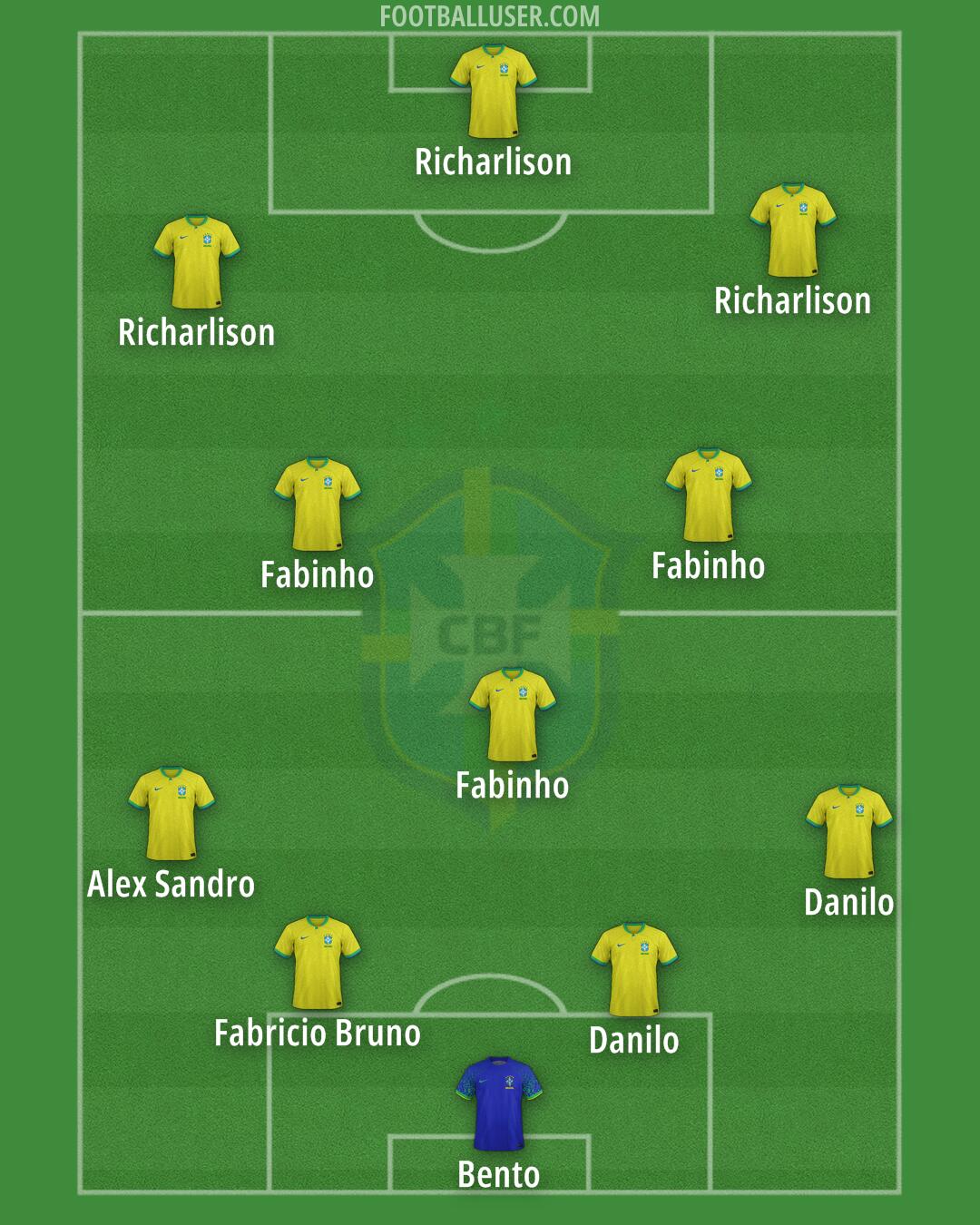

Brazil National Football Team Formation
 November 4, 2025


Starting Lineup
Bento · Danilo · Fabricio Bruno · Danilo · Fabinho · Fabinho · Fabinho · Alex Sandro · Richarlison · Richarlison · RicharlisonPrioritizing a heavy defensive block and rapid transitions, Brazil operates in a 5-2-3 formation. This lineup is built to sit deep and absorb pressure before launching quick vertical attacks. The team looks to use the wide areas to stretch the opposition while keeping the center compact.
Bento stays between the posts to command the box and organize the back line. A back three consisting of Fabinho, Fabricio Bruno, and Danilo sits deep to protect the central area and win aerial duels. Danilo pushes up the right flank as a wing back to provide width, while Alex Sandro covers the left side to overlap and deliver crosses. The defensive unit shifts together to maintain a compact block and deny space between the lines.
The midfield relies on a double pivot to control the middle of the pitch. Fabinho operates in these central roles to shield the defense and intercept passes. He works to break the lines with his passing and connects the defensive unit to the forwards. This midfield duo must track back constantly to support the back five when the team loses possession.
In the attacking third, the formation utilizes three attackers to pin the opposition back. Richarlison plays as a lone striker to hold up the ball and lead the press, while also occupying the wide channels. Richarlison moves between the left and right sides to cut inside and find space. This movement allows the team to transition from a defensive block to a wide attacking presence very quickly.
The primary tactical strengths of this Brazil lineup include the ability to create wide overloads through the wing backs. When Alex Sandro and Danilo push high, they create extra passing lanes to support the attackers. The team also benefits from a high level of compactness when defending in a low block. This makes it difficult for opponents to play through the middle, forcing them to cross into a crowded penalty area.
This 5-2-3 formation focuses on defensive stability and rapid counter attacks. It is best suited for games against teams that dominate possession and require a disciplined low block to frustrate.