
FC Porto Football Formation
 November 5, 2025


Starting Lineup
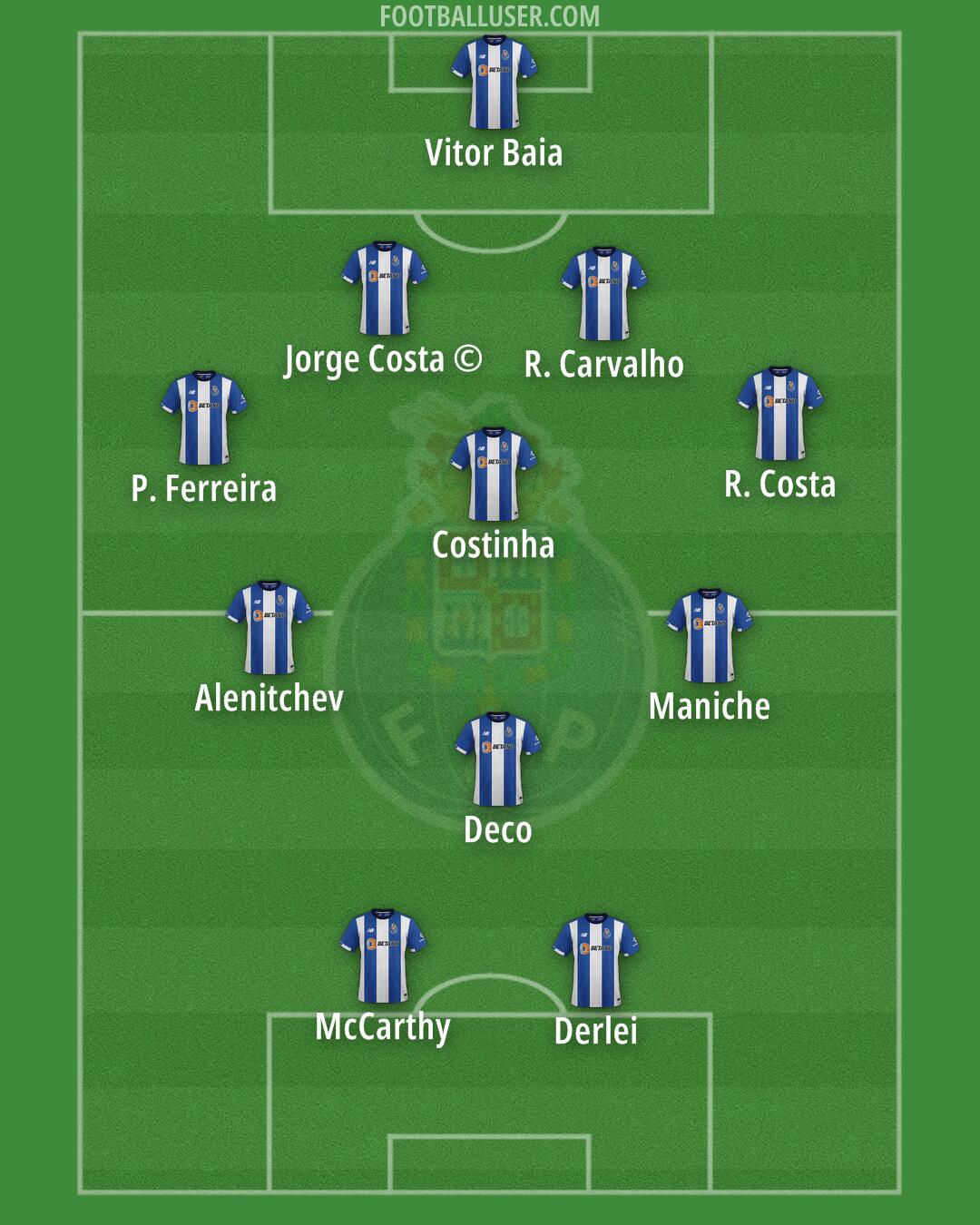
Vitor Baia · Jorge Costa © · R. Carvalho · P. Ferreira · R. Costa · Costinha · Alenitchev · Maniche · Deco · McCarthy · DerleiPrioritizing defensive solidity and quick transitions, FC Porto operates within a 5-3-2 formation. This lineup focuses on a compact block that remains hard to break through while looking to hit opponents on the break. The team aims to control the middle of the pitch and use the width provided by the wing backs to stretch the opposition.
Vitor Baia starts in goal to organize the back line. The defense consists of a back three with Costinha acting as the central anchor, flanked by R. Carvalho and the captain Jorge Costa ©. Both Jorge Costa © and R. Carvalho use their aerial strength and physical presence to win headers and clear danger. The wing backs, P. Ferreira and R. Costa, provide the width by pushing up the flanks to support the attack, but they must track back quickly to form a five man wall when the team sits deep.
The midfield works in a way that connects the defense to the attackers. Maniche and Alenitchev occupy the central roles to shield the back three and win second balls. Maniche provides a high work rate and energy to cover large areas of the pitch. Deco plays as the attacking ten, sitting behind the strikers to create chances and break the line with his passing range. This midfield unit must stay close together to prevent opponents from playing through the middle.
In the attacking phase, FC Porto utilizes two forwards to lead the press and occupy the opposition center backs. Derlei and McCarthy work as the front two, looking to hold up the ball and bring Deco into the game. The movement of Derlei and McCarthy forces defenders to drop deep, which creates space for the midfield to push up. The wing backs, P. Ferreira and R. Costa, provide the crosses needed to find the strikers in the box.
One major advantage for FC Porto is the ability to create wide overloads when the wing backs overlap with the midfielders. The team also finds success through the compactness when defending, making it very difficult for opponents to find gaps between the lines. By sitting deep and then using the passing range of Deco to switch play, the team can catch opponents out of position during transitions.
This 5-3-2 formation is built to frustrate dominant teams by denying them space in central areas. It is best suited for matches where the team needs to absorb pressure and strike through efficient counter attacks.