
Dinamo Football Formation
 November 6, 2025


Starting Lineup
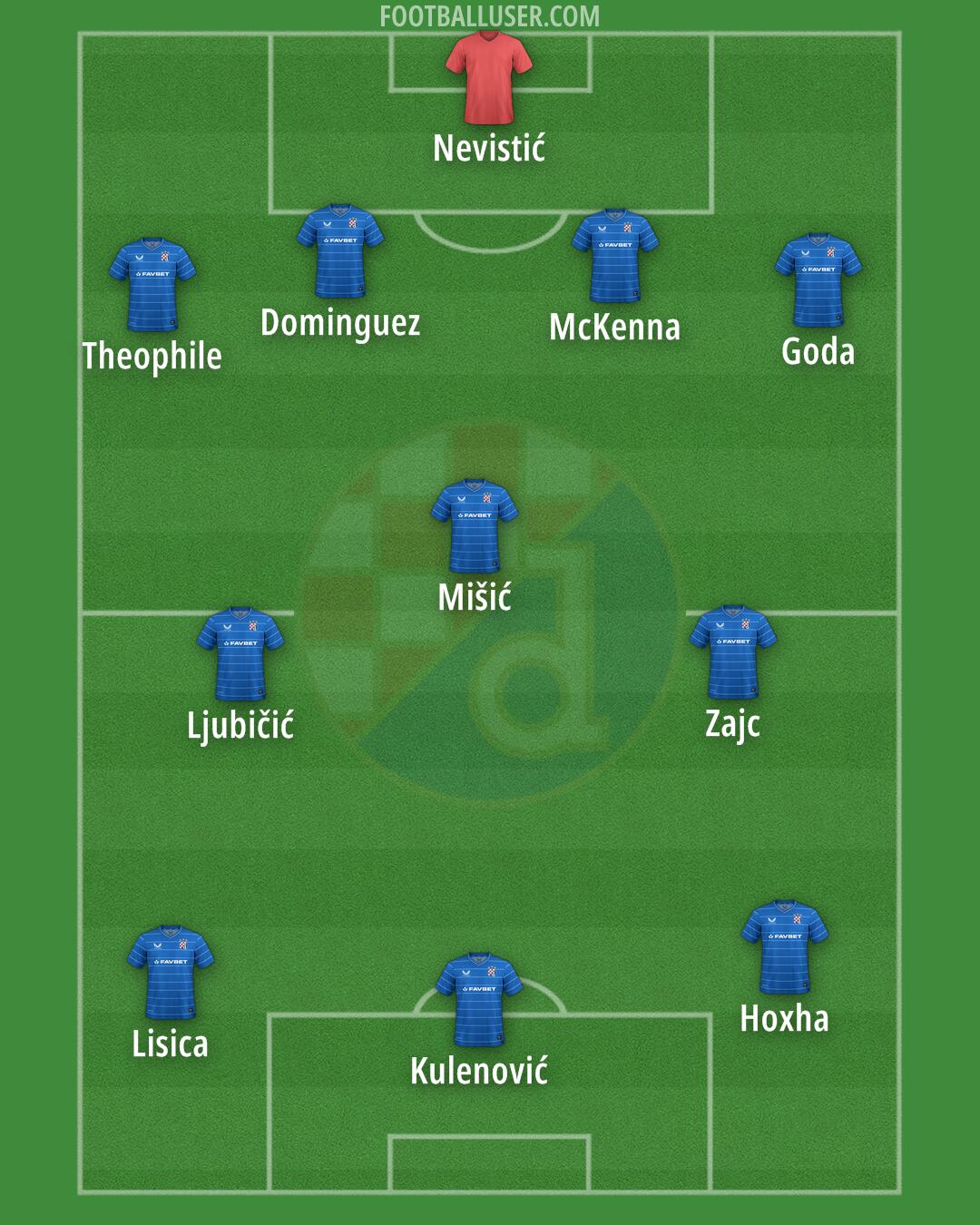
Nevistić · Theophile · Dominguez · McKenna · Goda · Ljubičić · Mišić · Zajc · Lisica · Kulenović · HoxhaA high pressing and aggressive identity defines Dinamo and their use of a 4-3-3. This lineup is built to dominate territory and force turnovers high up the pitch. The team seeks to control the tempo through heavy pressure and quick transitions to catch opponents out of position.
Nevistić sits between the posts to organize the defensive unit. The back four functions with a relatively high line to compress the space in the middle of the park. Dominguez acts as the right-sided center back to provide cover while McKenna holds the left side of the central defense. The full backs, Goda on the left and Theophile on the right, are tasked to push up the pitch to provide width. This allows the central defenders to step up and intercept passes before they reach the final third.
In the center of the pitch, Mišić acts as the single pivot to shield the back four and break up play. He works alongside Ljubičić and Zajc to control the middle third. Ljubičić and Zajc operate as the two central midfielders who drive the ball forward and connect the defense to the front three. They move between the lines to find pockets of space and ensure Dinamo can transition from a low block to an attacking phase with speed.
The attacking front line utilizes three attackers to stretch the opposition. Kulenović leads the line as the lone striker, tasked to hold up the ball and run the channels. On the flanks, Hoxha and Lisica operate as wide wingers to provide width and cross the ball into the box. Hoxha and Lisica often cut inside to create numerical superiority in the central areas, which forces the opposing full backs to tuck in and leaves space for the overlapping runs of Goda and Theophile.
One major advantage for Dinamo is the ability to press high in coordinated waves to disrupt the opponent build up. This lineup also creates wide overloads when the wingers and full backs combine to pin the opposition back. The presence of Mišić allows the other midfielders to push forward, which creates a compact block when the team sits deep to defend.
This 4-3-3 formation provides Dinamo with a clear path to control games through high intensity and ball movement. It is best suited for facing teams that try to play out from the back and struggle under heavy pressure.