Man Utd Football Formation
 November 12, 2025


Starting Lineup
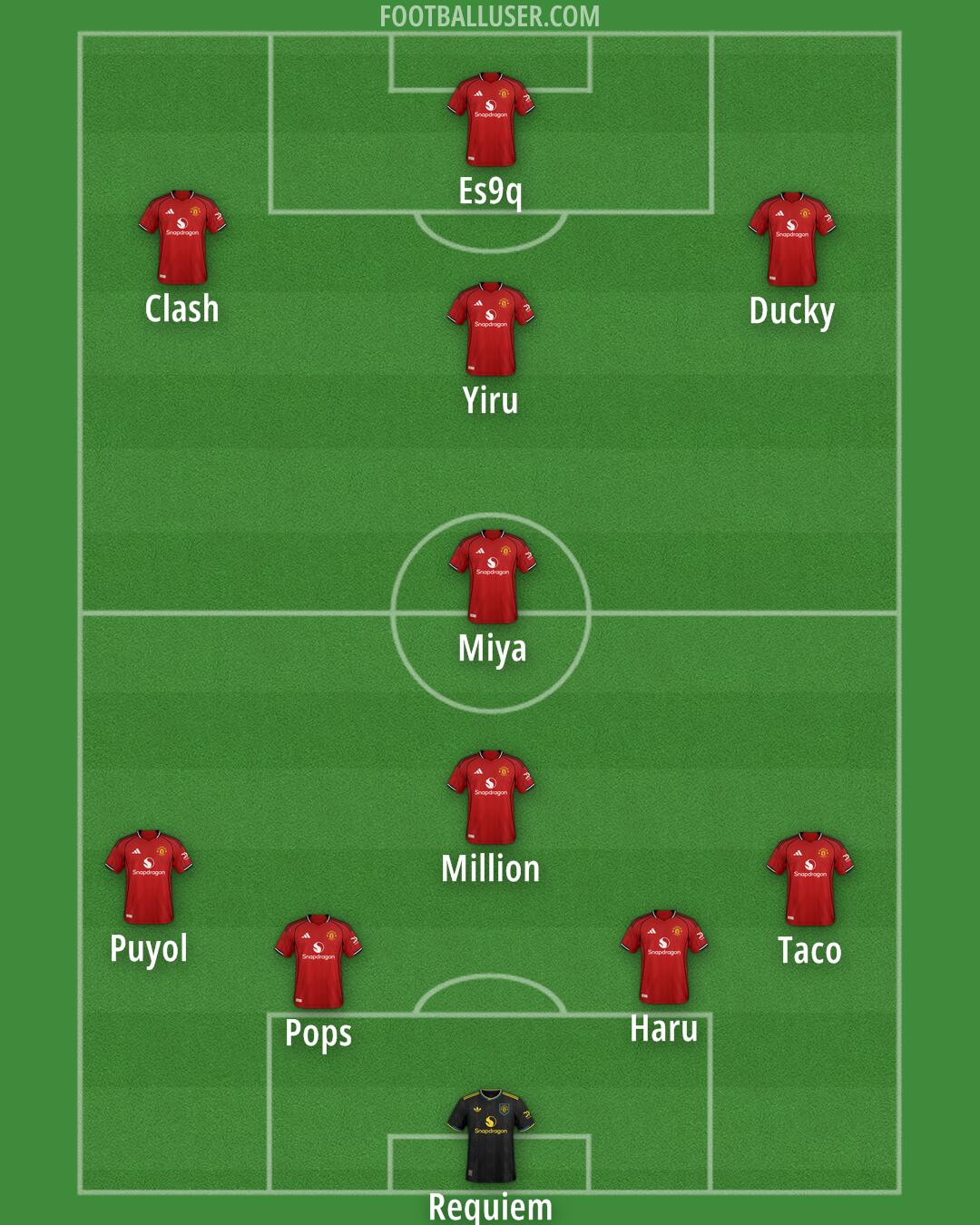
Requiem · Es9q · Million · Ducky · Clash · Yiru · Pops · Haru · Puyol · Miya · TacoPrioritizing a defensive block and rapid transitions defines the identity of Man Utd in this 5-4-1 formation. This lineup is built to sit deep and absorb pressure before launching quick attacks. The team relies on defensive solidity to frustrate opponents and wait for the right moment to break.
Requiem sits between the posts to command the area. In front of him, the defensive unit operates with a back three consisting of Million, Haru, and Pops. Million acts as the central anchor while Haru and Pops cover the spaces around him. The wide defenders, Puyol and Taco, function as wing backs who must track back to form a five man line when defending but push high to provide width. This unit works to stay compact and minimize the gaps between the lines to prevent central penetration.
The midfield operates in a flat four to protect the defensive line. Miya sits as the single pivot to shield the defenders and intercept passes. Yiru, Ducky, and Clash occupy the central and wide areas to maintain a compact block. Ducky and Clash work to occupy the half spaces, while Yiru helps connect the ball from the back to the front. This group focuses on maintaining short distances between players to block passing lanes and force the opposition wide.
Up front, Es9q operates as a lone striker tasked with holding up the ball. The attacking presence relies on the width provided by Puyol and Taco to stretch the opposition. When the team wins the ball, the forwards press to stop immediate counters, while the movement of the midfielders allows for quick vertical passes to Es9q. The goal is to use the striker to link with the advancing midfield and create chances in transition.
Man Utd gains a significant advantage through their compactness when defending. By sitting in a low block, they make it difficult for opponents to find space between the lines. Another strength is the ability to use the wing backs to create wide overloads once the ball is won. The speed of transition allows the team to move from a defensive stance to an attacking one in a matter of seconds.
This formation provides a resilient defensive base designed to frustrate dominant teams. It is best suited for matches where the opponent controls possession and the team needs to play on the counter.