
Real Madrid Football Formation
 November 15, 2025


Starting Lineup
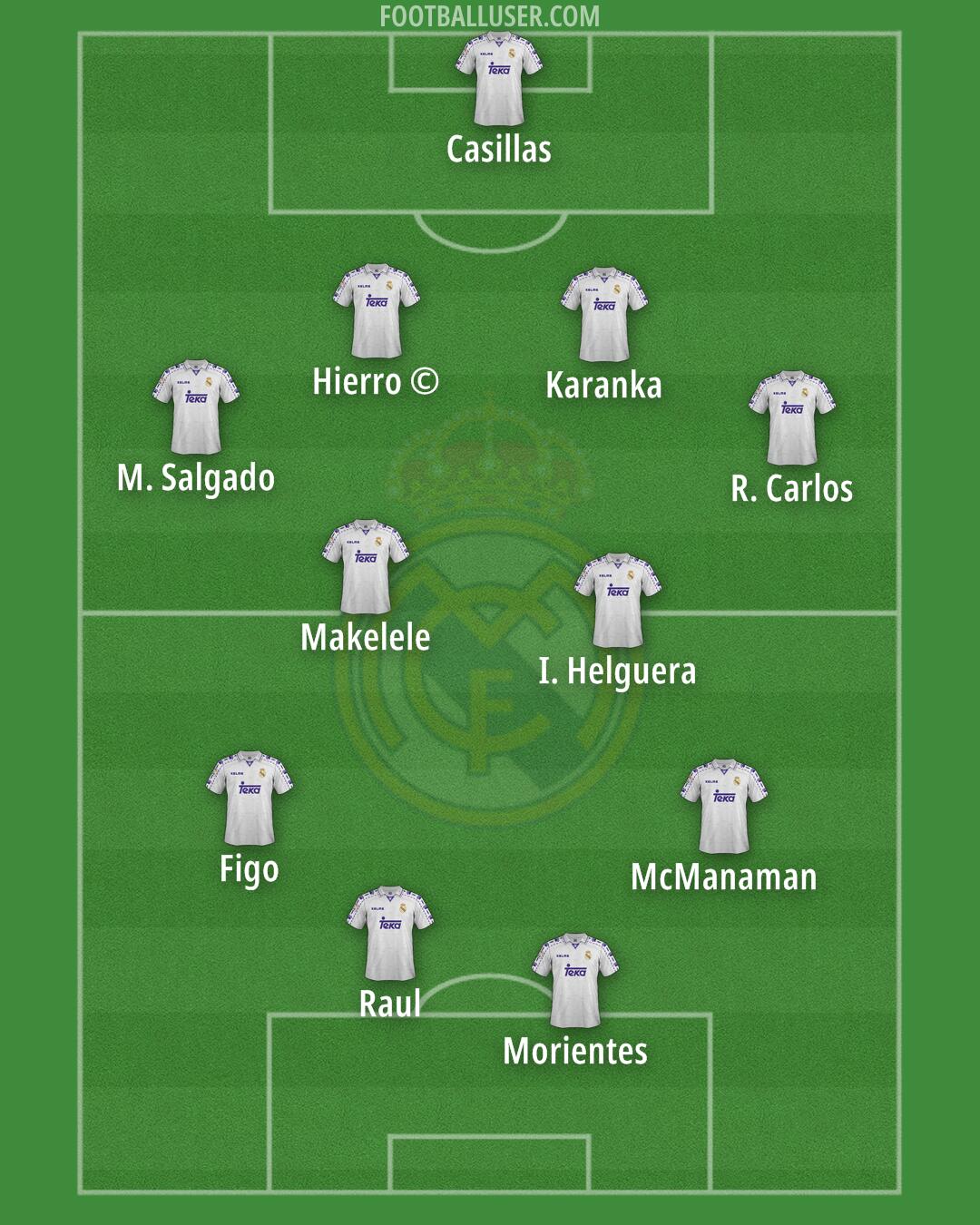
Casillas · Hierro © · Karanka · M. Salgado · R. Carlos · I. Helguera · Makelele · Figo · McManaman · Morientes · RaulReal Madrid aims to play a vertical and high intensity brand of football using a 4-2-4 formation. This lineup seeks to overwhelm opponents by committing bodies forward quickly and forcing mistakes high up the pitch. The intention is to use heavy pressure to win the ball and then hit the opposition with rapid transitions.
Casillas guards the goal, acting as the last line of defense for the club. The back four operates as a traditional line, though it relies heavily on the mobility of the wide players. Roberto Carlos acts as a powerful left back who pushes high to join the attack, while M. Salgado covers the right side. In the center, Karanka provides cover and stays close to the captain, Hierro, who is known for his passing range and ability to step up into midfield. Hierro © organizes the defensive line to ensure the team stays compact when the ball is lost.
The midfield functions as a double pivot to protect the central areas. Makelele sits deep to shield the back four, using his high interception rate and tackling ability to break up play. Beside him, I. Helguera connects the defense to the attack by recycling possession and moving the ball forward. This pair must work hard to cover the spaces left behind by the advancing full backs to prevent counter attacks.
The attacking lineup is built to punish defenses through width and central strength. Figo operates on the right wing, often looking to cut inside and create chances, while McManaman provides movement on the left. In the center, Raul and Morientes work as two forwards. Raul often drops slightly deeper to link the midfield with the attack, while Morientes uses his presence to hold up the ball and finish crosses.
One major strength for Real Madrid is the ability to create wide overloads through the runs of Roberto Carlos. The team can also isolate wide players like Figo in one on one situations once the ball reaches the final third. By using two central strikers, the formation forces the opposing center backs to stay deep, which creates more room for the midfielders to push forward.
This 4-2-4 formation is designed for teams that want to dominate through directness and attacking numbers. It is best suited for matches where the opponent sits deep and can be broken down with high speed and heavy pressure.