Custom Team Football Formation
 November 19, 2025


Starting Lineup
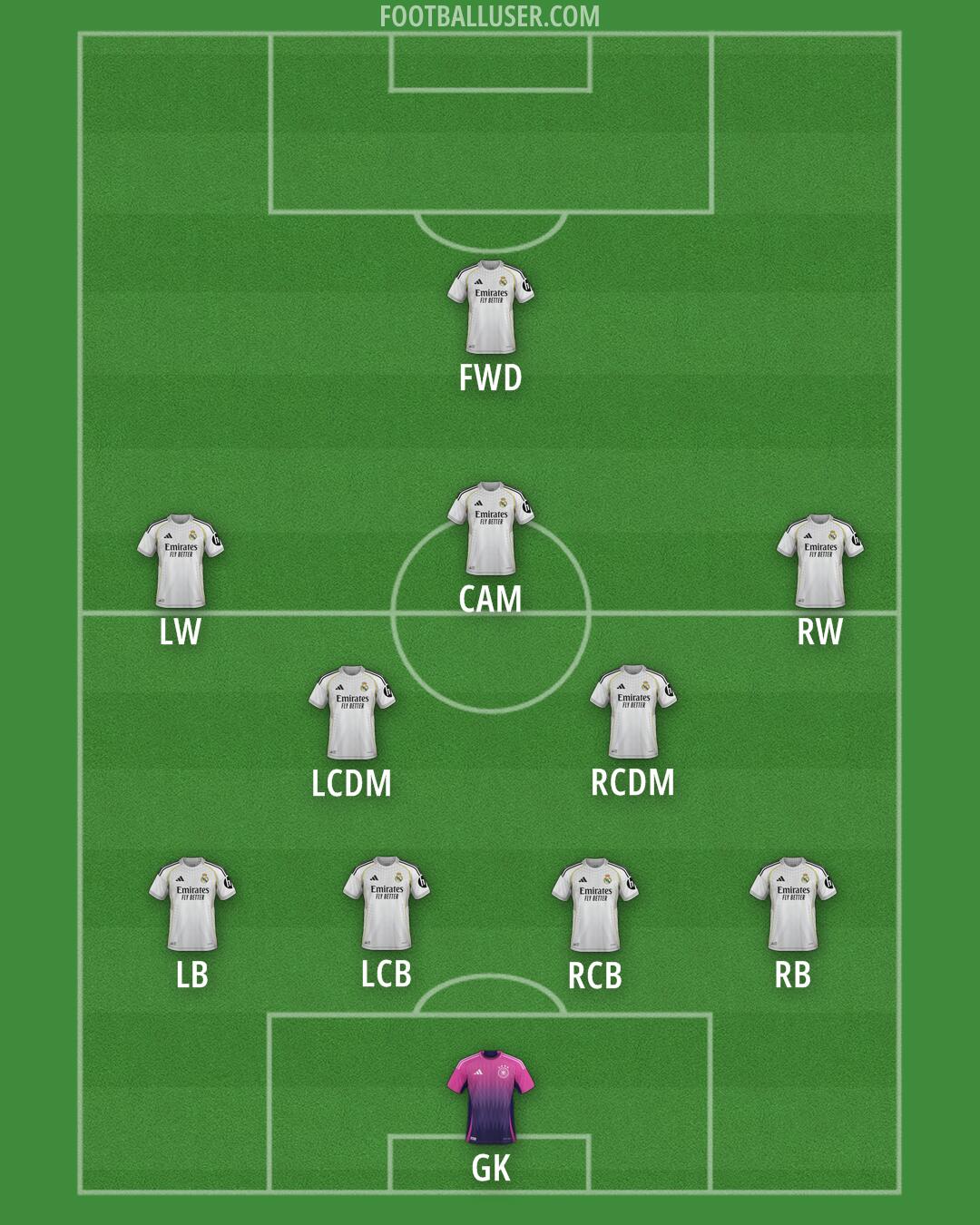
FWD (Real Madrid) · LCDM (Real Madrid) · RCDM (Real Madrid) · LB (Real Madrid) · RB (Real Madrid) · LCB (Real Madrid) · RCB (Real Madrid) · LW (Real Madrid) · CAM (Real Madrid) · RW (Real Madrid) · GK (Germany)A heavy focus on defensive solidity and quick transitions defines this lineup, which operates in a 4-5-1. The team aims to sit deep to deny space and then hit opponents on the break when they lose control of the ball. By packing the central areas, the formation seeks to frustrate the opposition before launching direct attacks toward the lone forward.
The GK acts as the last line of defense behind a flat back four. To keep the defensive unit compact, the RCB and LCB must hold the line and stay close to each other to prevent being split by through balls. The RB and LB provide the width in a defensive mid-block, making sure to track back and prevent wide overloads. These defenders must be disciplined to ensure they do not get caught too high up the pitch, allowing the unit to stay narrow and force the opposition wide.
In the middle of the pitch, the team utilizes a three-man midfield with a double pivot acting as a shield. The LDM and RDM sit in front of the back four to intercept passes and protect the center. Ahead of them, the LCM and RCM occupy the half-spaces to connect the defensive work to the attack. The CM plays as an attacking ten, looking to find pockets of space between the lines and deliver the ball to the front line. This midfield group must work hard to squeeze the space and win the second ball to maintain control of the game.
The attack relies on a lone ST to lead the press from the front. To provide support, the LW and RW act as wide wingers who stay near the touchline to stretch the defense. These players aim to isolate defenders in one on one situations or provide service through crosses. The attack is built through quick transitions where the LCM and RCM carry the ball forward to find the ST. This movement is designed to create runs in behind and allow the LW and RW to cut inside into goal scoring positions.
One major advantage is the compactness when defending, as the five midfielders and four defenders create a wall that is hard to break down. The team also benefits from the ability to hit in behind on the transition, using the speed of the LW and RW to exploit high lines. By crowding the central channels, the team limits the ability of the opponent to play through the lines, forcing them into low percentage long balls.
This 4-5-1 formation provides a reliable way to frustrate teams that dominate possession. It is best suited for matches against superior technical sides where the goal is to defend deep and counter at pace.