
Colo Colo Football Formation
 November 27, 2025


Starting Lineup
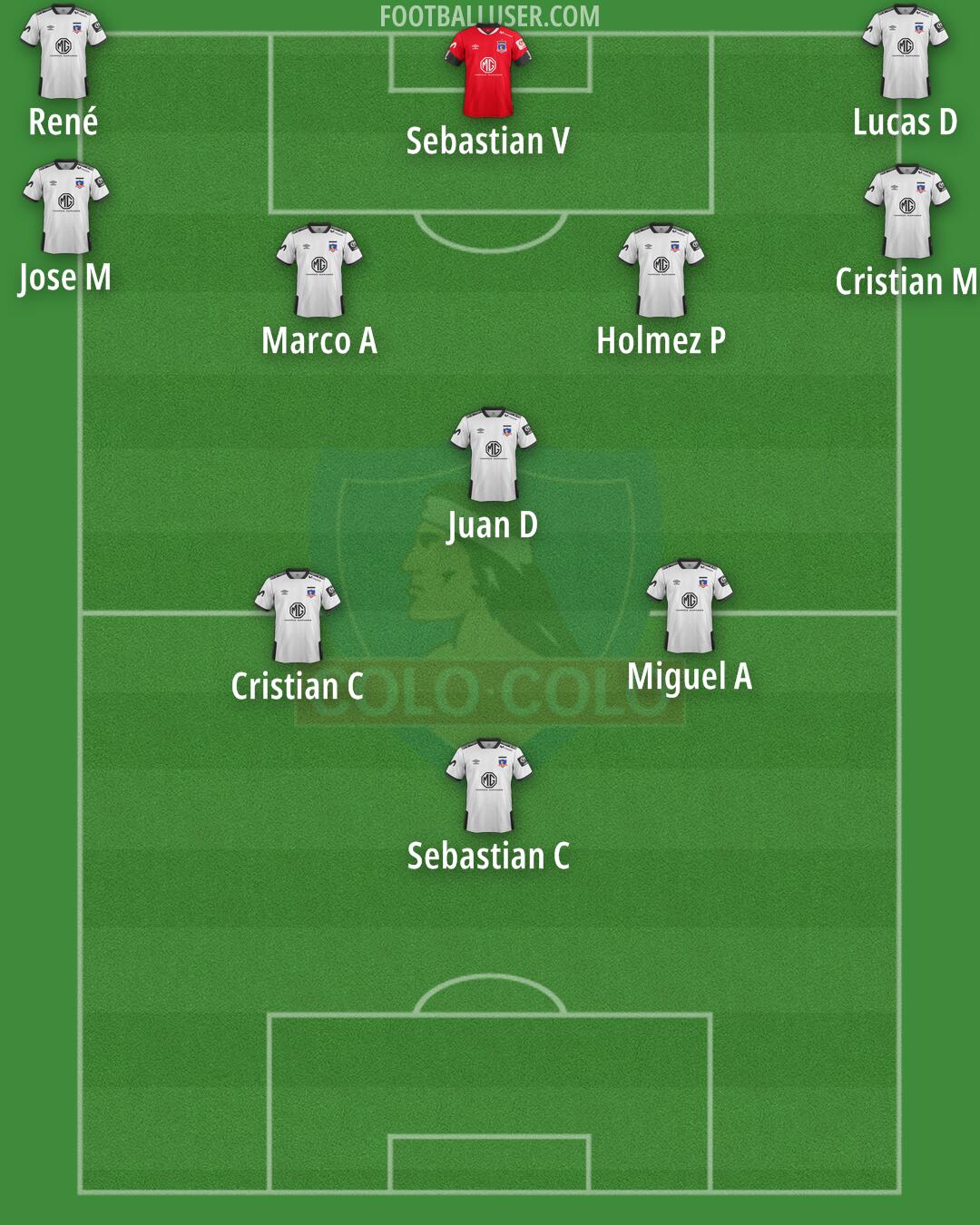
Sebastian V · Sebastian C · Holmez P · Cristian M · Lucas D · Cristian C · Miguel A · Jose M · René · Juan D · Marco AColo Colo relies on a high press and verticality to overwhelm opponents through a 2-5-3 formation. This lineup aims to dominate the central zones and pin the opposition back in their own half. The team looks to win the ball high up the pitch and move forward quickly to exploit gaps before the defense can settle.
Sebastian V stands between the posts to organize the defensive unit. The back line consists of just two central defenders, Lucas D and René, who must step up high to compress the space. Because there are only two men in the deep line, they must be ready to intercept long balls and cover the wide areas if the midfield is bypassed. This setup forces the defensive unit to act as a high block, relying on quick recovery runs and aggressive tackling to stop attacks.
The midfield is the engine of the Colo Colo system, utilizing a dense block of five players to control the center. Juan D operates as the attacking ten to connect the lines and find pockets of space between the opposition's defense and midfield. Marco A and Holmez P act as the central engine, with Marco A looking to break the line with vertical passes while Holmez P holds the middle to shield the two defenders. On the flanks, Jose M and Cristian M provide the necessary width, tracking back to help the defenders and pushing forward to support the attack.
The attacking unit employs three players to stretch the opposition defense. Sebastian C leads the line as the lone striker, tasked to hold up the ball and bring others into play. He is flanked by Miguel A on the left and Cristian C on the right, who act as wide attackers. These players look to cut inside or use their pace to run behind the line. The goal is to create constant movement, making it difficult for the opposing center backs to mark the runners.
A major tactical strength of this formation is the ability to create numerical superiority in the middle of the pitch. With five midfielders, the team can easily outnumber a standard three man midfield to win second balls and control possession. Another advantage is the ability to press high in coordinated waves, using the front three and the attacking midfielder to trap opponents near their own goal. This creates high turnover opportunities in dangerous areas.
This 2-5-3 formation is built for aggressive, offensive football that seeks to dictate the tempo. It is best suited for matches where the team needs to break down a low block or dominate an opponent through sheer numbers in the central zones.