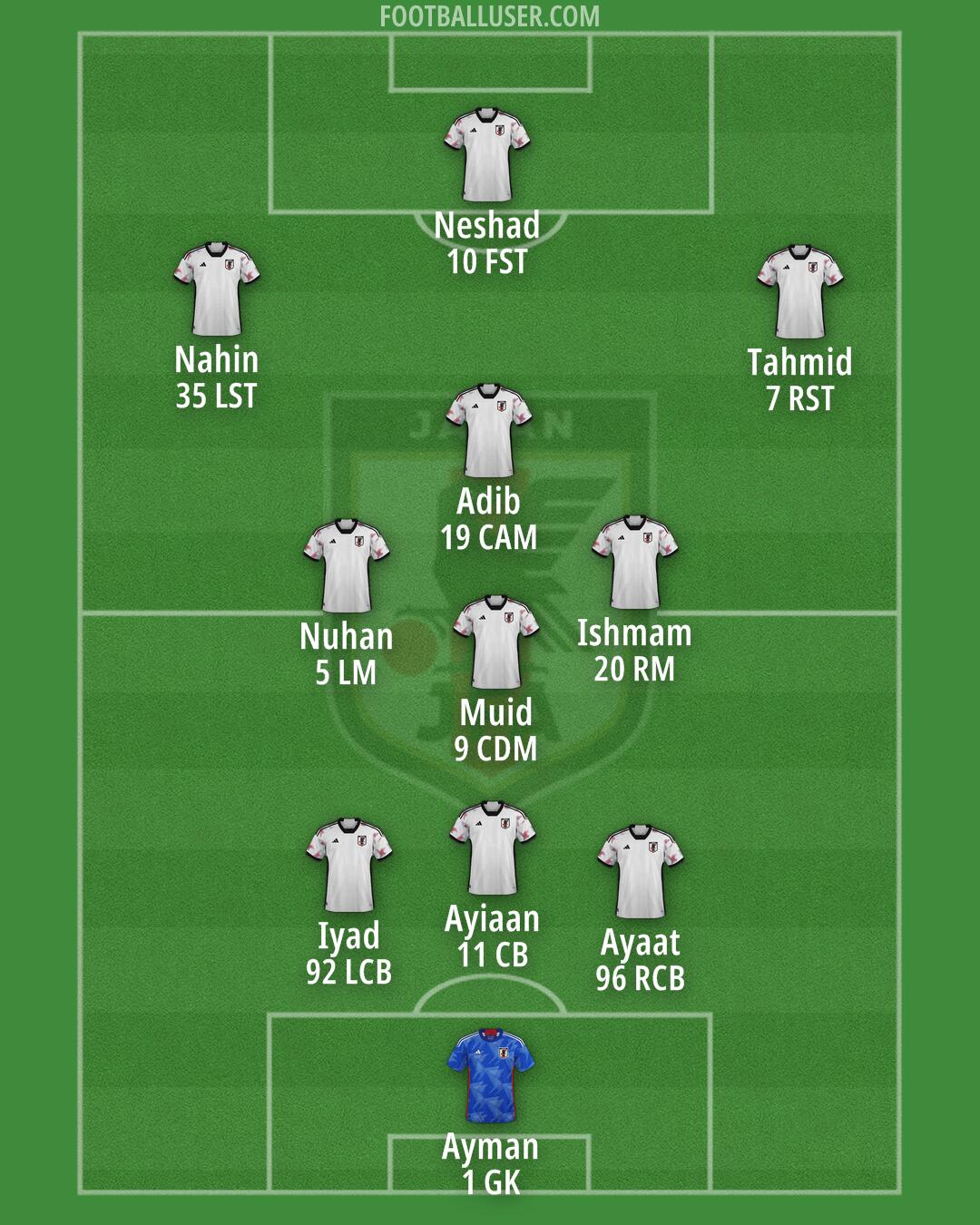

Japan National Football Team Formation
 December 2, 2025
 Ayiaan


Starting Lineup
Ayman (1 GK) · Iyad (92 LCB) · Ayiaan (11 CB) · Tahmid (7 RST) · Ishmam (20 RM) · Nuhan (5 LM) · Adib (19 CAM) · Nahin (35 LST) · Neshad (10 FST) · Ayaat (96 RCB) · Muid (9 CDM)Focusing on aggressive pressing and quick verticality, Japan operates with a 3-4-3 formation. This lineup is built to dominate the pitch through high intensity and rapid transitions. The team aims to win the ball high up the field to catch the opposition out of position before they can settle.
Ayman starts in goal to command the area and organize the defensive line. The back three consists of Ayiaan acting as the central anchor, while Ayaat and Iyad cover the left and right sides of the central defense. Ayiaan holds the line to prevent direct runs, whereas Ayaat and Iyad step up to intercept passes and win aerial duels. This back three stays compact to block central lanes when the team sits deep.
The midfield works in a central block to control the middle of the pitch. Muid sits as the single pivot to shield the defense and break the lines with his passing. Ahead of him, Nuhan and Ishmam occupy the central roles to drive the ball forward and connect the defense to the attack. Adib operates as an attacking midfielder, pushing into advanced pockets of space to create chances for the front line.
In the final third, Japan uses three attackers to stretch the opposition. Neshad leads the line as the lone striker to hold up the ball and bring others into play. Nahin and Tahmid act as wide wingers, ready to cut inside or run the flanks to create overloads. This attacking unit presses heavily from the front to force mistakes in the opponent's buildup.
This formation offers significant tactical advantages, such as the ability to press high in coordinated waves with the front three and Adib. The central density provided by Muid, Nuhan, Ishmam, and Adib allows Japan to win second balls and dominate possession in the middle. Additionally, the width provided by Nahin and Tahmid helps to isolate defenders in one on one situations during transitions.
The 3-4-3 formation makes Japan a dangerous side for teams that struggle to play out from the back. It is best suited for matches where the team can use high pressing to force turnovers in dangerous areas.