Man Utd Football Formation
 December 5, 2025


Starting Lineup
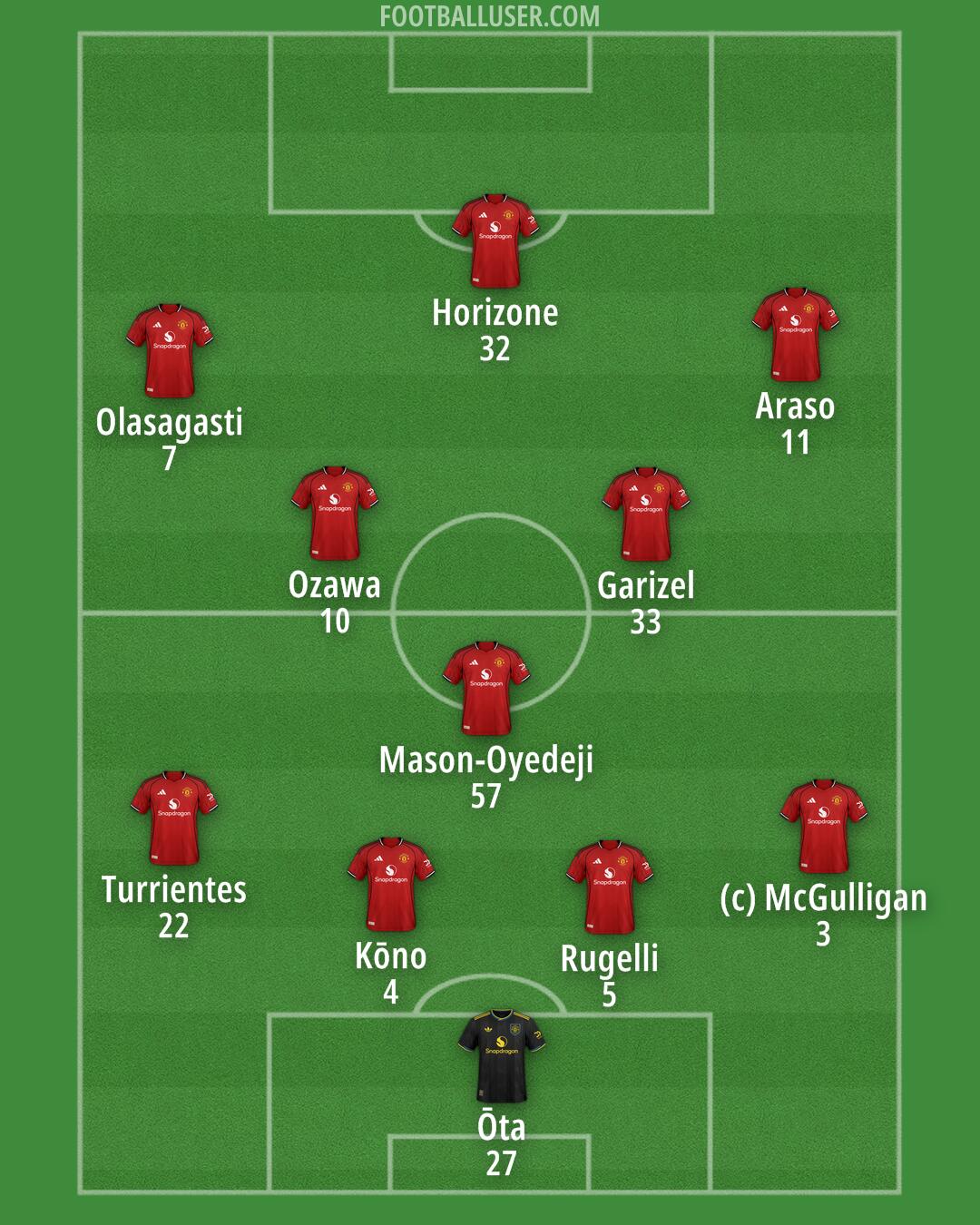
Ōta (27) · Turrientes (22) · Kōno (4) · Rugelli (5) · (c) McGulligan (3) · Mason-Oyedeji (57) · Garizel (33) · Ozawa (10) · Olasagasti (7) · Araso (11) · Horizone (32)Man Utd seeks to control games through a high press and rapid transitions using a 5-2-3 formation. This lineup focuses on heavy pressure in the final third and uses wide areas to stretch the opposition. The team looks to win the ball high up the pitch to catch opponents out of position.
In the defensive unit, Ōta sits between the posts to organize the back line. The three central defenders, consisting of Rugelli, Mason-Oyedeji, and Kōno, form a compact block that is strong in the air and covers the central zones. Captain McGulligan operates as the right wing back, ready to push up the flank while providing defensive cover. Turrientes plays as the left wing back, tasked with tracking back to help the central trio and overlapping when the ball moves wide. This five man defense ensures the team remains difficult to break down when they sit deep.
The midfield functions with a double pivot to bridge the gap between defense and attack. Garizel and Ozawa work to control the center, with one player often dropping to shield the back three while the other looks to break the line with forward passes. They must press intensely to prevent the opposition from playing through the middle. This pair acts as the engine, connecting the defensive unit to the front three through quick ball movement.
The attacking front line uses three players to stretch the field. Araso plays as the right winger, looking to cut inside and create chances, while Olasagasti operates on the left wing to provide width. Horizone leads the line as a lone striker, tasked with holding up the ball and making runs into the channels. These attackers press in coordinated waves to force turnovers near the opponent's goal.
Man Utd gains a massive advantage through wide overloads when McGulligan and Turrientes push forward to join the wingers. This creates numerical superiority on the flanks, making it hard for the opposition to defend the crosses. The formation also offers compactness when defending, as the wide attackers and wing backs can quickly drop to form a very solid defensive block.
This 5-2-3 formation provides a heavy presence in the final third while maintaining a secure foundation. It is best suited for matches where the team needs to exploit space on the wings or catch a high line through quick vertical play.