
Indonesia National Football Team Formation
 December 11, 2025


Starting Lineup
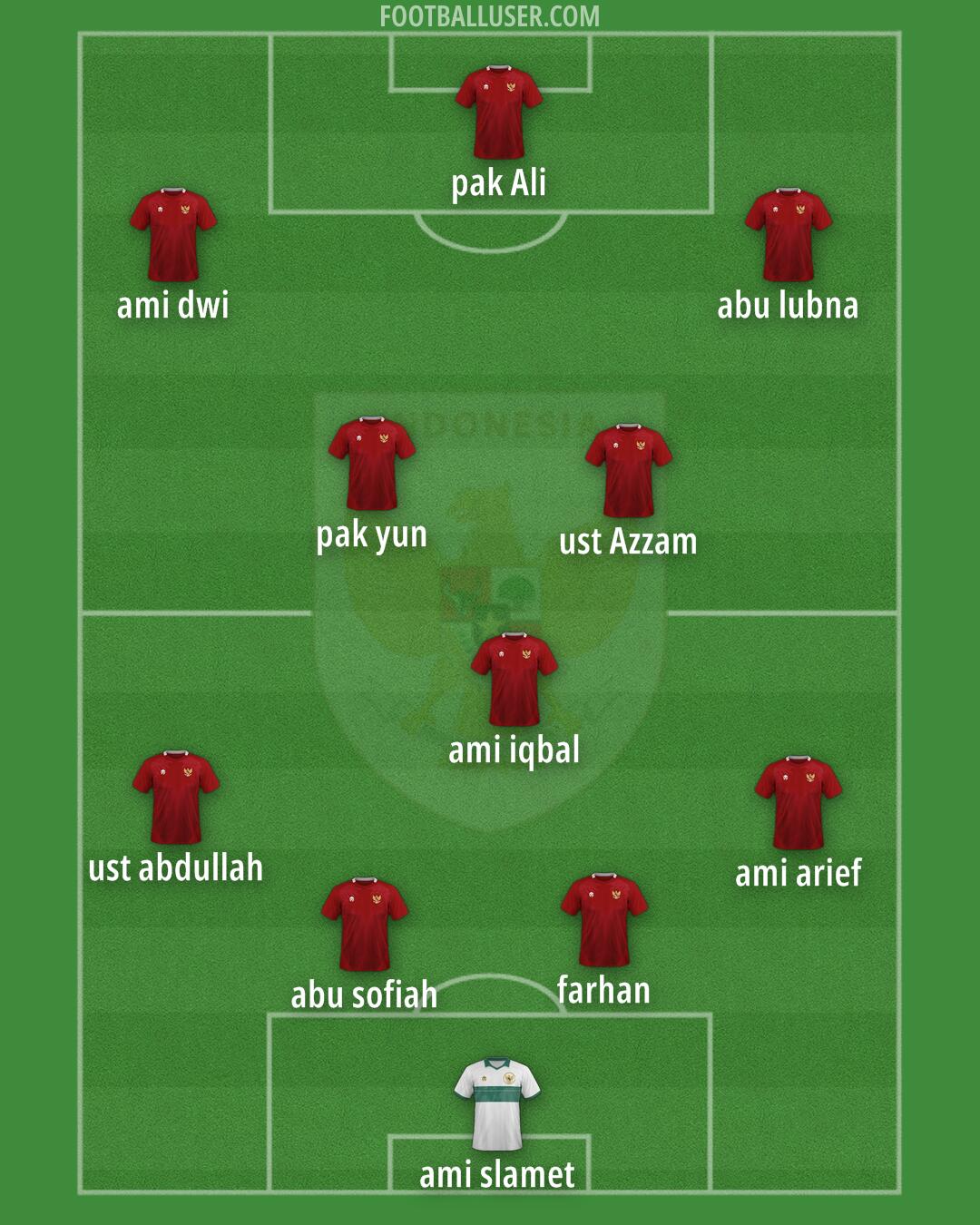
ami slamet · farhan · abu sofiah · ami arief · ust Azzam · ust abdullah · ami iqbal · abu lubna · ami dwi · pak Ali · pak yunSeeking to control the pitch through a compact low block and quick transitions, Indonesia utilizes a 5-2-3 formation. This lineup focuses on defensive solidity while leaving space for rapid counter attacks through the wide areas. The team aims to sit deep to absorb pressure before looking to break the lines with long passes or direct vertical runs.
Ami Slamet stays between the posts to direct the back line during defensive phases. The defensive unit consists of three central defenders where Ami Iqbal acts as the central anchor, flanked by Abu Sofiah and Farhan. This back three provides aerial strength and covers the width of the penalty area. On either side, the wing backs Ust Abdullah and Ami Arief provide width, expected to track back to form a flat five when defending and push high to overlap when in possession.
In the middle of the pitch, Indonesia relies on a double pivot to manage the game. Pak Yun and Ust Azzam work together to shield the defense and intercept passes in the central zone. These two midfielders must cover a lot of ground to prevent opponents from playing through the center. They act as the bridge, winning the ball back and quickly switching play to the flanks to start an attack.
The attacking unit features three players positioned high up the pitch. Pak Ali leads the line as a lone striker, tasked to hold up the ball and bring others into play. On the wings, Ami Dwi and Abu Lubna act as wide attackers to stretch the opposition. Ami Dwi and Abu Lubna look to cut inside or use their pace to beat full backs, creating crossing opportunities for Pak Ali to attack in the box.
One major advantage for Indonesia is the ability to create wide overloads when Ami Arief and Ust Abdullah push forward to support the wingers. This creates a numbers advantage on the flanks that can overwhelm a back four. Additionally, the formation provides great compactness when defending, making it very difficult for opponents to find gaps between the lines.
This 5-2-3 formation is built for a team that wants to remain hard to beat and strike on the break. It is particularly effective against teams that commit many players forward and leave space behind their defensive line.