Man City Football Formation
 December 17, 2025


Starting Lineup
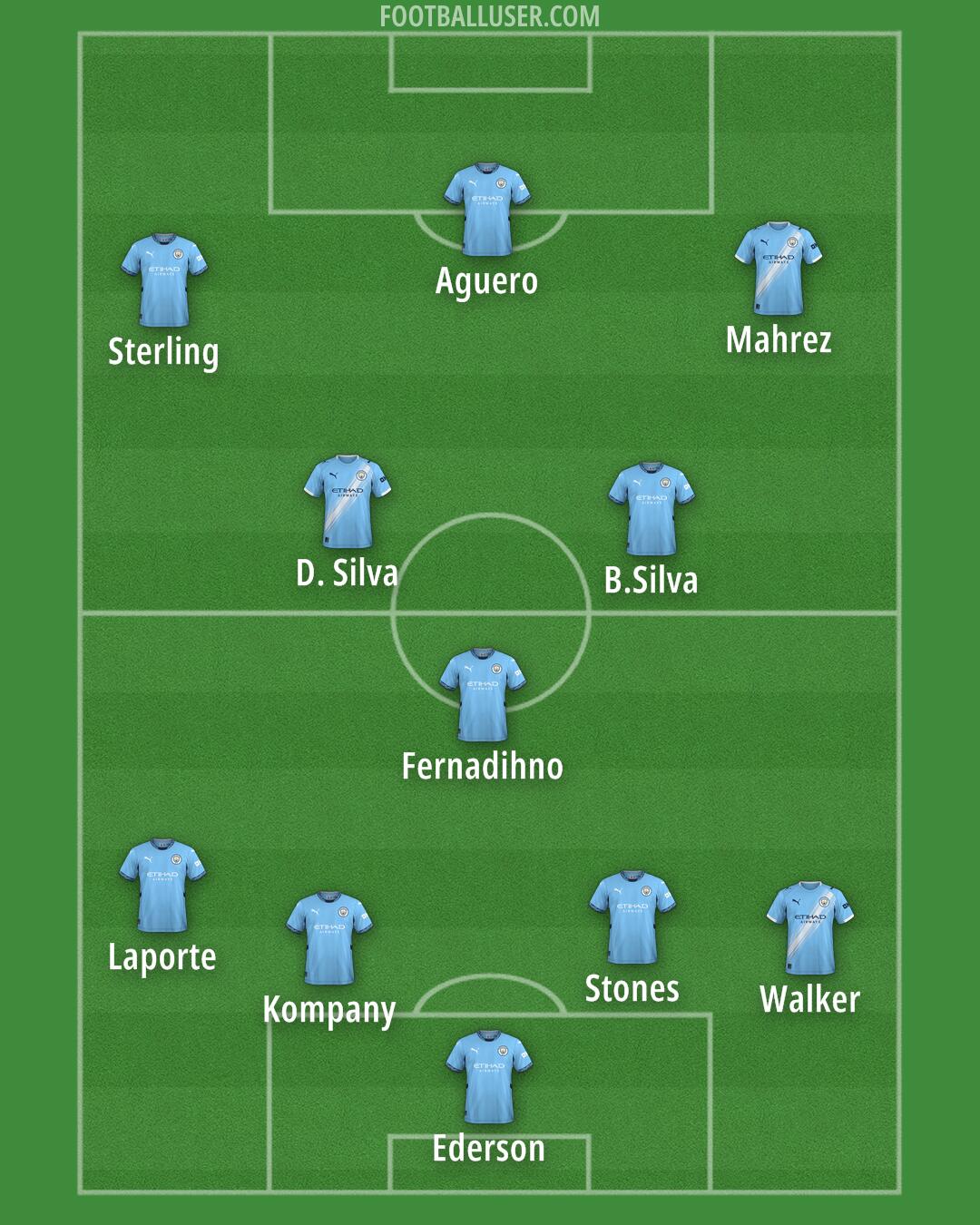
Ederson · Walker · Kompany · Stones · Laporte · Fernadihno · B.Silva · Mahrez · Sterling · Aguero · D. SilvaMan City focuses on heavy possession and controlling the ball to dictate the rhythm of the match. This control is achieved through a 4-3-3 formation that allows the players to dominate the central areas of the pitch. The lineup is built to pass through lines and keep the ball moving to tire out the opposition.
Ederson operates as the goalkeeper, often acting as a ball playing option to start attacks from deep. Behind him, the back four stays relatively high to compress the playing area. Walker plays as a right back with great recovery speed to cover large spaces, while Laporte sits on the left to provide stability. In the center, Stones and Kompany act as the main defensive wall, with Kompany providing leadership and aerial strength to clear crosses.
The midfield works as a single pivot system paired with two advanced central players. Fernanhino sits in front of the defense to shield the back line and break up opposition play. Alongside him, B. Silva and D. Silva occupy the central pockets to connect the defense to the attack. B. Silva uses his ball control and passing range to drive the team forward, while D. Silva moves into spaces to create chances. This trio ensures that Man City maintains control in the middle of the park.
In the attacking third, the team uses three attackers to stretch the opposition defense. Aguero acts as the lone striker, using his movement to find space in the box and hold up the ball. On the wings, Sterling and Mahrez provide width and can cut inside to shoot or cross. Sterling uses his pace to run at defenders, while Mahrez looks to switch play or find a killer pass. The forwards work together to press high and force turnovers near the opponent's goal.
This formation offers clear tactical advantages through numerical superiority in the middle of the pitch. By keeping the ball, Manchester City can force the opposition to run and eventually create gaps in their lines. The combination of wide wingers and overlapping movements allows the team to create wide overloads. Additionally, the speed of the full backs helps the team transition quickly when they win the ball back in high areas.
The 4-3-3 formation provides a dominant platform for teams that want to control every phase of the game. It is best suited for matches where the goal is to pin the opponent back and limit their opportunities to counter.