
Borussia Dortmund Football Formation
 December 17, 2025


Starting Lineup
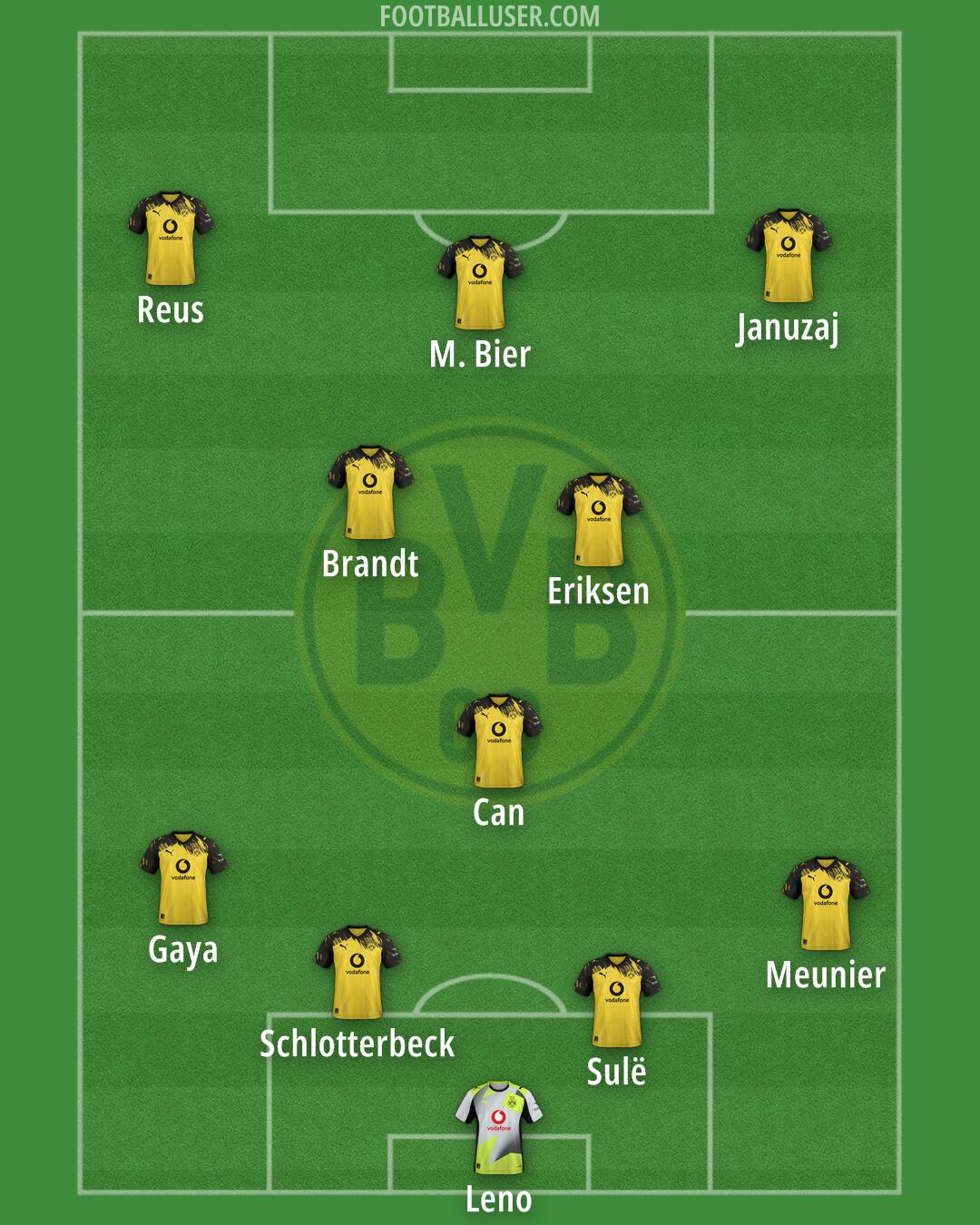
Leno · Can · Brandt · Schlotterbeck · Reus · Gaya · Sulë · Meunier · Januzaj · M. Bier · EriksenBorussia Dortmund aims to control the tempo through high pressing and quick transitions in a 5-2-3 formation. This lineup focuses on controlling the middle of the pitch while maintaining a solid base to absorb pressure. The goal is to win the ball high up the pitch and move it forward rapidly to catch opponents out of position.
Leno guards the goal and manages the defensive line from deep. The back five consists of Can, Schlotterbeck, and Sulë acting as a central core. Can holds the line and provides aerial strength, while Schlotterbeck and Sulë look to step up and intercept passes. On the flanks, Meunier and Gaya function as wing backs who provide width. Meunier is expected to overlap to support the attack, whereas Gaya must track back to prevent crosses when the team sits deep.
The midfield operates with a two man central block. Eriksen and Brandt link the defense to the forward line. Eriksen uses his passing range to break the line and switch play to the wings. Brandt works to find pockets of space between the lines to create chances. These two midfielders must cover significant ground to protect the back five and ensure the team remains compact when the opponent has possession.
In the final third, Borussia Dortmund uses three attackers to stretch the opposition. M. Bier acts as a lone striker who must hold up the ball and bring others into play. Januzaj and Reus operate as wide attackers. Januzaj prefers to cut inside to create goalscoring opportunities, while Reus moves into central areas to link play. This attacking unit presses high to force mistakes from the opposing defenders.
One major advantage of this formation is the ability to create wide overloads when Meunier and Gaya push high. This puts immense pressure on the opposition full backs. Another strength is the compactness when defending in a low block, as the five defenders and two midfielders can quickly close down central passing lanes. The team can also use the speed of transition to exploit spaces left by attacking opponents.
This 5-2-3 formation relies on strong wing back play and central control to succeed. It is best suited for matches against teams that play with high defensive lines or leave space behind their wingers.