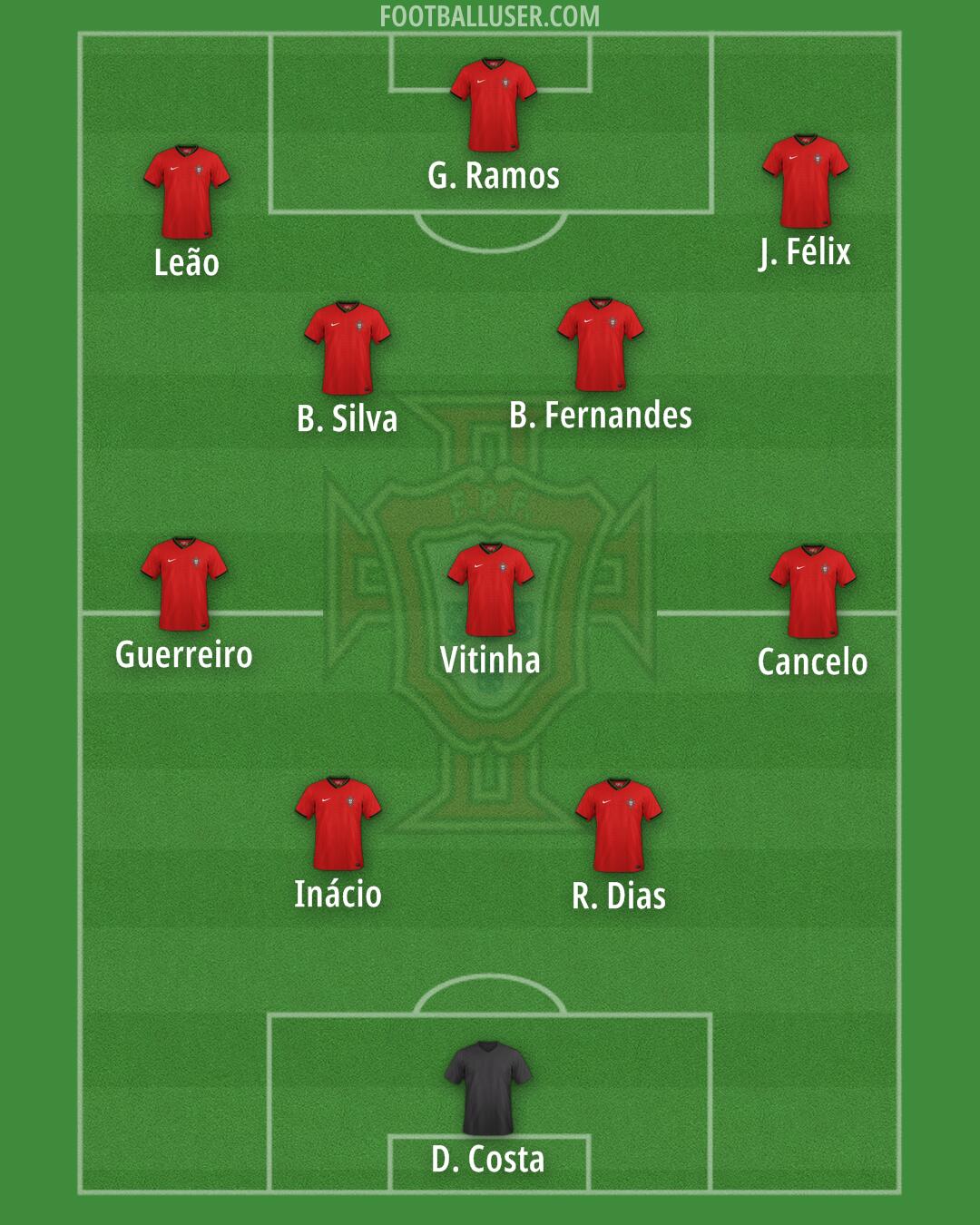

Portugal National Football Team Formation
 December 18, 2025


Starting Lineup
D. Costa · R. Dias · Guerreiro · Inácio · Cancelo · Vitinha · G. Ramos · B. Fernandes · B. Silva · Leão · J. FélixPortugal seeks to control games through high pressing and quick vertical transitions in a 5-2-3. This formation relies on a strong defensive foundation to allow the attacking players to push high up the pitch. The team looks to win the ball back quickly in the final third to catch opponents out of position.
Diogo Costa acts as the last line of defense, providing stability behind a back five. The defensive unit uses a wide trio of defenders with Rúben Dias and Inácio acting as the central pillars. Rúben Dias provides aerial strength and leadership to the back line, while Inácio covers the left side. Vitinha sits in the center to help build play from the back. On the flanks, Cancelo and Guerreiro act as wing backs who provide immense width. They are expected to push up the pitch to support the attack while tracking back to cover the wide areas when the ball is lost.
The midfield operates with a double pivot to control the center of the pitch. Bernardo Silva and Bruno Fernandes occupy the two central roles, acting as the engine room for Portugal. Bernardo Silva uses his pressing intensity to win the ball back, while Bruno Fernandes works to break the line with his passing range. This duo connects the defense to the forward line, ensuring the team can switch play quickly. They must also drop deep to shield the back five when the opposition carries the ball forward.
In the attacking phase, the lineup utilizes three forwards to stretch the opponent. Gelson Ramos leads the line as a lone striker, tasked to hold up the ball and occupy the central defenders. Rafael Leão and João Félix operate as wide attackers. Rafael Leão uses his dribbling style to beat markers on the flank, while João Félix cuts inside to create chances. This front three presses the opposition defenders high, forcing mistakes and creating immediate scoring opportunities.
A major advantage for this lineup is the ability to create wide overloads. When Cancelo and Guerreiro push forward, they create two on one situations against opposition full backs. The team also benefits from numerical superiority in the defensive transitions because the three central defenders can sit deep to form a compact block. This allows the midfielders to focus on pressing rather than dropping too far back.
Portugal uses this 5-2-3 to dominate possession and exploit space through wide areas. This formation is best suited for matches against teams that play with a high defensive line and leave space behind their defenders.