
PSG Football Formation
 December 23, 2025


Starting Lineup
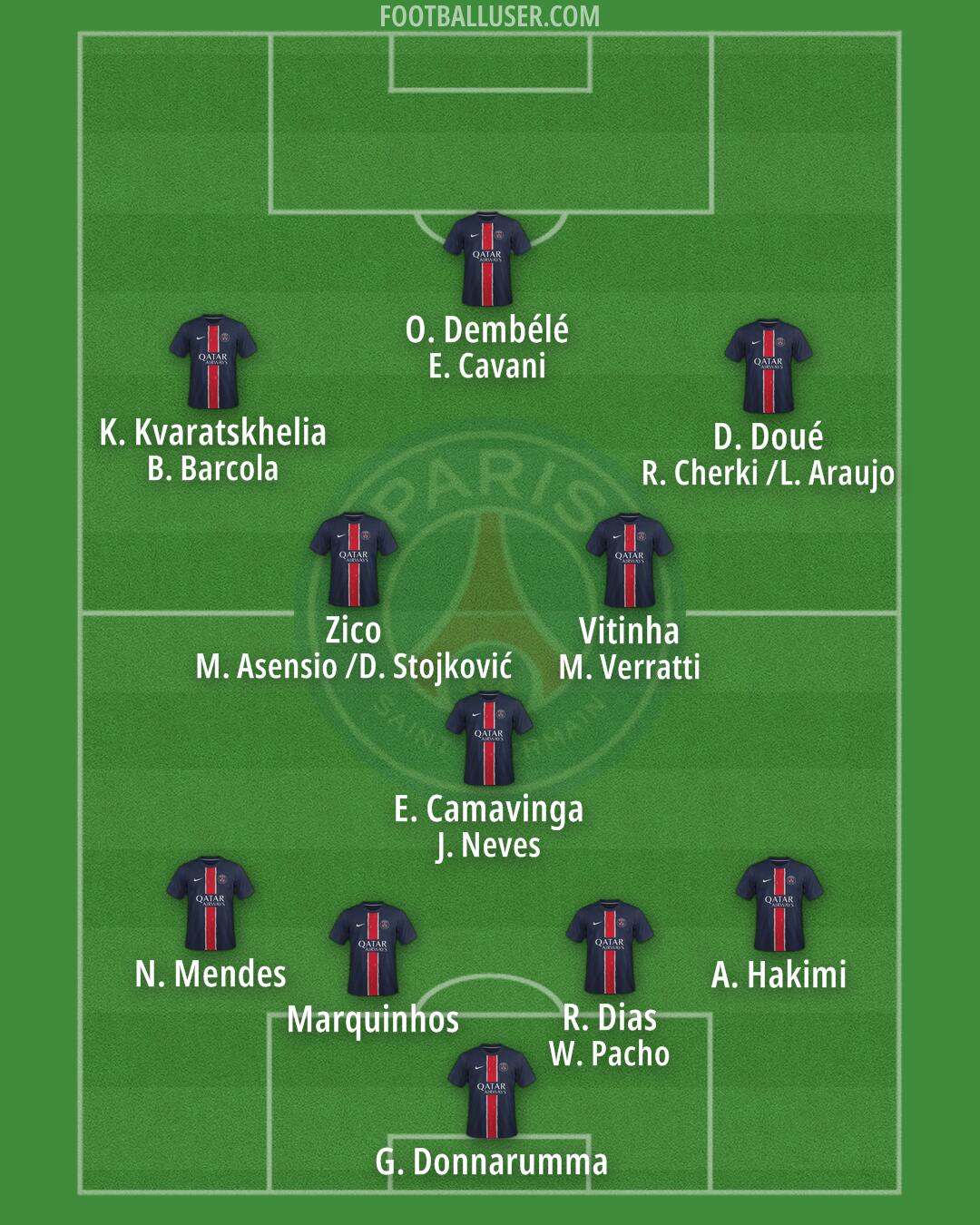
O. Dembélé (E. Cavani) · K. Kvaratskhelia (B. Barcola) · D. Doué (R. Cherki /L. Araujo) · Zico (M. Asensio /D. Stojković) · Vitinha (M. Verratti) · E. Camavinga (J. Neves) · N. Mendes · Marquinhos · R. Dias (W. Pacho) · A. Hakimi · G. DonnarummaSeeking to dominate through high intensity and quick transitions, PSG employs a 5-2-3 formation. This lineup aims to press high up the pitch and use the width of the wings to stretch the opposition. By using three central defenders and two wing backs, the team seeks to control much of the pitch while remaining difficult to break down when they drop back into a low block.
Gianluigi Donnarumma guards the goal, acting as the last line of defense. In front of him, a back three consists of Marquinhos, R. Dias, and E. Camavinga. Marquinhos, who serves as the captain, uses his reading of the game to intercept passes and organize the line. R. Dias provides aerial strength and physical presence to win duels, while E. Camavinga acts as a ball playing defender to help move the ball out from the back. The wing backs, N. Mendes and A. Hakimi, push high to provide width, but they must track back quickly to form a five man line when defending deep.
The midfield relies on a double pivot to connect the defense to the attack. Vitinha operates as a central midfielder who works to move the ball through the lines with his passing range. Beside him, Zico provides support to link the ball from the back three toward the front three. This duo must cover a lot of ground to block passing lanes and protect the central area when the wing backs are pushed forward.
PSG utilizes three attackers to lead the press and threaten the opposition. K. Kvaratskhelia operates from the left wing, often looking to cut inside to create chances. On the right, D. Doué provides pace and movement to stretch the defense. O. Dembélé plays as the lone striker, tasked to hold up the ball and run the channels to create space for the midfielders to join the attack. This front line is designed to press the opposition defenders immediately upon losing possession.
One major strength of this formation is the ability to create wide overloads. When A. Hakimi and N. Mendes overlap, they force the opposing wingers to track back, often leaving their own attackers outnumbered. Another advantage is the compactness of the central unit. With Marquinhos, R. Dias, and E. Camavinga, the team can sit deep and force opponents into wide areas where they are easier to mark. The speed of transition from a defensive block to an attacking wave is also a key component.
This 5-2-3 formation is built for teams that want to control the wings and hit opponents on the break. It is best suited for matches against sides that play with a high line and can be exploited through quick movement in the wide areas.