
Real Madrid Football Formation
 January 4, 2026


Starting Lineup
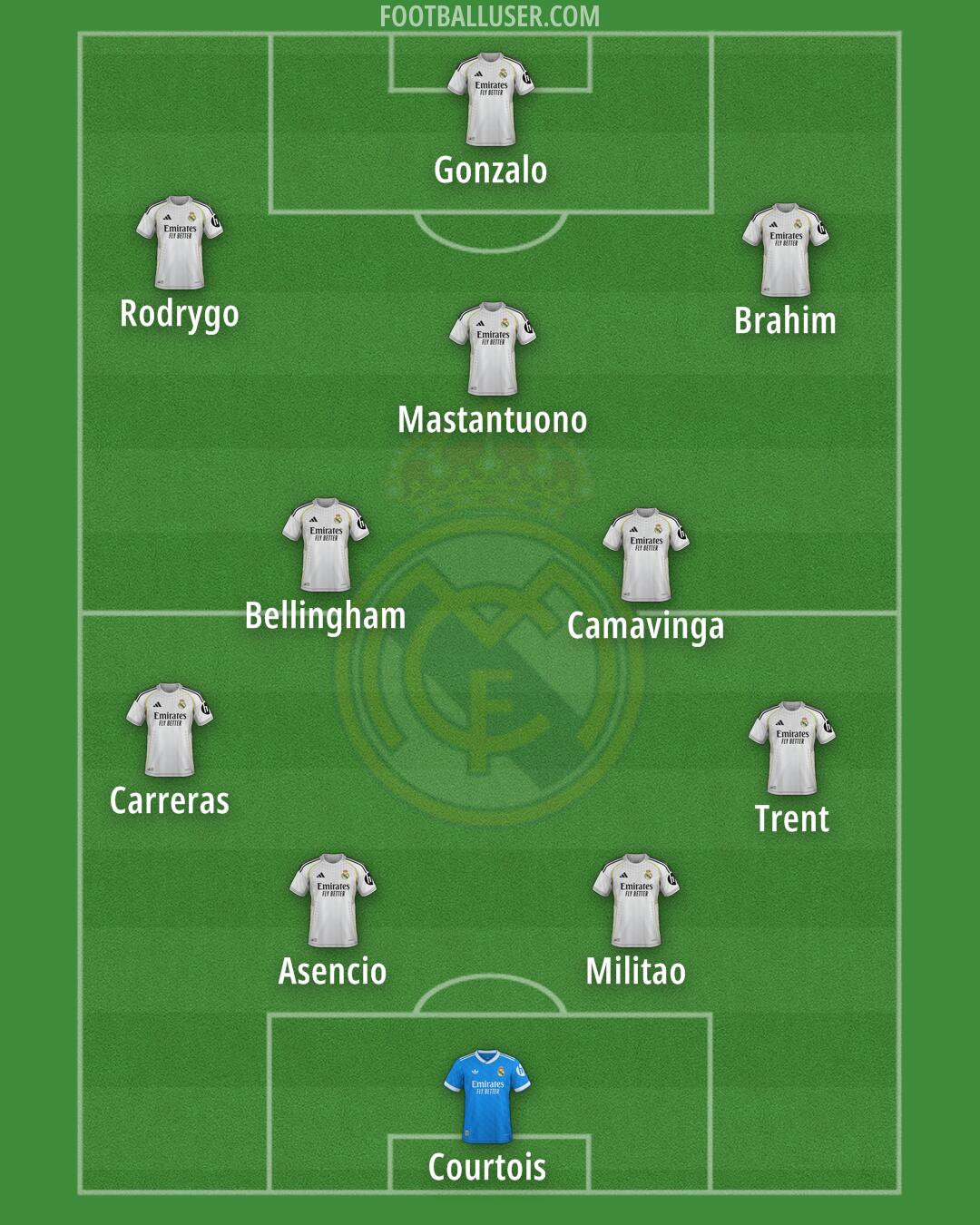
Courtois · Carreras · Asencio · Militao · Trent · Camavinga · Bellingham · Rodrygo · Mastantuono · Gonzalo · BrahimReal Madrid focuses on high pressing and rapid vertical transitions through a 4-3-3 formation. This lineup aims to control the tempo by winning the ball high up the pitch and quickly moving it forward to catch the opposition out of position. The team relies on the ability of its players to press in waves to force turnovers in the final third.
Courtois guards the goal as the last line of defense. The back line functions as a flat four where Trent pushes high to provide width on the right side. Militao acts as a central defender who is dominant in the air and covers the space behind the high line. Asencio and Carreras sit in the back four to maintain compactness, with Carreras looking to overlap when the play shifts to the left.
The midfield operates with a mix of roles to connect the defense and attack. Camavinga sits in the right central role to shield the defense and intercept passes. Bellingham works in the left central role, driving forward with his ball carrying and high energy to link play. Mastantuono plays as an attacking ten in the center to find pockets of space and create chances for the front three.
The attacking front line uses three attackers to stretch the opposition. Rodrygo plays on the left as an inverted winger who likes to cut inside on his stronger foot to shoot or pass. Brahim occupies the right wing and can also move into central areas to create overloads. Gonzalo acts as the lone striker to hold up the ball and occupy the two central defenders, creating room for the runners behind him.
Real Madrid possesses several tactical advantages with this lineup. The team creates wide overloads through the movement of Trent and the wingers. Having Bellingham and Camavinga allows the team to press high in coordinated waves. The ability to isolate Brahim and Rodrygo in one on one situations on the flanks makes the transition from midfield to attack very difficult to track.
This 4-3-3 formation is built for heavy pressing and quick counter attacks. It is best suited for games against opponents who play a high line and leave space behind their defenders.