
Honvéd Football Formation
 January 6, 2026


Starting Lineup
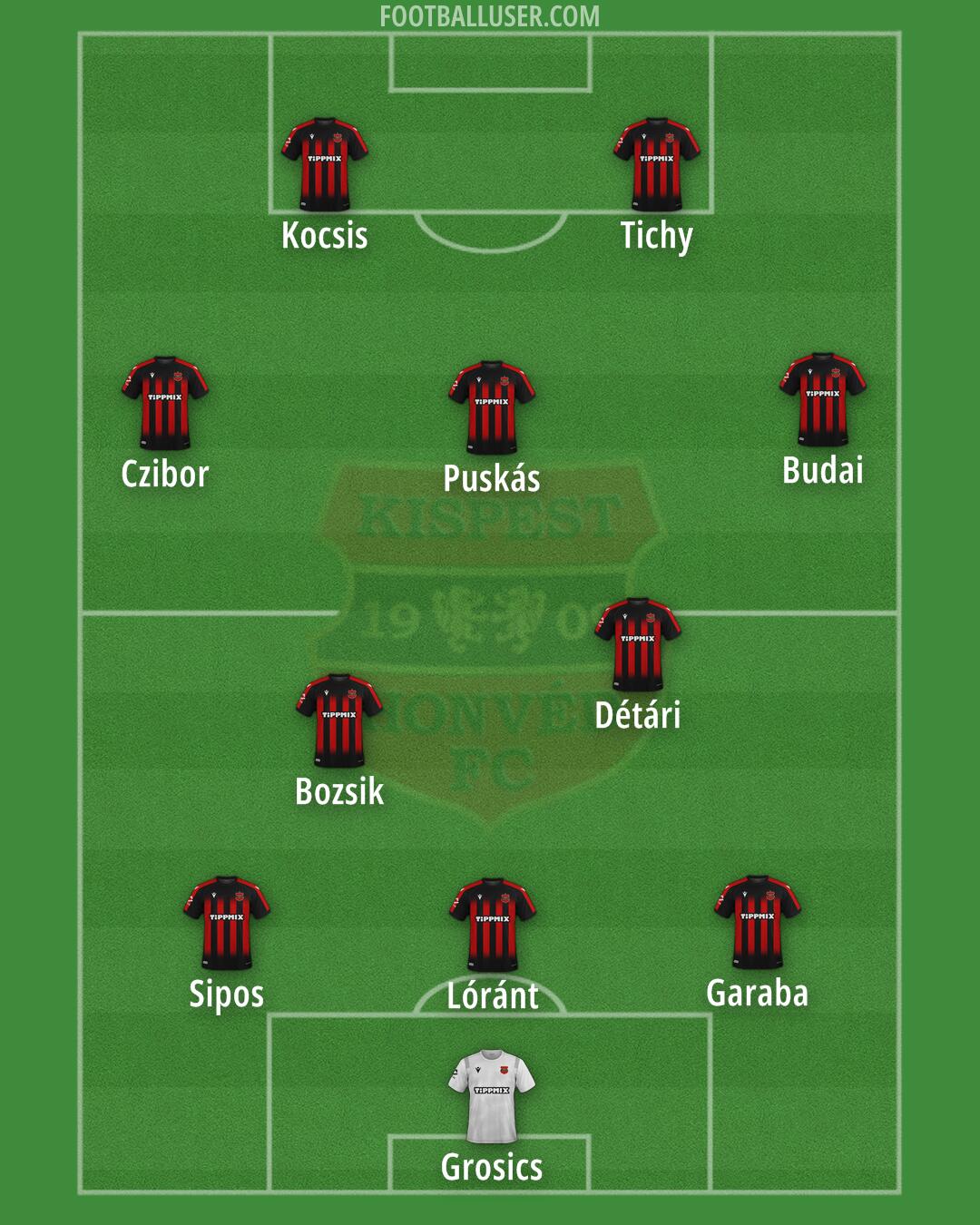
Grosics · Lóránt · Sipos · Garaba · Bozsik · Détári · Puskás · Budai · Czibor · Kocsis · TichyA heavy emphasis on verticality and quick transitions defines this Honvéd lineup in a 5-3-2. The team aims to control the center of the pitch before launching rapid attacks toward the goal. This formation relies on strong central presence and the ability of the wing backs to stretch the pitch.
Grosics acts as the last line of defense in goal. The defensive unit sits in a back three consisting of Lóránt, Bozsik, and Détári. These three central defenders must mark tightly and win aerial duels to maintain a solid block. Sipos and Garaba operate as the wide defenders, providing width by pushing up the flanks to overlap the midfield. Their role is to track back quickly when possession is lost to prevent crosses from the wings.
The midfield operates as a central trio to control the tempo of the match. Puskás works in the middle to drive forward and break the line with precise passing. Czibor and Budai support him, acting as links between the defense and the attack. They must press opponents in the middle third and intercept passes to regain control. This trio ensures that the Honvéd midfield remains compact and difficult for the opposition to bypass.
Two forwards lead the line to create constant pressure on the opponent back four. Kocsis and Tichy play as the primary goal threats, with Kocsis often looking to hold up the ball to allow others to join the attack. Tichy works alongside him to make runs into the channels. They press high to force mistakes and use their movement to create gaps in the defensive line. This two-man front line demands high intensity from both players.
This formation offers significant advantages through its central density and width. Honvéd can achieve numerical superiority in the middle of the park, making it hard for opponents to play through them. The wing backs, Sipos and Garaba, provide wide overloads that can isolate defenders in one on one situations. When defending, the team can sit deep and compress the space between the lines to stay compact.
The 5-3-2 formation provides a balance of defensive stability and rapid attacking transitions. It is best suited for games against teams that play with a wide midfield, as it can quickly exploit the space left behind.