
Brazil National Football Team Formation
 January 7, 2026


Starting Lineup
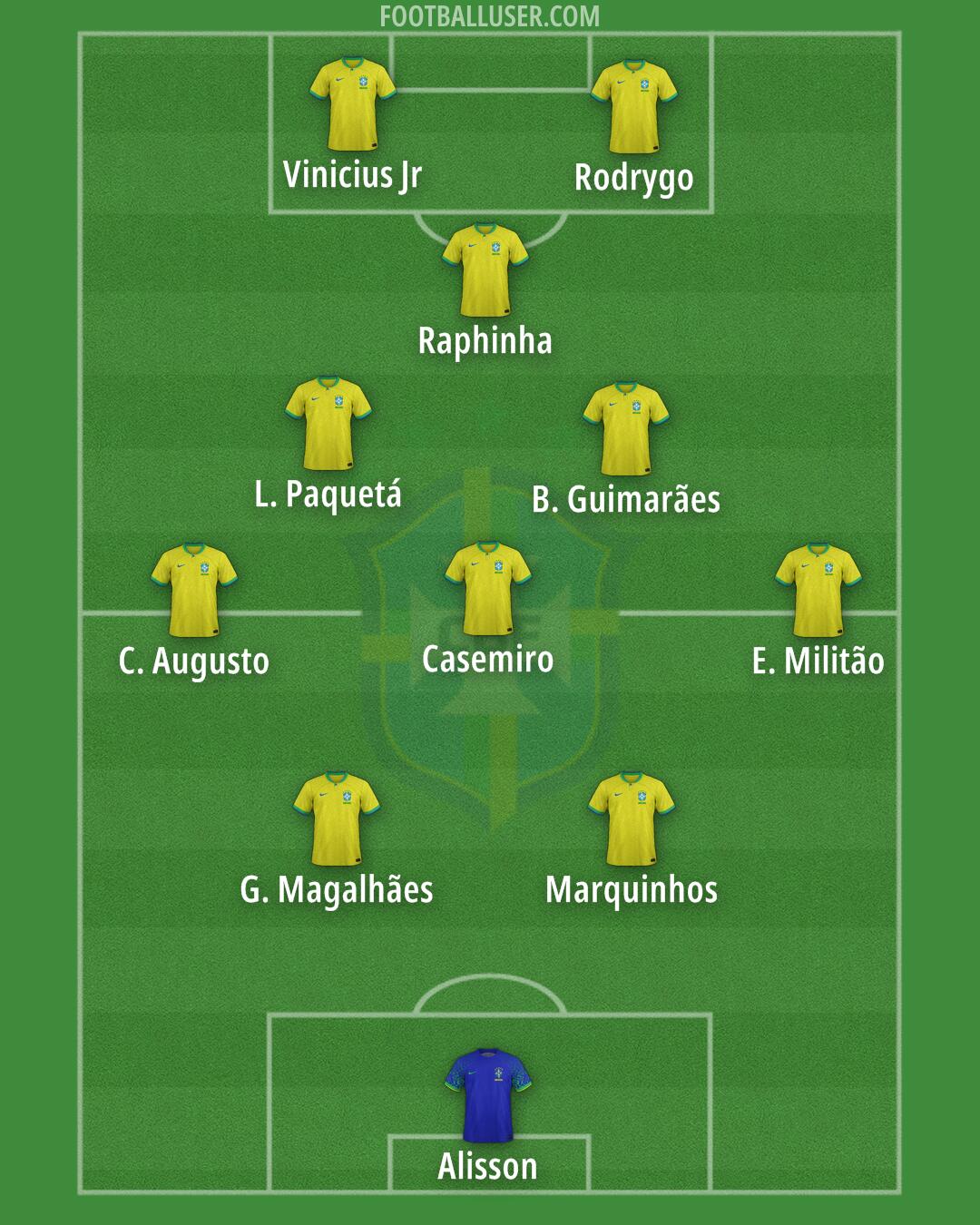
C. Augusto · E. Militão · G. Magalhães · Marquinhos · Casemiro · L. Paquetá · B. Guimarães · Raphinha · Vinicius Jr · Rodrygo · AlissonHigh intensity and central dominance define this Brazil lineup in a 2-6-2. This formation seeks to overwhelm the opposition by packing the middle of the pitch and keeping the ball in the final third. It is a vertical system built to control tempo and pin the opponent back into their own half.
Alisson acts as the last line of defense behind a very narrow back two. G. Magalhães and Marquinhos play as high-line central defenders, tasked with intercepting long balls and covering the wide spaces left vacant by the lack of fullbacks. They must step up to squeeze the play and remain ready to tackle attackers running into the channels. The defensive unit relies on the midfield to block passing lanes before the ball reaches the center backs.
The midfield layer is massive, functioning as a six-man engine room. Casemiro, C. Augusto, and E. Militão form a deep pivot to shield the two defenders and hold the center. Moving higher, B. Guimarães, L. Paquetá, and Raphinha operate in the attacking midfield zones to drive the play forward. This group links the defensive block to the attackers by constantly moving into pockets of space and making runs to break the line.
Two strikers lead the attack, with Vinicius Jr and Rodrygo looking to exploit space between the lines. Vinicius Jr uses his explosive dribbling to cut inside from the left, while Rodrygo works to find gaps in the defense. The three attacking midfielders push up to support them, creating a heavy central presence. When the ball is lost, these forwards and midfielders press high to win it back immediately.
Brazil gains significant tactical advantages through numerical superiority in the middle. By placing six players in the center, they can easily pass around opponents and create overloads. The team also uses the ability to press high in coordinated waves, using the front five to trap the opponent in their own half. This allows the team to switch play quickly and isolate defenders in one on one situations.
The 2-6-2 formation represents an all-out attack designed to punish teams that sit deep. It is most effective when facing an opponent that lacks the speed to exploit the wide spaces left by the two central defenders.