
Saint-Étienne Football Formation
 January 7, 2026


Starting Lineup
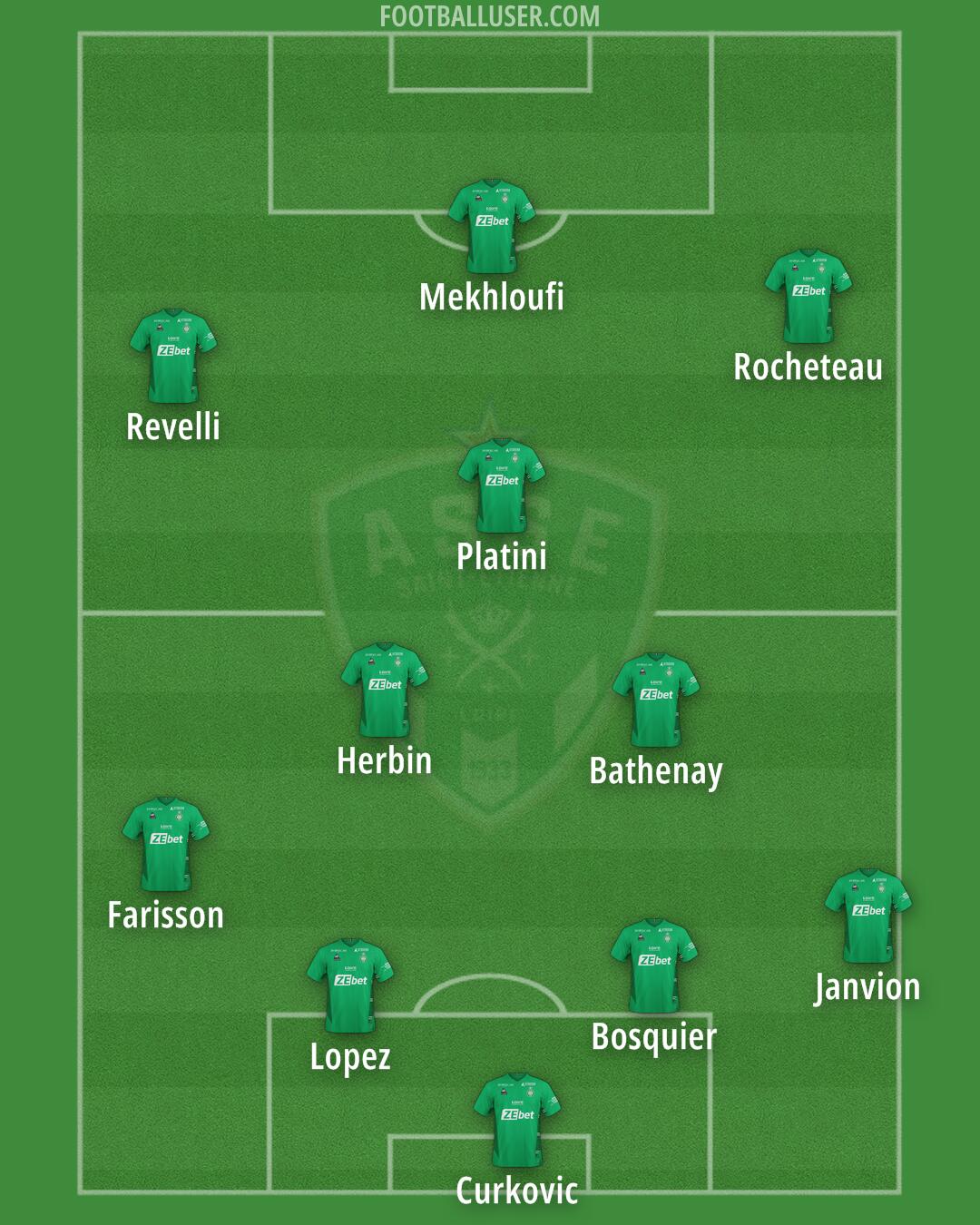
Curkovic · Janvion · Bosquier · Lopez · Farisson · Bathenay · Herbin · Platini · Rocheteau · Mekhloufi · RevelliA heavy emphasis on controlling the game through direct attacking movements defines Saint-Étienne as they deploy a 4-3-3. This formation aims to dominate opponents by moving the ball quickly into forward areas and maintaining high pressure. The lineup works to dictate the tempo through a central creative hub, making it a very vertical team built to break lines.
Curkovic stands between the posts to command the defensive unit. The back four functions as a flat line where Janvion operates on the right side to push forward and overlap. On the left, Farisson provides balance while managing the wide space. In the center, Lopez and Bosquier act as the primary blockers, with Lopez focusing on covering space and Bosquier providing aerial strength to intercept long balls.
Control of the central zone relies on a midfield trio that links the defense to the attack. Bathenay and Herbin act as the engine, with Bathenay working to shield the back line and Herbin driving the ball forward to link play. Platini operates as the attacking ten, sitting just behind the forwards to create chances with his exceptional passing range and vision. This midfield group ensures the ball moves from the deep areas into the final third.
The attacking front line utilizes three players to stretch the opposition. Mekhloufi leads the line as a lone striker, tasked to hold up the ball and bring others into play. On the flanks, Revelli and Rocheteau act as wide attackers, often looking to cut inside to find goalscoring opportunities. These three forwards press high when the ball is lost, forcing the opposition into mistakes near their own goal.
Saint-Étienne finds several tactical advantages through this specific formation. The presence of Platini allows for numerical superiority in the half spaces, creating passing lanes that are hard to mark. Additionally, the combination of Janvion and Farisson allows the team to create wide overloads, pulling defenders out of position to create gaps in the middle. The team can also shift quickly from a defensive block to a vertical counter attack.
This 4-3-3 formation creates a potent balance between defensive stability and creative freedom. It is best suited for matches against opponents who sit deep and require constant pressure to break down.