Rangers Football Formation
 January 9, 2026


Starting Lineup
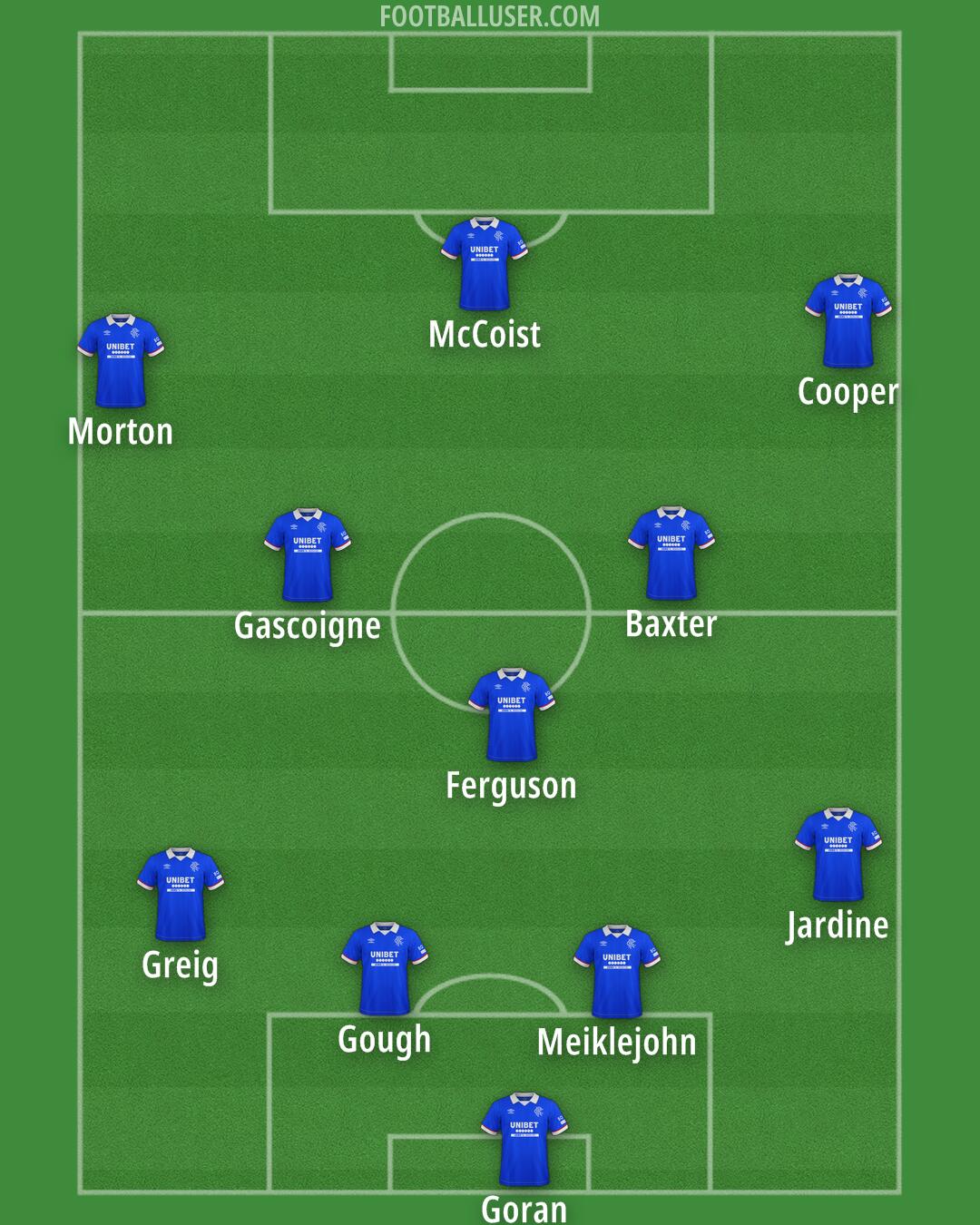
Goran · Jardine · Meiklejohn · Gough · Greig · Ferguson · Baxter · Gascoigne · Cooper · McCoist · MortonA high press and quick transitions define the tactical identity of Rangers in a 5-2-3. This formation seeks to dominate space by pushing numbers forward while maintaining a strong base to defend against breaks. The lineup relies on verticality to move the ball quickly from the back to the front three.
Goran sits between the posts to organize the defensive line. A back three provides a solid foundation with Ferguson acting as the central anchor to hold the line and intercept passes. Meiklejohn sits on the right of the trio to cover the wide areas, while Gough defends the left side. The wing backs, Greig and Jardine, provide the necessary width, often pushing high to overlap the attackers or dropping back to form a deep block when the team loses possession.
The midfield relies on a double pivot to control the center of the pitch. Gascoigne operates in the left central role to drive forward and connect the defense to the attack, while Baxter manages the right central position to shield the back three. These two must work hard to track back and cover the space left by the advancing wing backs. They act as the engine of the Rangers midfield, tasked with breaking the lines through short passes or long switches.
In the final third, the team utilizes three attackers to stretch the opposition. McCoist leads the line as the lone striker, tasked to hold up the ball and bring others into play. Morton occupies the left wing and Cooper stays on the right, both looking to cut inside or stretch the play to create room for the midfield. This front line is designed to press high, forcing mistakes from the opposing defenders.
This formation offers several tactical advantages, specifically the ability to create wide overloads when Greig and Jardine push forward. The presence of three central defenders makes the team very difficult to break down centrally, providing compactness when defending. Additionally, the direct nature of the front three allows for rapid speed of transition once the ball is won in the middle third.
The 5-2-3 formation provides a balance of defensive security and attacking width. It is best suited for games against teams that play with a high line or when looking to exploit space on the flanks.