
Austria National Football Team Formation
 January 12, 2026


Starting Lineup
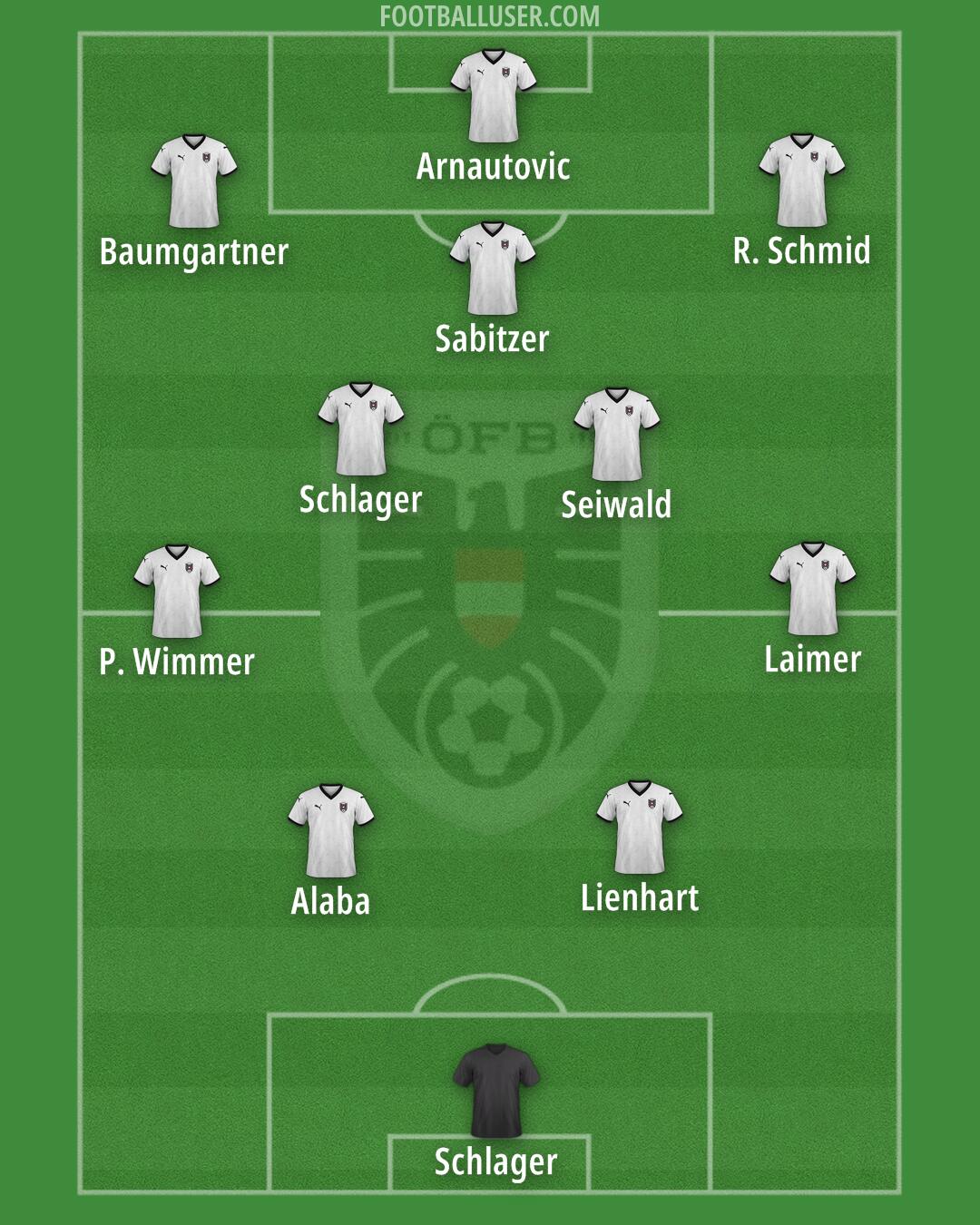
Alaba · Lienhart · P. Wimmer · Laimer · Schlager · Seiwald · Baumgartner · R. Schmid · Sabitzer · Schlager · ArnautovicHigh intensity pressing defines the identity of Austria, who operate within a 2-5-3 formation. This lineup seeks to win the ball back quickly and drive the play forward through central channels. The team builds its play by squeezing the pitch, making it very difficult for opponents to find time on the ball in their own half.
Schlager acts as the last line of defense in goal. Ahead of him, a back two consisting of Alaba and Lienhart must remain extremely disciplined. Alaba is known for his passing range and ability to step up into midfield, while Lienhart provides coverage and aerial strength. Because there are only two central defenders, they must maintain a high line to compress the space and prevent long balls from bypassing the midfield.
The midfield unit is the engine of the Austria lineup. It functions as a five man block that can shift across the pitch to cover gaps. P. Wimmer and Laimer operate in the deeper roles to shield the two central defenders, with Laimer known for his high pressing intensity and work rate. Seiwald and Schlager occupy the central areas to connect the defense to the attack, while Sabitzer plays as the attacking midfielder to break the lines with his passing and ability to arrive late in the box.
In the final third, the team utilizes three attackers to stretch the opposition. Baumgartner and R. Schmid act as wide wingers, looking to cut inside or provide width to create passing lanes. Arnautovic leads the line as a lone striker, using his physical presence to hold up the ball and bring others into play. The wingers are expected to press the opposition full backs heavily to force turnovers in dangerous areas.
This formation offers several tactical advantages, particularly the ability to press high in coordinated waves. By crowding the middle of the pitch, the five midfielders can create numerical superiority to intercept passes and win second balls. The narrowness of the central block also makes the team very compact when defending, forcing opponents to play around the perimeter rather than through the heart of the team.
Austria relies on this aggressive 2-5-3 to dominate the tempo and suffocate opponents. This formation is best suited for matches where the team can exploit a high line or overwhelm a single pivot in midfield.