
Real Madrid Football Formation
 January 13, 2026


Starting Lineup
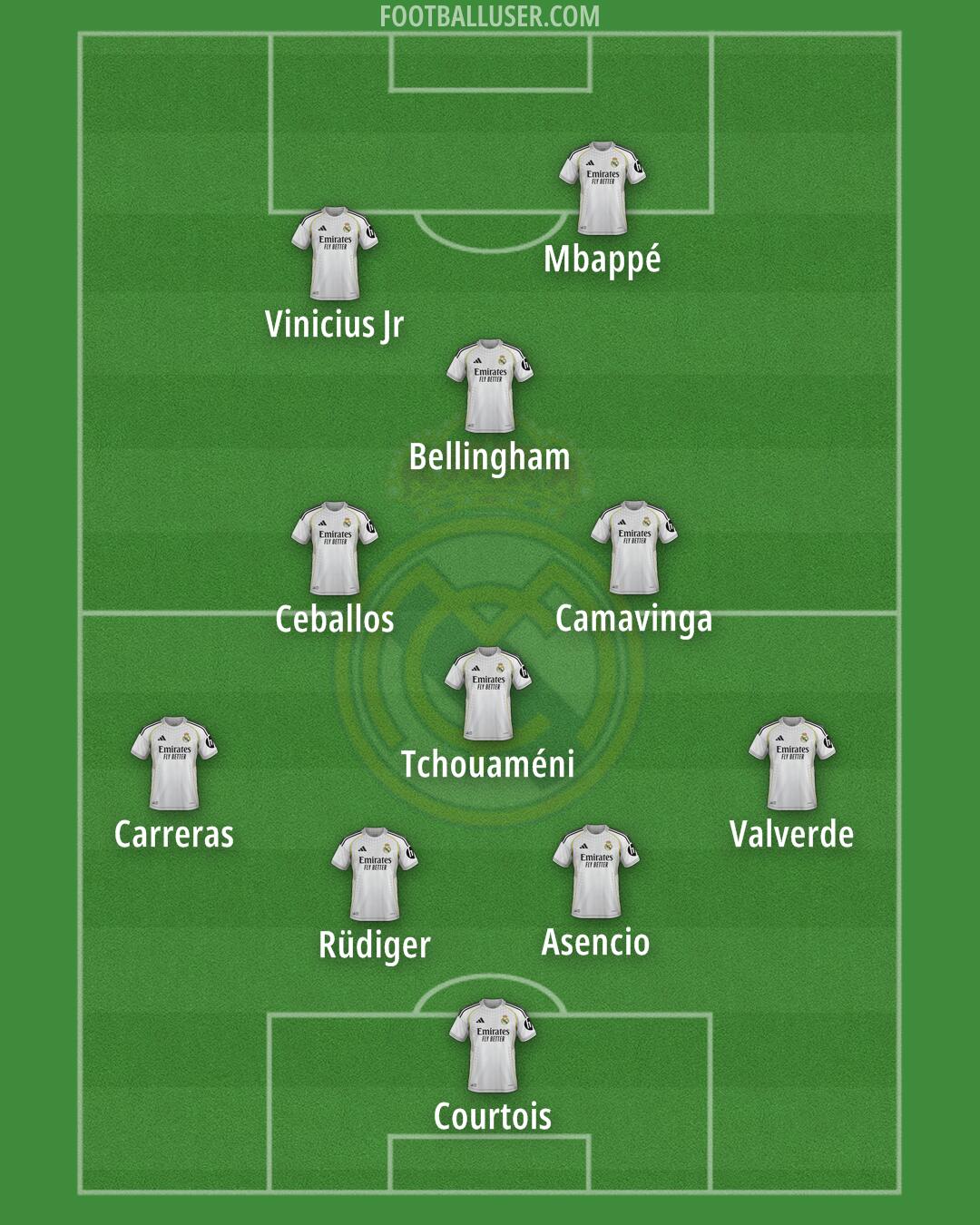
Courtois · Carreras · Valverde · Asencio · Rüdiger · Mbappé · Vinicius Jr · Bellingham · Tchouaméni · Ceballos · CamavingaHigh intensity pressing and rapid transitions define the tactical identity of Real Madrid in this 5-3-2 formation. The lineup focuses on controlling the central areas while leaving space for quick bursts of speed on the flanks. This system allows the team to be defensively solid while remaining extremely vertical when they win the ball back in the middle third.
Thibaut Courtois stands between the posts to anchor the defensive unit. A back three consisting of Tchouaméni, Rüdiger, and Asencio provides a central block that is dominant in the air. Rüdiger acts as a primary defender who can step up to intercept, while Tchouaméni provides extra cover in the center. On the flanks, Valverde and Carreras act as wing backs who push high to provide width, requiring them to track back quickly when the team loses possession.
The midfield works through a central trio that connects the defense to the attack. Camavinga and Ceballos sit in the middle to shield the back line and pick up loose balls, while Bellingham operates as an attacking midfielder to drive forward and break the line with his runs. Bellingham uses his driving runs to link the midfield to the front two, ensuring the team maintains a central presence during build up.
Two forwards lead the attack to exploit spaces behind the opponent defense. Vinicius Jr and Mbappé operate as a strike partnership that focuses on cutting inside to threaten the goal. Vinicius Jr uses his explosive dribbling to beat markers on the edge of the box, while Mbappé looks to run into channels and finish movements. These two attackers press high to force errors from the opposition back line.
Real Madrid gains a significant advantage through the ability to create wide overloads when Valverde and Carreras overlap. The formation also offers compactness when defending, making it difficult for opponents to pass through the middle. By using a central midfield three, the team maintains numerical superiority in the center of the pitch, allowing them to win second balls and launch quick counter attacks.
This 5-3-2 formation provides a robust platform for a side that wants to dominate central play while utilizing elite speed on the break. It is best suited for games against opponents who leave space behind their midfield or play with wide defensive lines.